
托育教育

Search documents
从拓展托育资源到加强队伍建设,四川以“托幼一体化”破局“带娃难”丨川观解读
Xin Lang Cai Jing· 2025-12-19 13:18
Core Viewpoint - The implementation plan for integrated childcare and early education in Sichuan aims to address the urgent needs of parents regarding childcare accessibility and affordability, marking a significant step towards a comprehensive service system for early childhood development and education [1][2]. Group 1: Policy Overview - The "integrated childcare and early education" concept connects services for children aged 0-3 with educational resources for those aged 3-6, focusing on management systems, institution setup, teacher training, and curriculum design [2]. - The issuance of the implementation plan signifies a transition from conceptual advocacy to systematic restructuring, aligning with national population development strategies and promoting public policy collaboration [2][3]. Group 2: Practical Implications - The plan aims to transform childcare services from being accessible to a minority to being available to the majority, ensuring that working-class families can afford and access these services [2][3]. - The plan emphasizes the importance of safety and quality in childcare, leveraging existing kindergarten systems to provide professional and regulated services quickly [2][3]. Group 3: Financial Support and Accessibility - The implementation plan includes financial support measures, such as a subsidy of 200 yuan per child per month for kindergartens providing inclusive childcare services, and one-time construction subsidies for public kindergartens expanding their services [4][5]. - The plan aims to reduce the operational burden on kindergartens and significantly lower childcare costs for ordinary families [4][5]. Group 4: Quality Assurance - The plan outlines comprehensive standards for registration, facility requirements, and health management to ensure high-quality childcare services [5]. - It emphasizes the importance of building a qualified workforce through professional training and continuous education to support service quality [5][6]. Group 5: Challenges and Recommendations - Key challenges include the need for coordinated management systems, differentiated service offerings, and refined talent development in the childcare sector [6]. - Recommendations include simplifying approval processes, developing diverse childcare formats, and integrating early childhood education into higher education curricula to cultivate qualified professionals [6][7].
创新国资投融资模式,桂城加力提速产业高质量发展
Sou Hu Cai Jing· 2025-11-19 06:01
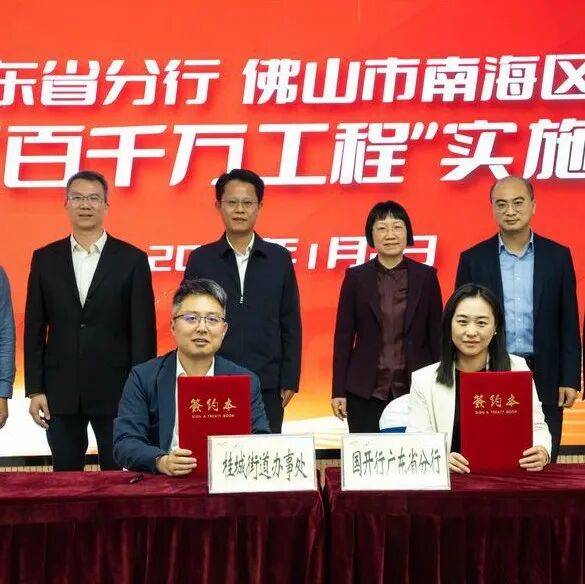
Core Viewpoint - The article highlights the ongoing integration of state-owned enterprise reform and regional economic development in Guicheng, Foshan, showcasing a shift from being "capital beneficiaries" to "industry chain enablers" through a diversified financing system [1]. Group 1: Diverse Financing Solutions - Guicheng has adopted a "policy funds + state-owned capital operation" dual-driven strategy to address funding needs for key projects, urban renewal, and ecological governance, facilitating continuous financial support for regional development [3]. - A significant collaboration with the Guangdong branch of the National Development Bank has been established, resulting in a landmark project with a funding amount of 30 billion yuan, aimed at enhancing living conditions and infrastructure [3]. - Guicheng has secured a special loan credit of 9.5 billion yuan for urban village renovation, becoming a national model for utilizing special loans at the town level [6]. - The region has also achieved breakthroughs in direct financing, with the issuance of 500 million yuan in corporate bonds by Guicheng Investment Development Co., marking it as the first local entity to enter the capital market for "super street" projects [6]. Group 2: Precision Empowerment and Quality Improvement - Guicheng has established a matrix of specialized funds targeting emerging industries such as artificial intelligence, semiconductors, and biomedicine, with five funds set up to support project implementation and equity exit [9]. - A town-level science and technology direct investment fund has been launched, with an initial scale of 100 million yuan, aimed at alleviating financing difficulties for startups, resulting in investments in 12 companies totaling 56 million yuan [11]. - In the mixed-ownership reform sector, Guicheng has implemented targeted investments to deepen the integration of state capital with industry and public welfare, including the establishment of a joint venture in the cultural tourism sector that has generated significant consumer engagement and revenue [14][16].

多层次托育人才培养体系助力“幼有所育” 托举万千家庭幸福未来
Yang Shi Wang· 2025-10-27 22:31
Core Insights - The demand for professional childcare services is urgent, with over 30% of families with children under three years old seeking childcare solutions, highlighting the need for a trained workforce in this sector [1][6] Group 1: Training Programs - Qilu Normal University offers a four-year vocational undergraduate program in "Infant Development and Health Management," focusing on practical skills and immediate employability [4] - Students engage in immersive learning experiences using AI simulation babies and VR technology to develop essential caregiving skills [1][2] - The curriculum includes courses on infant physiology, developmental psychology, health care, nutrition, and emergency care, ensuring a comprehensive education [3] Group 2: Industry Growth - Over 600 vocational colleges in China have established childcare-related programs, indicating a growing recognition of the need for trained professionals in this field [6] - The introduction of the "Infant Development and Health Management" program into regular undergraduate education marks a significant step in developing high-level, versatile childcare professionals [7] - Currently, there are only 500,000 certified childcare workers in China, with less than 10% holding a bachelor's degree, emphasizing the gap in qualified personnel [7]