投贷联动

Search documents
“投资者点题 代表委员作答”|如何破解金融服务实体经济结构性矛盾?·2026全国两会特别策划
证券时报· 2026-03-06 00:25
Core Viewpoint - The article discusses the need for financial services to better support the real economy, particularly focusing on how to direct funds towards innovative small and medium-sized enterprises (SMEs) and traditional businesses in need of transformation [2]. Group 1: Financial Services and SMEs - There is a significant disparity in funding, with capital favoring large enterprises while innovative SMEs struggle to access financing [2]. - Suggestions include broadening private equity exit channels and innovating the investment-loan linkage mechanism to enhance financial service efficiency for the real economy [2]. Group 2: Private Equity Fund Challenges - Private equity funds face challenges in their funding cycles, particularly due to a slowdown in traditional exit channels like IPOs, which affects their ability to reinvest [4]. - A proposal is made to establish a national, market-oriented private equity fund share trading platform in Hainan to improve transaction efficiency and transparency [4]. Group 3: Investment-Loan Linkage Mechanism - The article emphasizes the need to improve the investment-loan linkage mechanism to encourage banks to invest in technology innovation sectors, as traditional risk assessment methods do not align with the characteristics of tech firms [6][7]. - Recommendations include creating standardized cooperation platforms and enhancing communication between banks and private equity fund managers to foster long-term partnerships [7]. Group 4: Comprehensive Financial Service System - The development of direct financing channels in capital markets is crucial for addressing structural issues in financing, alongside the need for patient capital and support for mergers and acquisitions [9]. - Suggestions include refining policies for merger funds and relaxing certain regulatory requirements to stimulate activity in the capital market [9]. Group 5: Addressing Financing Bottlenecks - To overcome financing challenges for SMEs, financial institutions are encouraged to innovate credit products and local governments to establish risk compensation funds [10]. - The overarching goal is to ensure that funds flow to where they are most needed, thereby supporting innovative SMEs through various financing avenues [10].


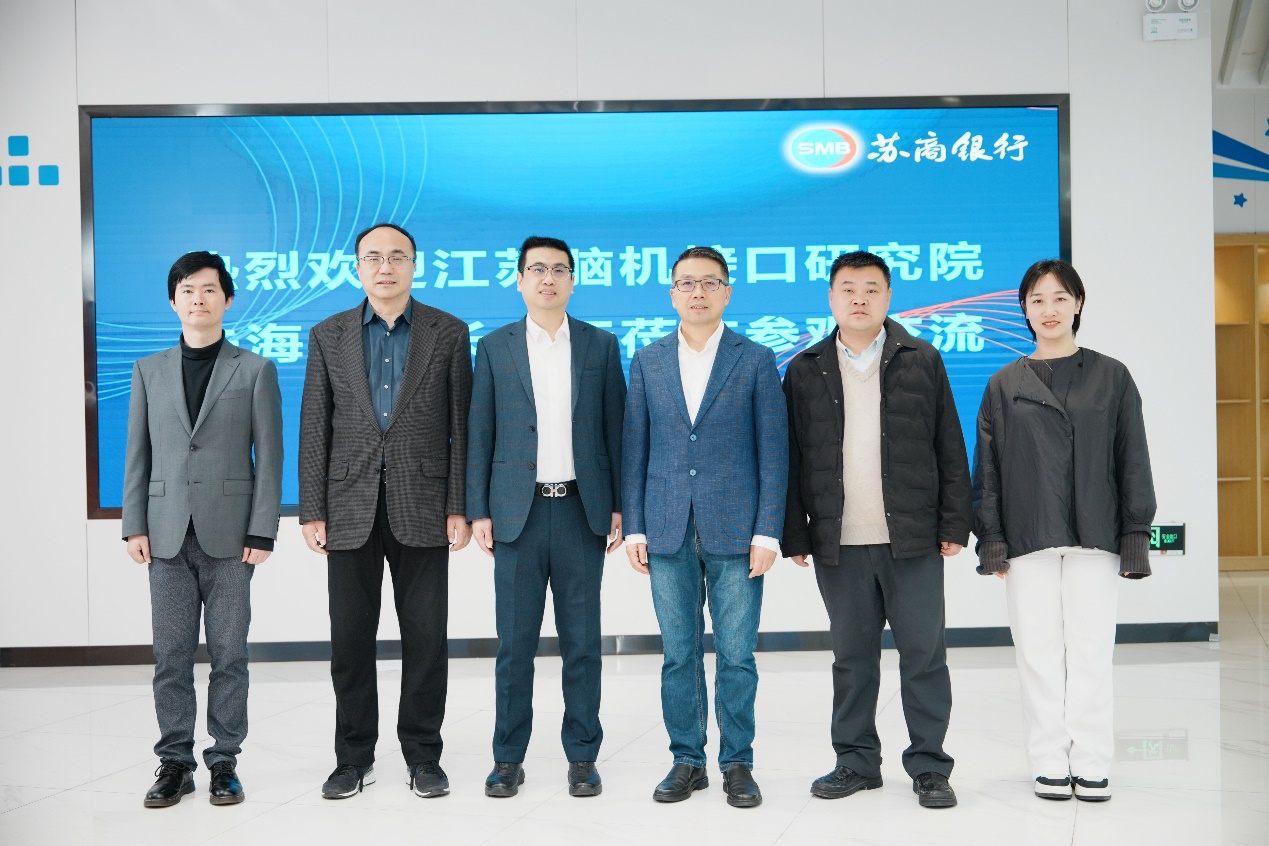
江苏脑机接口研究院到访苏商银行 共探投贷联动赋能产业创新新路径
Jin Rong Jie· 2026-02-09 10:20
Group 1 - The core focus of the meeting between Jiangsu Brain-Computer Interface Research Institute and SuShang Bank is to explore the investment and loan linkage model for the brain-computer interface industry, aiming to empower innovation and development in this sector [1][5] - Jiangsu Brain-Computer Interface Research Institute, established on September 28, 2025, has gathered 15 core member units, creating a collaborative innovation network that integrates government, industry, academia, research, and medical sectors [3] - Brain-computer interface technology establishes real-time communication and control systems between the human brain and external devices, representing a critical area in national technological competition and is included in China's "14th Five-Year Plan" as one of the six future industries [3] Group 2 - SuShang Bank has made significant progress in digital banking and inclusive financial services, with AI models deeply applied in credit approval and other core business modules [4] - The bank has supported over 4,000 high-tech, specialized, and unicorn enterprises with a total loan amount exceeding 80 billion yuan, focusing on the needs of startup technology companies [4] - The Vice President of Jiangsu Brain-Computer Interface Research Institute praised SuShang Bank's digital development and expressed willingness to collaborate in promoting the high-quality development of the brain-computer interface industry in Jiangsu [5]
淮安首笔“贷款+认股权”业务 落地洪泽
Jiang Nan Shi Bao· 2026-02-05 23:14
Core Viewpoint - Jiangsu Hongze Rural Commercial Bank has successfully completed the first "loan + equity option" business for Hongze Millennium Paper Co., marking a significant breakthrough in Huai'an's financial service model of investment and loan linkage [1] Group 1: Business Model Innovation - The "loan + equity option" service model was developed based on local industry characteristics and the actual needs of enterprises, providing urgent credit funds while granting the bank equity rights for a certain period [1] - This model allows the bank to share in the growth value of the enterprise, creating a dual channel of "credit support + equity income" for mutual benefit between the bank and the enterprise [1] Group 2: Company Profile and Market Position - Hongze Millennium Paper Co. is identified as a key enterprise with good growth potential in Hongze District, aligning with national industrial policy and having a broad development outlook [1] - The bank conducted thorough research and risk assessment to accurately match this innovative service to the enterprise, alleviating short-term financing pressure and strengthening long-term cooperation through equity ties [1] Group 3: Future Plans and Commitment - The bank's leadership expressed intentions to use the success of this business as a catalyst to continue serving the local economy, deepening cooperation with investment institutions and government departments [1] - There is a commitment to further improve the "debt + equity" comprehensive financial service model and expand service coverage to contribute to the high-quality economic development of Huai'an City [1]
零售之王对公发力:招行“开门红”的钱,正流向何方?
Xin Lang Cai Jing· 2026-02-04 10:41
Core Viewpoint - The focus of the bank's corporate business has shifted from "how much to lend" to "who to lend to" and "how to lend," indicating a deep transformation from a "fund intermediary" to a "value discoverer" [1][15][25] Group 1: Strategic Shift in Lending - The bank is restructuring its credit resources with unprecedented precision, withdrawing from traditional sectors and aligning with national strategies and industrial upgrades [1][15] - The emphasis on "structural optimization" over "total growth" marks a fundamental change in operational logic, prioritizing long-term asset quality and core customer relationships [3][16] - The bank's credit logic is evolving from reliance on historical assets to assessing future cash flows and industry chain positions [1][15][16] Group 2: Policy and Market Drivers - The People's Bank of China has mandated that commercial banks optimize credit structures to support technological innovation, advanced manufacturing, green development, and small and micro enterprises [1][15] - The persistent low net interest margin for commercial banks necessitates a shift from scale expansion to refined, structured credit allocation for survival and growth [2][15] Group 3: Risk Repricing and Resource Allocation - The bank is actively reallocating credit resources, focusing on high-tech enterprises with core technologies while reducing exposure to high-risk sectors [5][18] - The bank has significantly increased support for "specialized, sophisticated, and innovative" enterprises, concentrating resources on key areas such as artificial intelligence and biomedicine [5][18] Group 4: Innovative Financial Products - New financial products, such as loans based on "future intellectual property pledges" and "order financing," are being introduced to cater to industries with long R&D cycles [5][18] - The scope of green finance has expanded to support energy-saving technology upgrades for small suppliers in various industries, marking a shift from large-scale projects to micro-level production activities [19] Group 5: Supply Chain Financing and Industry Integration - The bank is enhancing its supply chain financing model, allowing financing based on stable, verifiable orders and cash flows, even for companies with limited tangible assets [20][21] - A "loan-equity linkage" service is being promoted for rapidly growing tech companies, aligning debt financing with equity investments from reputable venture capital firms [22] Group 6: Evolution of Risk Management - The bank is undergoing a fundamental evolution in its risk management approach, shifting from retrospective validation to forward-looking assessments of industry trends and enterprise prospects [23][24] - A more dynamic and proactive monitoring system is being implemented, focusing on R&D intensity, key patent statuses, and market iteration speeds for technology firms [24][25] Group 7: Human Capital and Training - A large-scale "business personnel empowerment" initiative is being launched to transform client managers into industry consultants capable of providing comprehensive solutions [25] - The success of this strategic transformation will depend on the effectiveness of human capital investment and the ability to adapt to new operational paradigms [25]

165个市区两级重点融资需求项目发布
Bei Jing Qing Nian Bao· 2026-02-03 18:39
Core Viewpoint - The Beijing Municipal Financing Work Conference announced 165 key financing projects with a total investment of approximately 285.1 billion yuan and a financing demand of about 76.3 billion yuan [1][3]. Group 1: Project Overview - The 165 key financing projects are categorized into three types: - Industrial Development Projects (138 projects) with a total investment of about 164.1 billion yuan and a financing demand of approximately 57.3 billion yuan [3]. - Infrastructure Projects (10 projects) with a total investment of around 65.2 billion yuan and a financing demand of about 7.1 billion yuan [3]. - Livelihood Improvement Projects (17 projects) with a total investment of approximately 55.7 billion yuan and a financing demand of about 12 billion yuan [3]. Group 2: Financing Support Strategies - Financial institutions are required to enhance support for investment and consumption, focusing on four key areas: - Expanding domestic demand by implementing financial policies to meet loan needs of individuals and businesses [4]. - Promoting the construction of a modern industrial system by innovating financial products to support technology-driven enterprises [4]. - Coordinating regional development by increasing financial support for key regional projects [4]. - Improving livelihood and urban governance by developing diverse financial products tailored to public service and infrastructure needs [4]. Group 3: Ongoing Financing Initiatives - The Beijing Municipal Development and Reform Commission will continuously improve financing services by rolling out a list of major projects with financing needs, enhancing the effectiveness and timeliness of financing connections [5]. - There will be a focus on policy support services to lower financing costs for small and micro enterprises, alongside optimizing the business environment to facilitate better communication and support for financing needs [5].
金融与科企“湘伴前行”
Jin Rong Shi Bao· 2026-01-27 03:42
Core Viewpoint - Hunan Province is actively promoting technological innovation and aims to become a strong technology province, with the transformation of scientific and technological achievements as a core engine for development [1] Group 1: Financial Support Initiatives - The "Xiangban Qianxing" plan, launched by the People's Bank of China Hunan Branch and other departments, aims to establish a long-term strategic cooperation relationship among government, finance, and enterprises, providing diversified financial services for technology companies [1][2] - By the end of November 2025, loans to technology enterprises in Hunan Province increased by 12.8%, outpacing the overall loan growth rate by 7.1% [1] - More than 10 financial institutions signed medium to long-term cooperation agreements with 127 enterprises, with a total credit amount of 3.75 billion yuan and loans issued amounting to 1.66 billion yuan [2] Group 2: Innovative Financing Models - The "Xiangban Qianxing" plan promotes innovative financing models such as "investment-loan linkage," providing "accompanying" financial services for early-stage and growth-stage technology companies [3] - The establishment of the Jin Furong Investment Fund aims to create a comprehensive fund matrix to increase investment in technology innovation [4] - The plan includes a combination of policy supports to encourage financial institutions to lend to technology companies, including a special re-loan quota of no less than 10 billion yuan [5] Group 3: Risk Mitigation and Insurance - The integration of technology loans with technology insurance is being promoted to support companies during the trial production phase, providing risk guarantees and credit support [6] - The Hunan Province Technology Financing Guarantee Company has provided special guarantee loans totaling 2 billion yuan to over 340 technology companies [6] Group 4: Innovation Evaluation and Credit Products - The promotion of an "innovation points system" allows banks to use innovation scores as a reference for credit, integrating various data sources to create tailored credit products [7] - By the end of November 2025, over 2,500 technology companies received more than 15 billion yuan in loans through specialized credit products [7] - The establishment of a dedicated evaluation system for technology companies has led to an increase in internal ratings for over 400 companies based on market prospects and R&D capabilities [7]
浙江东方分析师会议-20260124
Dong Jian Yan Bao· 2026-01-24 07:22
Investment Rating - The report does not explicitly state an investment rating for the multi-financial industry or the specific company being analyzed [2]. Core Insights - The private equity business of the company is primarily executed by its wholly-owned subsidiary, with a management scale of approximately 26.7 billion and a cumulative management scale exceeding 33.7 billion [23]. - The investment focus is on high-end equipment, new energy, new materials, and intelligent manufacturing, with these sectors accounting for over 75% of the number of projects and 80% of the investment amount [23]. - The company has seen a significant increase in fund management scale in recent years, with government contributions rising to 30%-70% in newly established funds post-2021 [23]. - The overall MOIC (Multiple on Invested Capital) for all existing funds is approximately 1.45 times [24]. - The company has invested in around 150 projects, with 31 achieving IPO exits across various stock exchanges, including the Shanghai Stock Exchange and the Hong Kong Stock Exchange [26]. - The company anticipates launching 2-3 new funds in 2026, with a focus on industrial investment directions and collaboration with local governments and financial institutions [27]. - The company reported significant growth in the first three quarters of 2025, driven by improved profitability of its financial subsidiaries and substantial increases in equity investment income [27]. Summary by Sections 1. Basic Research Information - The research was conducted on January 22, 2026, focusing on the multi-financial industry and the company Zhejiang Dongfang [12][16]. 2. Detailed Research Institutions - Participating institutions included Guangfa Securities, CITIC Bank, Harvest Fund, BOC International, and Caitong Fund [17]. 3. Research Institution Proportions - The report does not provide specific data on the proportions of research institutions involved [22]. 4. Main Content Information - The private equity business is structured as a comprehensive ecosystem involving direct investment, mother funds, and industrial funds, with a focus on collaboration with AIC institutions and local government [23]. - The company has adjusted its investment strategy in response to changing market conditions, with a decrease in the minimum return threshold from 8% to 5%-6% [24]. - The company is exploring various exit strategies due to market environment impacts, with a focus on maintaining a steady operational performance and optimizing asset structure for sustainable profitability [27].
浙江宁波政协委员袁涌泉:做初创企业的“成长合伙人”
Xin Lang Cai Jing· 2026-01-22 05:49
Core Viewpoint - The Ningbo Municipal Political Consultative Conference emphasizes the importance of supporting small and startup enterprises as "growth partners" to address their common challenges [1][4]. Group 1: Challenges Faced by Startups - Startups are facing four main challenges: lack of funds, lack of personnel, lack of business opportunities, and lack of networking [3]. Group 2: Solutions Proposed - For the lack of funds, the "Initial Five Loans" are recommended, which include Partner Loan, Talent Loan, Executive Loan, Salary Loan, and Technology Loan, along with tailored financing solutions [3]. - To address the lack of personnel, free access to the "HR Direct Recruitment" platform and "Bobo Zhiliao" for legal, financial, and tax services is suggested, along with a "Digital Human Resources 3.0" system for improved HR management [3]. - To tackle the lack of business opportunities, the "Beautiful Life" platform is proposed to connect with end customers, and a "Cross-border E-commerce Package" for comprehensive support is recommended [3]. - For the lack of networking, a talent service studio and innovation support center composed of political consultative committee members at various levels will be established to integrate various service resources [3].
去年深圳8家银行密集“换将”,新行长们的角色之变
Nan Fang Du Shi Bao· 2026-01-21 06:19
Core Insights - Shenzhen's "14th Five-Year Plan" aims to establish a global "Industrial Financial Center," raising expectations for local financial institutions, particularly banks [1] - The recent leadership changes in at least eight commercial banks in Shenzhen reflect a strategic shift towards enhancing the role of these institutions in the financial ecosystem [1] Leadership Changes - The appointment of Xiong Tao as the head of the Industrial and Commercial Bank of China (ICBC) Shenzhen branch marks a significant leadership transition, emphasizing his experience in corporate banking and technology finance [2][3] - Ma Mingjun, previously the head of the Tianjin branch of the Bank of China, has been appointed to lead the Shenzhen branch, indicating a strategic focus on the Guangdong-Hong Kong-Macao Greater Bay Area [3] - Wang Xinghai has taken over as the head of the Shenzhen branch of China Merchants Bank, showcasing the bank's commitment to internal talent development and stability [4][6] - Zhang Chaohui's appointment as the head of Ping An Bank's Shenzhen branch highlights the importance of this branch within the bank's overall strategy [5][6] Focus on Technology Finance - Several new leaders in Shenzhen's banking sector are emphasizing technology finance, with initiatives aimed at supporting key sectors such as semiconductors and advanced manufacturing [8][9] - The establishment of specialized financial products for technology enterprises is a priority for banks like Shanghai Pudong Development Bank, which aims to support the entire lifecycle of tech companies [9] - Chen Dapeng, head of Minsheng Bank's Shenzhen branch, aims to tailor financial services to the unique needs of the innovation-driven economy in Shenzhen [10][11] Strategic Importance of Shenzhen - Shenzhen's banking sector is positioned as a critical area for talent development and strategic implementation, serving as a testing ground for financial innovations [12][13] - The city is recognized as a key player in China's financial landscape, with total banking assets reaching 14.25 trillion yuan, ranking third among major cities [14] - The "14th Five-Year Plan" emphasizes the need for banks to transition from traditional financing to integrated services, including venture capital and cross-border finance [15]
观察|去年深圳8家银行密集“换将”,新行长们的角色之变
Nan Fang Du Shi Bao· 2026-01-21 06:03
Core Viewpoint - Shenzhen's "15th Five-Year Plan" aims to establish itself as a global "industrial financial center," raising expectations for local financial institutions, particularly banks, in their roles and responsibilities [22][23]. Group 1: Leadership Changes in Shenzhen Banks - Over the past year, at least eight commercial banks in Shenzhen have changed their leadership, including major state-owned banks and leading joint-stock banks [2]. - The appointment of Xiong Tao as the head of the Industrial and Commercial Bank of China (ICBC) Shenzhen branch reflects a strategic move to enhance the bank's focus on technology and innovation [2][4]. - Similarly, Ma Mingjun has been appointed as the head of the Bank of China Shenzhen branch, indicating a strengthened commitment to the Guangdong-Hong Kong-Macao Greater Bay Area [4][7]. Group 2: Key Appointments and Their Implications - Wang Xinghai, a veteran of China Merchants Bank, has taken over as the head of the Shenzhen branch, showcasing the bank's internal talent development strategy [9]. - Ping An Bank has also seen significant leadership changes, with Zhang Chaohui becoming the head of the Shenzhen branch, emphasizing the importance of this branch within the bank's overall strategy [11]. - New leaders at various banks, such as Shang Wencheng of China Everbright Bank and Yuan Rui of Shanghai Pudong Development Bank, are focusing on technology finance and innovative service models to meet the needs of Shenzhen's tech-driven economy [12][15]. Group 3: Strategic Focus on Technology Finance - The new leaders are expected to align their banks' strategies with Shenzhen's identity as a technology innovation hub, emphasizing the importance of "investment-loan linkage" services [12][23]. - The financial institutions are being urged to develop comprehensive service models that support the entire lifecycle of technology enterprises, particularly in critical sectors like semiconductors and advanced manufacturing [12][15]. - The shift towards a more integrated financial service approach reflects a broader trend in which banks are expected to act as "deep partners" and "comprehensive service providers" rather than just capital providers [23]. Group 4: Challenges and Future Directions - The banks in Shenzhen face challenges in transitioning from traditional financing to more complex service models, requiring enhanced risk management and understanding of emerging technologies [23]. - There is a growing need for collaboration with venture capital, insurance, and other financial institutions to meet the comprehensive needs of enterprises [23]. - The emphasis on long-term investment strategies and the establishment of a long-term assessment mechanism are critical for supporting sustainable growth in the technology sector [23].