
智能场内物流机器人

Search documents
申万宏源助力浙江凯乐士科技集团(2729.HK)在香港联交所主板成功上市
申万宏源证券上海北京西路营业部· 2026-03-26 03:01
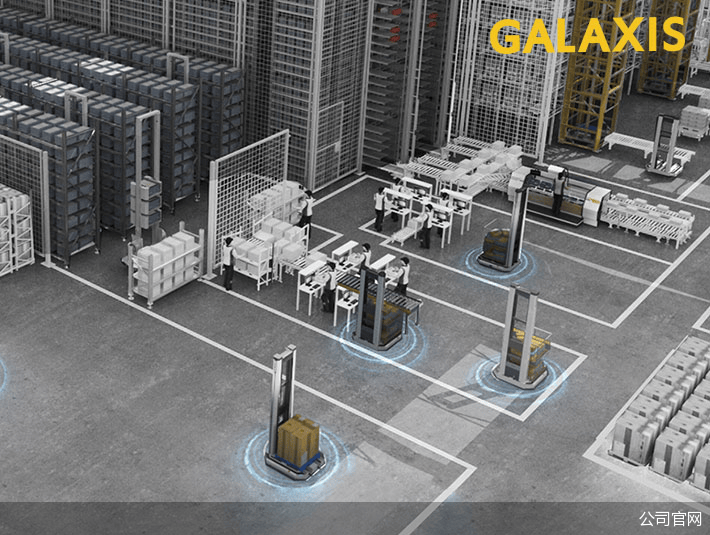
Group 1 - The company, Zhejiang Kailesi Technology Group Co., Ltd., successfully listed on the Hong Kong Stock Exchange on March 24, 2026, with a share price of HKD 16.66 and a base issuance scale of HKD 613 million [2] - Kailesi Technology is a comprehensive provider of intelligent in-warehouse logistics robots, offering a diverse range of products including Multi-directional Shuttle Robots (MSR), Autonomous Mobile Robots (AMR), and Conveyor Sorting Robots (CSR) [3] - The company is recognized as one of the mature manufacturers in the intelligent in-warehouse logistics robot industry, holding a market share of 1.6% among the top five comprehensive intelligent in-warehouse logistics robot companies in China, based on projected revenue for 2024 [4] Group 2 - Shenwan Hongyuan Securities (Hong Kong) acted as the joint bookrunner and lead underwriter for the issuance, demonstrating professionalism and market expertise [4] - The company has been dedicated to innovation in warehouse logistics automation for over a decade, showcasing a strong commitment to research and development in robotic technology [4]


凯乐士科技(02729):IPO申购指南
Guoyuan International· 2026-03-16 14:49
Investment Rating - The report suggests a cautious subscription for the company, Kales Technology (2729.HK) [2][3]. Core Insights - The company is a mature player in the intelligent in-house logistics robot industry, with a diverse portfolio of self-developed robotic products and a market share of 1.6% among the top five comprehensive intelligent in-house logistics robot companies in China as of 2024 [2]. - The global intelligent in-house logistics market is projected to grow from RMB 270.6 billion in 2020 to RMB 455.1 billion in 2024, with a compound annual growth rate (CAGR) of 13.7% from 2025 to 2030 [2]. - The intelligent logistics robot market is expected to increase from RMB 42.6 billion in 2020 to RMB 118.3 billion in 2024, with a CAGR of 19.4% from 2025 to 2030 [2]. Financial Performance - The company's total revenue for 2022, 2023, and 2024 was RMB 656.9 million, RMB 550.8 million, and RMB 721.4 million, respectively. The annual losses narrowed from RMB 209.6 million in 2022 and RMB 241.6 million in 2023 to RMB 178.1 million in 2024 [3]. - For the nine months ending September 30, 2024, the company reported a loss of RMB 141.3 million, which decreased to RMB 134.5 million in the same period for 2025 [3]. - The IPO price midpoint is set at HKD 18.4 per share, corresponding to a price-to-sales (P/S) ratio of 9.6 times for 2024 [3].
浙江凯乐士科技集团股份有限公司(H0278) - 聆讯后资料集(第一次呈交)
2026-03-07 16:00
香港聯合交易所有限公司與證券及期貨事務監察委員會對本聆訊後資料集的內容概不負責,對其準確性或完整性 亦不發表任何意見,並明確表示概不就因本聆訊後資料集全部或任何部分內容而產生或因倚賴該等內容而引致的 任何損失承擔任何責任。 Zhejiang Galaxis Technology Group Co., Ltd. 浙江凱樂士科技集團股份有限公司 (「本公司」) (於中華人民共和國註冊成立的股份有限公司) 的聆訊後資料集 警 告 本聆訊後資料集乃根據香港聯合交易所有限公司(「聯交所」)與證券及期貨事務監察委員會(「證監 會」)的要求而刊發,僅用作提供資訊予香港公眾人士。 本聆訊後資料集為草擬本,其內所載資訊並不完整,亦可能會作出重大變動。您閱覽本文件,即代表 您知悉、接納並向本公司、其聯席保薦人、保薦人兼整體協調人、整體協調人、顧問或包銷團成員表 示同意: 倘於適當時候向香港公眾人士提出要約或邀請,有意投資者務請僅依據與香港公司註冊處處長註冊的 本公司招股章程作出投資決定;有關文本將於發售期內向公眾公佈。 (a) 本文件僅為向香港公眾人士提供有關本公司的資料,概無任何其他目的;投資者不應根據本文 件中的資料作出任何 ...
负重赴港的凯乐士,冲刺“物流机器人第一股”
Sou Hu Cai Jing· 2026-01-05 13:53
Core Viewpoint - Zhejiang Kailesi Technology (Kailesi) is seeking to go public on the Hong Kong Stock Exchange, potentially becoming the first logistics robotics stock in Hong Kong, backed by logistics giant SF Express, which holds an 8.4588% stake, enhancing Kailesi's market visibility and credibility [1][3]. Industry Overview - The global smart indoor logistics robot market is projected to grow from 42.6 billion yuan in 2020 to 118.3 billion yuan by 2024, with an expected compound annual growth rate (CAGR) of 19.4% from 2025 to 2030. The Chinese market is anticipated to expand from 13.9 billion yuan in 2020 to 44 billion yuan by 2024, capturing 37.2% of the global market [4]. - Southeast Asia and the Middle East are identified as key growth regions, with market sizes expected to reach approximately 3 billion yuan and 5.3 billion yuan in 2024, respectively, and projected to grow significantly by 2030 [4]. Company Positioning - Kailesi positions itself as a midstream provider of comprehensive smart indoor logistics robots, focusing on three core types: multi-directional shuttles, autonomous mobile robots, and sorting conveyors, aimed at addressing traditional warehousing inefficiencies [3][4]. - As of 2024, Kailesi holds a 1.6% market share, ranking fifth in the industry, with a notable revenue increase of 60.3% year-on-year, reaching 552 million yuan in the first nine months of 2025 [4]. Financial Performance - Despite impressive growth, Kailesi faces significant profitability challenges, with cumulative net losses of 629 million yuan from 2022 to 2024 and a negative net profit margin for three consecutive years. The company reported a net loss of 134 million yuan in the first nine months of 2025 [5][6]. - The company's revenue primarily comes from robot and system sales, which have consistently accounted for over 95% of total revenue. However, the gross margin for multi-functional systems remains low, while single-function robot deployments have a higher gross margin but represent a smaller revenue share [6]. Future Prospects - Kailesi aims to leverage the IPO to alleviate financial pressures and support business development, with plans to use the raised funds for expanding core product lines, enhancing R&D, increasing production capacity, and entering global markets [7][8].

凯乐士科技递表港交所 亏损收窄未止亏
Jing Ji Guan Cha Bao· 2026-01-04 09:49
Core Viewpoint - Zhejiang Kailesi Technology Group Co., Ltd. (referred to as "Kailesi") has submitted a listing application to the Hong Kong Stock Exchange, aiming to redefine supply chain operations through advanced robotics technology [1] Company Overview - Kailesi is a comprehensive provider of intelligent in-warehouse logistics robots, offering a diverse range of robotic products across three core product lines: Multi-directional Shuttle Robots (MSR), Autonomous Mobile Robots (AMR), and Conveying Sorting Robots (CSR) [1] - The company has established itself as one of the mature players in the intelligent in-warehouse logistics robot industry, ranking fifth among China's top five comprehensive intelligent in-warehouse logistics robot companies with a market share of 1.6% as of 2024 [1] Financial Performance - Kailesi's revenue for the years 2022 to 2024 is reported as follows: 657 million yuan in 2022, 551 million yuan in 2023, and 721 million yuan in 2024, with revenue for the nine months ending September 30, 2025, reaching 552 million yuan [2] - The company has faced financial challenges, recording net losses of 210 million yuan in 2022, 242 million yuan in 2023, and 178 million yuan in 2024, totaling cumulative losses of 629 million yuan [2] - Adjusted net losses (excluding share-based payments and changes in redeemable liabilities) for the same period are reported as 117 million yuan in 2022, 123 million yuan in 2023, and 50 million yuan in 2024, with a net loss of 14 million yuan for the nine months ending September 30, 2025 [2] Industry Positioning - Kailesi operates in the midstream of the industry, leveraging its expertise in system design to combine advanced robotics technology with intelligent software, thereby providing flexible and scalable automation solutions [2] - The company's solutions aim to transform traditional warehouses into intelligent facilities that meet modern business demands while significantly reducing reliance on manual labor and rigid infrastructure [2]
凯乐士赴港IPO:三年多累亏超7亿元、负债率连飙至160%,第一大客户项目因地缘冲突延迟验收
Zhong Guo Neng Yuan Wang· 2026-01-04 09:37
Core Viewpoint - Zhejiang Kailesi Technology Group has submitted an application to list on the Hong Kong Stock Exchange, aiming to raise funds amid ongoing losses due to rapid expansion and significant R&D investments [1][2]. Company Overview - Established in 2016 and headquartered in Jiaxing, Zhejiang, Kailesi specializes in multi-directional shuttle cars (MSR), autonomous mobile robots (AMR), and conveyor sorting robots (CSR), serving 29 industries including automotive, new energy, 3C electronics, pharmaceuticals, and e-commerce [1]. - According to Frost & Sullivan, Kailesi ranks fifth in China's integrated intelligent in-warehouse logistics robot market with a market share of 1.6%, and leads the narrow aisle AMR segment with a 19.3% shipment market share [1]. Financial Performance - Revenue for the years 2022 to 2024 and the first three quarters of 2025 was reported as follows: 657 million, 551 million, 721 million, and 552 million yuan respectively [1]. - Net losses during the same periods were 210 million, 242 million, 178 million, and 134 million yuan, totaling approximately 760 million yuan over three years and nine months [1][2]. - Adjusted net losses (non-IFRS) decreased from 117 million yuan in 2022 to 50.5 million yuan in 2024, further reducing to 13.76 million yuan in the first three quarters of 2025, indicating a trend of narrowing losses [2]. Debt and Liquidity - Kailesi's net debt at the end of each reporting period was 645 million, 894 million, 1.066 billion, and 1.196 billion yuan, with total liabilities increasing from 2.577 billion to 3.121 billion yuan [2]. - The asset-liability ratios were reported as 133.4%, 141.57%, 153.12%, and 162.13%, indicating a consistent trend of exceeding 100% over the last three years [2]. Operational Challenges - The company acknowledges liquidity risks and has implemented measures such as accelerating receivables collection and optimizing inventory turnover, but cannot guarantee future liquidity stability [3]. - Operating cash flows remained negative throughout the reporting periods, with outflows of 94.3 million, 97 million, 10.8 million, and 35.3 million yuan [3]. Market Competition - The domestic intelligent in-warehouse logistics robot market has over 50 AMR suppliers, with increasing competition potentially leading to price declines and reduced profit margins [3]. - Kailesi faces uncertainty regarding technology routes, particularly with emerging automated storage systems that may reduce demand for integrated robotic systems [3]. Customer Concentration - The top five customers contributed 48.0%, 49.7%, 34.3%, and 27.4% of revenue from 2022 to 2025, with the largest customer accounting for 14.7%, 14.0%, 10.8%, and 6.0% respectively [4]. - The company cannot guarantee ongoing business relationships with existing customers, which poses risks to cash flow and financial stability [4]. Supply Chain and Quality Control - Since 2022, raw material costs have consistently accounted for over 80% of sales costs, with potential supply disruptions impacting strategic implementation [4]. - Kailesi cannot ensure effective quality control, which may lead to product defects and reputational damage [4]. Future Outlook - The company anticipates continued net losses and negative operating cash flows in 2025 due to significant investments in R&D, market expansion, and new product development [5].
凯乐士科技冲刺港交所IPO:三年合亏6.3亿元,年增速与毛利率远低于行业均值
Shen Zhen Shang Bao· 2025-07-09 08:29
Core Viewpoint - Zhejiang Kailesi Technology Group Co., Ltd. is planning to list on the Hong Kong Stock Exchange, aiming to raise funds for product development, technology enhancement, capacity expansion, global market strategy, and operational funding [1] Group 1: Company Overview - Kailesi Technology specializes in intelligent in-house logistics robots, offering a full range of products including Multi-directional Shuttle Robots (MSR), Autonomous Mobile Robots (AMR), and Conveying Sorting Robots (CSR) [2] - The company is one of the few that has mastered full-stack robotic technology and offers a comprehensive self-developed product lineup, covering all core functions of in-house logistics [2] Group 2: Market Growth vs. Company Performance - The global intelligent in-house logistics robot market is projected to grow from RMB 42.6 billion in 2020 to RMB 118.3 billion in 2024, and reach RMB 344.1 billion by 2030 [2] - However, Kailesi Technology's revenue growth has lagged behind the industry, with revenues of RMB 660 million in 2022, declining to RMB 550 million in 2023, and only rising to RMB 720 million in 2024, resulting in a compound annual growth rate of 4.8%, significantly below the market's 33.4% [2] Group 3: Financial Performance - The company has reported losses for three consecutive years, with annual losses of RMB 210 million, RMB 240 million, and RMB 180 million from 2022 to 2024, totaling RMB 630 million [3] - Despite a reduction in losses in 2024, the ongoing losses indicate an immature profit model [3] Group 4: Cost Control Measures - In an effort to reduce losses, the company initiated a cost-cutting strategy in 2024, reducing sales expenses from RMB 690 million in 2022 to RMB 410 million in 2024 (a 41% decrease), R&D expenses from RMB 950 million to RMB 620 million (a 34% decrease), and administrative expenses from RMB 780 million to RMB 610 million (a 22% decrease) [3] - Despite these efforts, the company's gross margin remained low, with figures of 15.7%, 16.6%, and 15.7% from 2022 to 2024, well below the industry average of 27.3% [3] Group 5: R&D Investment Trends - R&D investment has decreased over the past three years, from RMB 946 million in 2022 to RMB 620 million in 2024, a cumulative reduction of 34% [4] - In 2024, R&D expenses accounted for 8.6% of revenue, nearly equal to administrative expenses [4] Group 6: Customer Concentration and Stability - The concentration of customers has decreased, but the customer structure remains unstable, with the top five customers accounting for 48.0%, 49.7%, and 34.3% of revenue from 2022 to 2024 [5] - The largest customer's revenue share has declined, representing only 10.8% of total revenue in 2024, with no single customer generating over RMB 100 million annually [6]