材料科学研究

Search documents
国际材料研究学会联合会总部落户北京 2026年全面启动运行
Sou Hu Cai Jing· 2025-12-18 14:45
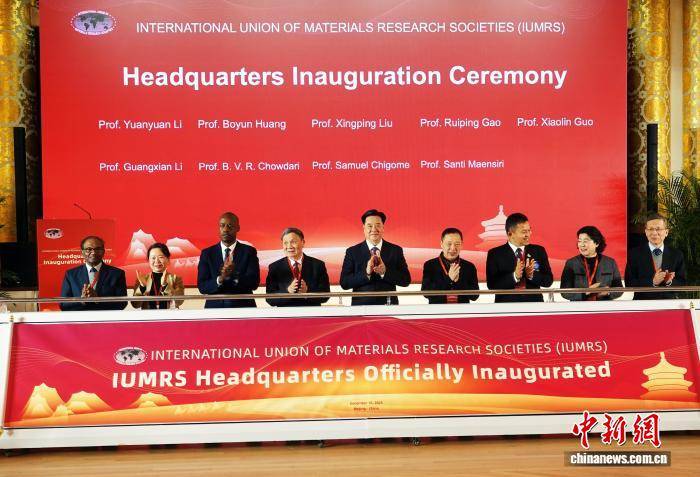
Core Points - The International Union of Materials Research Societies (IUMRS) headquarters has officially relocated to Beijing, China, marking a significant development in the global materials science community [1][3][4] - The headquarters is set to complete legal registration, financial account transfers, and operational handover by the end of December 2025, with full operations commencing on January 1, 2026, managed by the Chinese Materials Research Society (C-MRS) [3][4] Group 1 - The IUMRS was established in 1991 and is a key international academic organization in the field of materials science and engineering, comprising societies from Asia, Europe, the Americas, and Africa [3] - The Chinese Materials Research Society submitted a formal application to host the IUMRS headquarters in November 2023, demonstrating its capability and commitment through active participation in various organizational affairs and international exchanges over the following two years [3][4] - The decision to relocate the headquarters to Beijing was unanimously approved by the IUMRS Executive Committee in September 2025 and formally announced at the World Materials Congress in October 2025 [4] Group 2 - The relocation of the IUMRS headquarters to Beijing is expected to significantly enhance China's international influence in the field of materials science and deepen international collaboration [4]

【中国新闻网】中国科学院东莞材料科学与技术研究所成立
Zhong Guo Xin Wen Wang· 2025-12-07 00:07
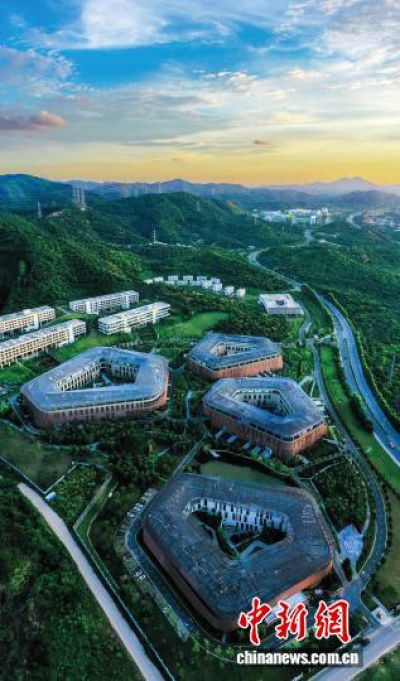
Core Insights - The establishment of the Dongguan Institute of Materials Science and Technology by the Chinese Academy of Sciences marks a significant development in the field of materials research in China [2] - This institute is the second specialized research institute established by the Chinese Academy of Sciences within a short period, following the Industrial Artificial Intelligence Research Institute in Nanjing [2] Group 1 - The Dongguan Institute is a collaborative effort between the Chinese Academy of Sciences, Guangdong Province, and Dongguan City [2] - The institute will focus on strategic and frontier material exploration as well as fundamental scientific research [2] - Research areas will include information materials, energy materials, functional ceramics, and metal materials [2] Group 2 - The goal is to create a new materials research center with global influence and leadership [2]
中国科学技术大学最新研究登上Cell头条
生物世界· 2025-06-28 23:25
Core Viewpoint - A recent study from the University of Science and Technology of China published in the journal Matter indicates that an iron-rich diet enhances the macro strength and toughness of bamboo rat tooth enamel, improving its damage resistance. This research provides new insights for the design of advanced structural materials and offers a novel approach to enhance human tooth enamel [3][6][9]. Group 1 - The study demonstrates that an iron-rich diet can significantly improve the mechanical properties of bamboo rat teeth, specifically their enamel strength and toughness [3][6]. - The research team successfully cultivated bamboo rats with iron-rich incisors and systematically studied the mechanical role of iron in tooth enamel [6][7]. - The findings suggest that the combination of compositional adjustments and graded structural advantages can synergistically enhance strength and toughness, providing new insights for advanced material design [9]. Group 2 - The study highlights the potential of dietary strategies to incorporate ions into the nanoscale structure of human tooth enamel, which could mitigate health risks associated with tooth fractures and cavities [9]. - The research indicates that the additional iron in the enamel of the bamboo rat enhances hardness, wear resistance, and damage resistance due to the aggregation of iron compounds in the intercrystalline domains [7]. - The results emphasize the importance of understanding how trace elements affect macro properties, which remains a relatively unexplored area in the field of biomaterials [5].