
校外托管

Search documents
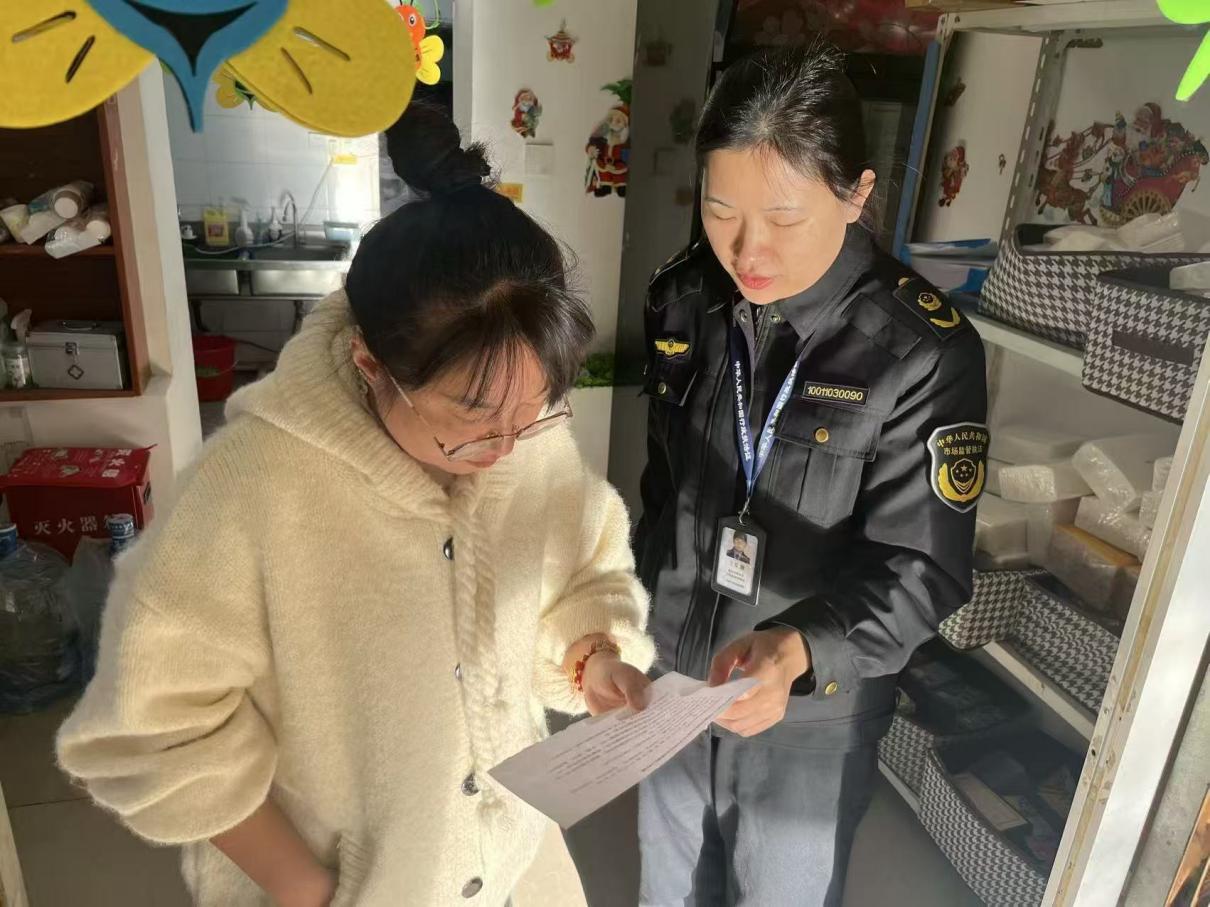
让“小饭桌”不负所“托” 南京市溧水区市场监管局加强校外托管机构规范化管理
Xin Lang Cai Jing· 2026-01-05 08:25
Core Viewpoint - The article discusses the regulatory efforts by the Lishui District Market Supervision Administration in Nanjing to enhance food safety management in off-campus meal service institutions, commonly referred to as "small dining tables," to ensure the safety of meals provided to students [1]. Group 1: Regulatory Actions - The Lishui District Market Supervision Administration is conducting a comprehensive "net-style" investigation to understand the operational status of off-campus meal service institutions, including their business qualifications and food service conditions [3]. - A total of 21 meal service institutions have been identified, serving approximately 300 students, with 4 institutions failing to complete the necessary small catering registration due to missing documentation and operating in different locations [3]. Group 2: Food Safety Guidance - The administration is implementing a "health check" style of guidance, focusing on various aspects of food safety, including personnel, environment, raw materials, utensils, and preparation processes [5]. - Institutions are being provided with standardized food sample labels and record templates, and are required to maintain food samples of at least 125 grams for a minimum of 48 hours to ensure traceability [5]. Group 3: Future Plans - The Lishui District Market Supervision Administration plans to increase inspection efforts, ensuring that every new meal service institution is registered and regulated, thereby achieving comprehensive oversight [5]. - The administration will conduct targeted food safety training for the off-campus meal service industry to promote standardized development and safeguard the health of children [5].

日照高新区创新“三维共治”,确保“托管”不“脱管”
Qi Lu Wan Bao Wang· 2025-06-19 10:29
Core Insights - The article discusses the increasing demand for off-campus care services due to the implementation of the "double reduction" policy, while highlighting the existing regulatory challenges such as unclear responsibilities, overlapping departmental duties, and significant safety risks [1] Group 1: Organizational Structure and Collaborative Management - The Rizhao High-tech Zone has strengthened its organizational framework to address issues of fragmented management and unclear responsibilities by implementing cross-departmental joint supervision, achieving 100% coverage in safety hazard inspections [2] - A special task force for off-campus care institutions has been established, involving seven departments to create unified inspection standards and a comprehensive problem tracking system, resulting in a safety hazard rectification rate increasing from below 40% to 98% [2] Group 2: Institutional Safeguards and Long-term Regulation - The Rizhao High-tech Zone has introduced the first management regulations for off-campus care institutions, establishing strict entry requirements and a standardized regulatory framework to prevent substandard institutions from operating [3] - The number of standardized care institutions has increased by 35% year-on-year, while the number of problematic institutions has decreased by 72%, indicating a shift towards high-quality development in the industry [3] Group 3: Collaborative Governance and Digital Empowerment - A safety protection system has been established that integrates family, school, and community collaboration with digital tools, enhancing the governance model from unilateral control to multi-party cooperation [4] - The "Tuokang e-management" platform has been developed to facilitate comprehensive oversight, achieving a 100% resolution rate for public inquiries and complaints, and a 95% satisfaction rate among users [4]