民族手工艺

Search documents
从“助传承”到“促转型”:金融护航民族手工技艺薪火相传
Jin Rong Shi Bao· 2025-11-27 02:32
Core Insights - The article highlights the revival of traditional ethnic handicrafts in Qinghai Province, particularly through companies like Lelema and Zanshidai, which leverage local cultural heritage to create marketable products [1][2][10] - Financial support from local banks, especially Henan County Rural Commercial Bank, plays a crucial role in sustaining these businesses and facilitating the transmission of traditional skills [3][5][9] Group 1: Company Overview - Lelema focuses on integrating traditional Mongolian and Tibetan wool weaving techniques into everyday products, aiming to preserve these crafts while providing income opportunities for local women and marginalized groups [2][3] - Zanshidai specializes in Tibetan incense, which has a history of over 1300 years, and has successfully expanded its market reach to Europe and major Chinese cities [4][5] - Amewoo, another company, produces wool blankets and has adopted semi-automated production methods to enhance efficiency and meet market demands [7][8] Group 2: Financial Support and Challenges - Lelema received a loan of 1 million yuan from Henan County Rural Commercial Bank in its early stages, which enabled the purchase of a stable operational facility and supported the acquisition of raw materials [3][9] - Zanshidai has benefited from multiple loans, including a significant 2 million yuan loan, which has been crucial for its research and development efforts in incense production [5][6] - Amewoo faced challenges with cash flow and inventory management, but received a 600,000 yuan loan to stabilize operations and fulfill new orders, leading to increased revenue [8][9] Group 3: Market Trends and Adaptation - The companies are adapting to modern consumer preferences by innovating product lines and exploring online sales channels, which has helped them maintain operations despite external pressures [10] - The rise of low-quality incense products in the market has prompted Zanshidai to focus on custom incense production, emphasizing quality and unique offerings [6][8] - Amewoo's sales have declined by 30% recently, highlighting the need for continuous adaptation and financial support to navigate market fluctuations [7][8]
甘肃为民族地区与国际市场“牵线搭桥”
Zhong Guo Xin Wen Wang· 2025-10-16 10:36
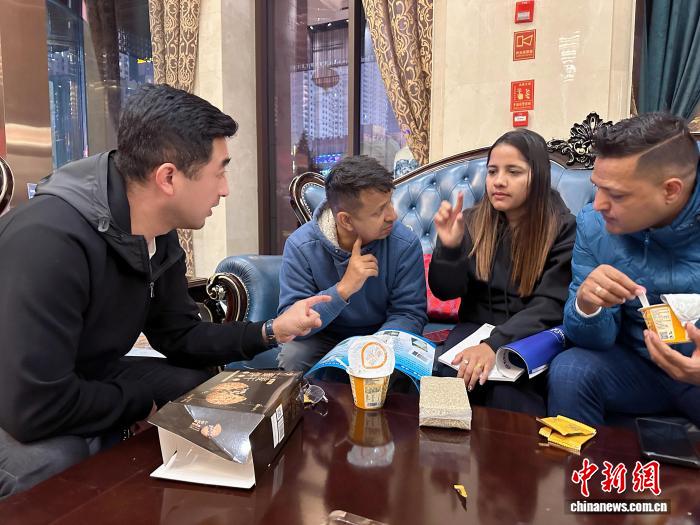
Group 1 - The Gansu Province's Min Trade and Min Products Entrepreneurs' Forum was held, resulting in the signing of 24 projects with a total agreement amount of 350 million yuan [1][3] - The collaboration between enterprises from Linxia Prefecture and Nepal focuses on agricultural sectors, particularly leveraging local quinoa production and processing advantages to promote cross-border food trade [1][3] - Gansu Province has 359 members in the Min Trade and Min Products sector, covering various fields such as food processing, specialty farming, ethnic handicrafts, and deep processing of agricultural products [3] Group 2 - Linxia Prefecture is one of the two Hui Autonomous Prefectures in China, with a rich cultural diversity and historical significance as a key point on the ancient Silk Road [3] - The local government aims to develop key industries including equipment manufacturing, new materials, cultural tourism, and food processing, aligning with the ecological and economic goals set for the region [3][4] - The food processing industry chain in Linxia focuses on building a supply chain for ethnic specialty ingredients and attracting leading food processing enterprises to expand the "Hezhou Flavor" brand into markets in the Middle East, Central Asia, and Eastern Europe [4] Group 3 - The establishment of the Linxia Food Supply Chain Technology Co., Ltd. in July 2023 aims to create a national-level ethnic specialty food industrial park and has already established production and sales cooperation with Malaysia and Indonesia [4][5] - The Linxia Prefecture Import and Export Trade Association was established in June 2025, facilitating trade connections with countries like Iran, Qatar, and Malaysia [5] - The number of Min Trade and Min Products enterprises in Linxia Prefecture exceeds 200, accounting for more than half of Gansu's total, with significant financial support provided for their development [5]