海军装备制造

Search documents
美媒新年脑补:中国想2026年“称霸海上”
Xin Lang Cai Jing· 2026-01-01 14:37
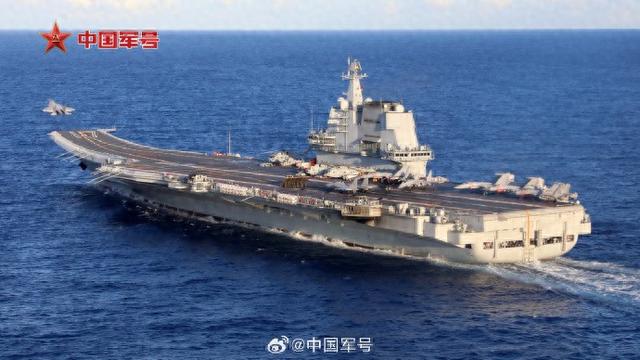
Core Viewpoint - The article discusses the U.S. media's portrayal of China's military capabilities, particularly its naval power, suggesting that China is rapidly modernizing its navy and may aim to dominate maritime operations by 2026 [1][2][5]. Summary by Sections U.S. Media Reports - U.S. media, particularly Newsweek, claims that China has built the world's largest navy with over 370 vessels, including three aircraft carriers, and is rapidly advancing its naval modernization efforts [5][11]. - The article highlights China's recent naval exercises, including dual aircraft carrier operations in the Western Pacific, portraying China as a leading maritime power [6][9]. Expert Opinions - Experts cited in the article express concerns about China's expanding naval capabilities, suggesting that China may increase its deployment frequency and range in 2026 [2][10]. - Analysts note that China's naval modernization includes the introduction of new vessels like the Fujian aircraft carrier and the 054B frigate, which enhance its operational capabilities [6][12]. Chinese Government Response - The Chinese Embassy in the U.S. and military officials have responded to the U.S. reports, asserting that China's military development is defensive and aimed at safeguarding national interests, not targeting any third party [2][12]. - Chinese officials emphasize that their naval activities comply with international law and are not intended to threaten regional stability [5][10]. Future Projections - The article suggests that China aims to have nine aircraft carriers, potentially surpassing the U.S. Navy's presence in the Pacific, and is also expanding its submarine fleet [11][12]. - Analysts predict that China's naval focus will remain on the Western Pacific and Indian Ocean, with ongoing developments in amphibious capabilities and maritime logistics [10][12].

落后中国太多,美国开始步印度后尘,心急如焚的特朗普四处求助
Sou Hu Cai Jing· 2025-08-27 05:29
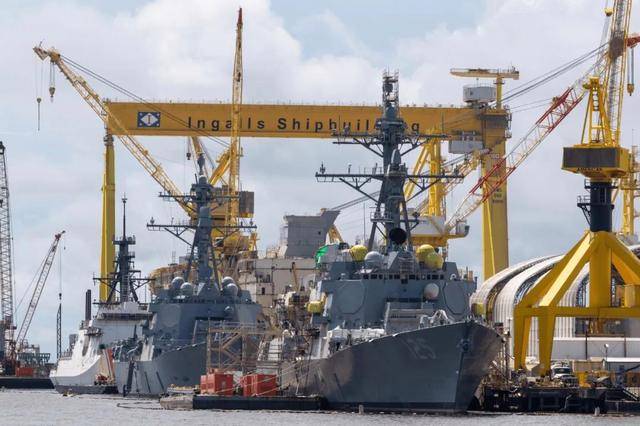
Core Viewpoint - The U.S. is significantly lagging behind China in the shipbuilding industry, holding only 0.1% of global commercial shipbuilding capacity compared to China's 53% [1][3]. Group 1: U.S. Shipbuilding Industry Challenges - The U.S. shipbuilding capacity has severely declined over the past two decades, with outdated facilities that frequently malfunction, failing to meet the maintenance needs of the U.S. Navy [5][9]. - Important shipbuilding projects are often delayed by 1 to 3 years, exacerbating the challenges faced by the U.S. Navy [5]. - The U.S. Navy's attempts to develop an unmanned vessel fleet have encountered numerous issues, including software failures and human errors during tests [5][8]. Group 2: International Collaboration Efforts - U.S. senators have sought assistance from South Korea and Japan to explore potential collaborations and joint ventures in shipbuilding [3][5]. - South Korea has proposed a $150 billion investment in the U.S. shipbuilding industry, while Japan has shown willingness to assist during tariff negotiations [8]. - Despite these efforts, the collaboration is seen as a temporary solution, as South Korea and Japan's shipbuilding capabilities do not match China's scale, efficiency, and technological comprehensiveness [8][12]. Group 3: Legislative and Structural Barriers - The Jones Act, a protectionist law, complicates overseas collaboration by mandating that all domestic shipping vessels must be built, registered, and operated in the U.S. [8][9]. - The U.S. military's procurement rules further restrict the purchase of foreign-built vessels, limiting the potential for revitalizing the domestic shipbuilding industry [9]. - The fragmentation of the domestic supply chain poses a significant challenge, as it takes years to train skilled workers, and the U.S. shipyards struggle to attract labor [9][11]. Group 4: Long-term Outlook - Even with potential support from South Korea and Japan, the U.S. is unlikely to quickly rebuild a shipbuilding system that can compete with China's [12]. - The U.S. must undergo deep reforms in technology accumulation, talent development, and supply chain reconstruction to catch up with China in shipbuilding [12]. - If the U.S. continues to pursue short-sighted and competitive strategies against China, it may further hinder its own capabilities in the shipbuilding sector [12].