中国军事威胁论

Search documents
美媒新年脑补:中国想2026年“称霸海上”
Xin Lang Cai Jing· 2026-01-01 14:37
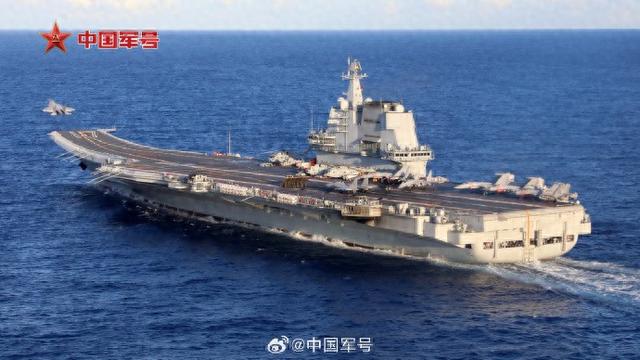
Core Viewpoint - The article discusses the U.S. media's portrayal of China's military capabilities, particularly its naval power, suggesting that China is rapidly modernizing its navy and may aim to dominate maritime operations by 2026 [1][2][5]. Summary by Sections U.S. Media Reports - U.S. media, particularly Newsweek, claims that China has built the world's largest navy with over 370 vessels, including three aircraft carriers, and is rapidly advancing its naval modernization efforts [5][11]. - The article highlights China's recent naval exercises, including dual aircraft carrier operations in the Western Pacific, portraying China as a leading maritime power [6][9]. Expert Opinions - Experts cited in the article express concerns about China's expanding naval capabilities, suggesting that China may increase its deployment frequency and range in 2026 [2][10]. - Analysts note that China's naval modernization includes the introduction of new vessels like the Fujian aircraft carrier and the 054B frigate, which enhance its operational capabilities [6][12]. Chinese Government Response - The Chinese Embassy in the U.S. and military officials have responded to the U.S. reports, asserting that China's military development is defensive and aimed at safeguarding national interests, not targeting any third party [2][12]. - Chinese officials emphasize that their naval activities comply with international law and are not intended to threaten regional stability [5][10]. Future Projections - The article suggests that China aims to have nine aircraft carriers, potentially surpassing the U.S. Navy's presence in the Pacific, and is also expanding its submarine fleet [11][12]. - Analysts predict that China's naval focus will remain on the Western Pacific and Indian Ocean, with ongoing developments in amphibious capabilities and maritime logistics [10][12].

“利”!美一边说“无力保台”一边炒作战争,岛内舆论发现背后原因
Xin Lang Cai Jing· 2025-12-27 14:33
Core Viewpoint - The Pentagon's 2025 "China Military and Security Development Report" continues to amplify the so-called "Chinese military threat," particularly regarding Taiwan, which has garnered significant attention in Taiwan's media [1][2]. Group 1: Military Capabilities - The report claims that China possesses a large and growing arsenal of nuclear weapons, naval power, conventional long-range strike capabilities, cyber capabilities, and space capabilities, which pose a direct threat to U.S. security [2]. - The Chinese military is reportedly making steady progress towards its 2027 goals, which include achieving a "strategic decisive victory" over Taiwan and establishing a "strategic balance" against the U.S. [2]. Group 2: U.S. Military Limitations - U.S. military intervention in the Taiwan Strait is acknowledged to be limited, with internal documents indicating that the U.S. military may be unable to defend Taiwan effectively [3]. - Advanced U.S. weaponry may be destroyed by the Chinese military before it can reach the Taiwan Strait, as indicated by multiple failed military simulations [3]. Group 3: Military-Industrial Complex - The U.S. military's portrayal of external threats is seen as a strategy to secure increased military funding, with China being the primary focus since the dissolution of the Soviet Union [5]. - A coalition of U.S. military officials, think tanks, politicians, and arms dealers is accused of exaggerating the "China threat" to justify military expansion and budget increases [5]. Group 4: Taiwan's Military Purchases - Taiwan's military procurement decisions are largely controlled by the U.S., with local officials admitting that the U.S. plans their military purchases [5]. - The Taiwanese government often accepts U.S. military sales without question, leading to issues such as inflated prices, delayed deliveries, and subpar quality, resulting in a "low quality, high price" reputation for Taiwan's military purchases [5][7]. Group 5: Political Dynamics - The military procurement process has become a means for certain Taiwanese and American politicians to gain political and economic benefits, described as a "bad play" that does not enhance Taiwan's security or contribute to cross-strait peace [7]. - The Taiwan issue is framed as an internal matter for China, with the Chinese military asserting its commitment to defending national sovereignty and territorial integrity without external interference [7].

社评:如何看待五角大楼这份报告的矛盾叙事
Xin Lang Cai Jing· 2025-12-24 15:44
Group 1 - The core narrative of the Pentagon's annual "China Military and Security Development Report" presents a dual perspective, portraying China as both a military threat and emphasizing the importance of stable U.S.-China relations under President Trump [1][2] - The report continues the long-standing narrative of "China military threat," suggesting that China's military development poses a direct threat to U.S. security, despite China's defense spending being maintained at 1.5% of GDP, below the global average [2][3] - China's defense policy is fundamentally defensive, aimed at safeguarding its sovereignty and security, and is not intended for hegemony or expansion, aligning military growth with national strength and international responsibilities [3][4] Group 2 - The importance of healthy and stable U.S.-China relations extends beyond bilateral concerns, impacting global prospects, with the Pentagon report highlighting the current administration's commitment to stabilizing these relations [4][5] - Dialogue and cooperation are emphasized as the only correct path for U.S.-China relations, with a focus on building a stable relationship framework based on mutual respect and benefits [4][5] - China's commitment to peace and global security is demonstrated through its active participation in international peacekeeping and security governance, countering the narrative of military threat presented in the Pentagon report [4][5]
中方:炒作“中国威胁”的虚假叙事在拉美和加勒比没有市场
Zhong Guo Xin Wen Wang· 2025-10-27 08:33
Core Viewpoint - The Chinese government asserts that the narrative of a "Chinese threat" has no traction in Latin America and the Caribbean, emphasizing that regional cooperation is based on mutual support rather than geopolitical calculations [1]. Group 1: China's Position on Regional Security - China supports the announcement of Latin America and the Caribbean as a peace zone and the declaration of a nuclear-free zone by 33 countries in the region [1]. - The Chinese government highlights that the cooperation between China and Latin America is devoid of military intentions [1]. Group 2: Critique of U.S. Narrative - The Chinese spokesperson criticizes the U.S. for exaggerating the "Chinese military threat" as a geopolitical strategy to reinforce its role as a security guarantor in the Western Hemisphere [1]. - It is stated that the actions of certain countries that undermine peace and stability in Latin America and the Caribbean are evident, urging respect for facts and the voices of regional populations [1].
外交部回应中美经贸磋商:双方同意进一步确定具体细节
证券时报· 2025-10-27 08:22
Group 1 - The core viewpoint of the article emphasizes the constructive dialogue and basic consensus reached between China and the U.S. regarding economic and trade issues, guided by the important consensus of the two heads of state [2] - China is willing to provide humanitarian assistance to the U.S. following the recent military incidents in the South China Sea, while highlighting that U.S. military activities in the region are the root cause of security issues [4] - China views its relationship with Germany from a strategic and long-term perspective, advocating for mutual respect and cooperation, especially in the current global context [5] Group 2 - The article mentions that China supports the peace initiatives in Latin America and the Caribbean, countering the exaggerated narratives of a "Chinese military threat" propagated by some U.S. officials [5] - China urges certain countries to respect facts and listen to the voices of regional nations, warning against the smear campaigns targeting China-Latin America relations [5]

现场观察·国防部记者会|中国航母动态备受瞩目,“香会”关注度升温
Xin Lang Cai Jing· 2025-05-29 12:39
Core Points - The recent press conference held by the Ministry of Defense highlighted the activities of China's aircraft carriers, the U.S. "Iron Dome" system, and the Shangri-La Dialogue, which have drawn significant media attention [1][3][10] Group 1: Aircraft Carrier Activities - The movements of China's aircraft carriers, including the Liaoning and the Fujian, have been closely monitored, with specific focus on the Liaoning's recent training exercises in the East China Sea [3][4] - The Japanese Self-Defense Forces reported that the Liaoning conducted carrier-based aircraft takeoff and landing drills closer to Japan, prompting a response from the Japanese government [3][4] - The Chinese Ministry of Defense emphasized that the Liaoning's activities are in accordance with international law and are not aimed at any specific country, urging Japan to adopt a more rational perspective [3][5] Group 2: Fujian Aircraft Carrier - The Fujian, China's first catapult aircraft carrier, is undergoing sea trials, which are essential for its development, although no specific timeline for its commissioning was provided [5][6] - Military experts suggest that the complex electromagnetic catapult technology used in the Fujian requires extensive testing to ensure reliability before it can be officially commissioned [6] Group 3: U.S. "Iron Dome" System - The U.S. plans to invest $175 billion in the "Iron Dome" missile defense system, which aims to protect against various missile threats and is expected to be operational within three years [7] - The deployment of this system has raised concerns about escalating an arms race in outer space, contradicting international treaties aimed at preventing the militarization of space [6][7] Group 4: Shangri-La Dialogue - China will send a delegation from the National Defense University to participate in the Shangri-La Dialogue from May 29 to June 2, aiming to engage in constructive discussions with other nations [10][11] - The Ministry of Defense expressed openness to communication with the U.S. military and emphasized the importance of mutual respect and cooperation in addressing regional security issues [10][11]
美防长称中国可在20分钟内摧毁美国所有航母?国防部回应→
证券时报· 2025-04-24 09:25
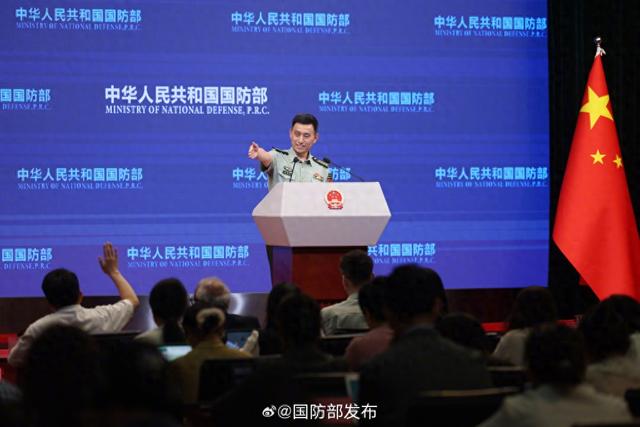
Core Viewpoint - The article discusses the comments made by a Chinese defense spokesperson regarding U.S. claims of a military threat from China, emphasizing the need for peaceful coexistence between the two nations [1]. Group 1 - The U.S. Defense Secretary has claimed that China is forming a military force specifically aimed at destroying the U.S., with advanced hypersonic missiles capable of destroying all U.S. aircraft carriers within 20 minutes [1]. - The U.S. Indo-Pacific Command has stated that China's production rate of aircraft and warships surpasses that of the U.S. military, indicating China's capability to prevent the U.S. from achieving air superiority within the "first island chain" [1]. - The Chinese defense spokesperson criticized the U.S. for viewing China's military through a biased lens, suggesting that this perspective hinders military exchanges between the two countries [1].