生态科研

Search documents
4个县域工作站挂牌运行
Xin Lang Cai Jing· 2026-02-13 22:46
Core Insights - The Sichuan Yellow River Laboratory has made significant progress in ecological protection and resource utilization in the Yellow River basin, with four county-level workstations established and eight research projects initiated [1] Group 1: Laboratory Overview - The laboratory operates in four counties: Aba County, Ruoergai County, Hongyuan County, and Wenchuan County, contributing to ecological safety in the upper reaches of the Yellow River [1] - The Yellow River's main stream in Sichuan, although only 174 kilometers long, contributes 40% of the water during dry periods and 26% during wet periods [1] Group 2: Laboratory Structure and Capabilities - The laboratory adopts a "1+4+N" layout, with one headquarters in Ruoergai, four county workstations, and multiple research teams [1] - Each of the four county workstations has established a shared laboratory of 1,000 square meters, equipped with over 30 devices for various research capabilities, including soil physical and chemical analysis and plant resistance studies [1] Group 3: Collaborative Efforts - The laboratory collaborates with institutions such as the Chengdu Institute of Biology of the Chinese Academy of Sciences and Southwest Minzu University for joint development [1] - Future plans include attracting more university and research teams to enhance collaborative research efforts for ecological protection and high-quality development in the Yellow River basin [1]
深山科考刷新武夷山兰科植物物种清单
Ke Ji Ri Bao· 2026-02-11 10:26
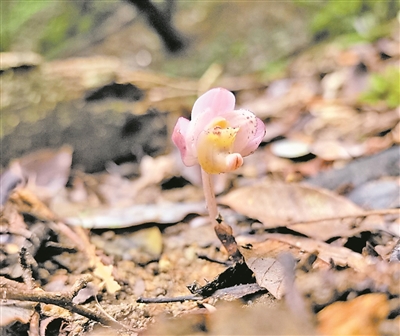
Group 1 - The core finding of the research project is the discovery of 42 genera and 87 species of wild orchid plants in the Wuyi Mountain National Park, including 5 new species for Jiangxi Province and 22 new species for the region [2] - The research team conducted extensive field studies over 119 days with 310 participants, covering altitudes from 400 to 2100 meters in various core areas of Wuyi Mountain [2] - The findings highlight the ecological health and integrity of the Wuyi Mountain National Park's ecosystem, with the discovery of rare and ecologically significant species such as the Fujian Tianma and Wuyi Tianma [2] Group 2 - The project has successfully returned nearly 5,000 rare orchid tissue culture seedlings, including species like Dendrobium nobile and Gastrodia elata, ensuring a seamless transition from discovery to conservation [3] - Future plans include expanding the survey area to regions like Qixianshan, leveraging technical support from Nanchang University to enhance conservation efforts [3] - The results underscore the ecological core value of Wuyi Mountain as a "World Biological Model Specimen Production Area" [3]

“太空望远镜”,打开看森林的新视野(唠“科”)
Ren Min Ri Bao· 2025-11-07 22:00
Core Insights - The article discusses the significance of tree species diversity in enhancing forest photosynthesis, which is crucial for carbon absorption in terrestrial ecosystems [2][3]. Group 1: Importance of Tree Species Diversity - Tree species diversity is identified as a key factor influencing global forest photosynthesis, second only to temperature [3]. - The study reveals that forests with richer species diversity exhibit stronger photosynthetic capabilities [3]. Group 2: Mechanisms of Enhanced Photosynthesis - Biodiversity enhances photosynthesis through two main pathways: increasing canopy complexity and improving nutrient absorption from the soil [3]. - A diverse forest canopy allows for better light utilization by different plant species growing at various heights and times [3]. - Enhanced nutrient absorption leads to improved leaf nitrogen content, which in turn boosts photosynthetic efficiency [3]. Group 3: Ecological Restoration Strategies - The article suggests that mimicking natural ecosystems by planting mixed forests can significantly improve biodiversity and carbon sequestration in southern China [4]. - In colder regions, targeted cultivation of cold-resistant tree species is recommended to enhance survival rates and biodiversity [4].
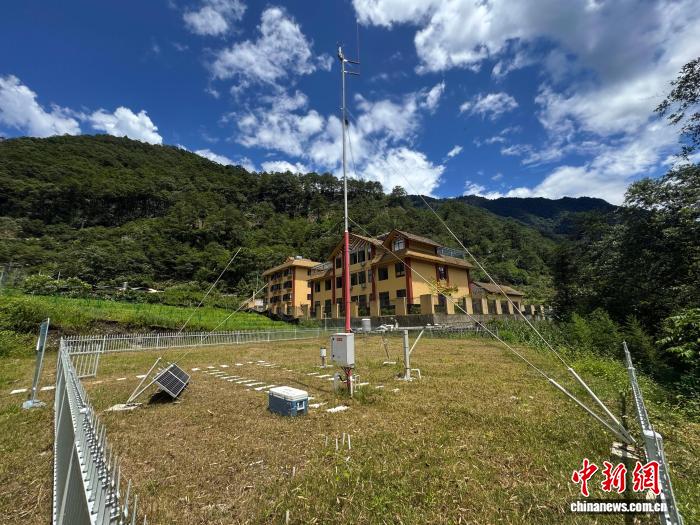
【中国新闻网】探访中国高黎贡山/独龙江站:全球生物多样性三个热点交汇区
Zhong Guo Xin Wen Wang· 2025-08-13 01:23
Core Viewpoint - The establishment of the Gaoligong Mountain/Independent River Station aims to enhance ecological protection and scientific research in the Gaoligong Mountain region, which is a biodiversity hotspot and a critical ecological barrier in Southwest China [5][6][11]. Group 1: Importance of Gaoligong Mountain - Gaoligong Mountain covers only 0.36% of China's land area but is home to approximately 17% of China's higher plants and 26% of vertebrates, highlighting its significant biodiversity [5]. - The region serves as a natural geographical barrier between China and Myanmar and is crucial for ecological security in Southwest China, spanning over 600 kilometers [6]. - The area is characterized by a vertical elevation difference of over 4000 meters, with diverse climatic features influenced by the Indian Ocean's warm and humid air currents [7]. Group 2: Research and Development at the Station - The Gaoligong Mountain/Independent River Station focuses on long-term field observations and data integration to support cross-border ecological security, biodiversity protection, and sustainable resource utilization [7][10]. - Research areas include the long-term changes in forest ecosystem structure and function, biodiversity's role in ecosystem services, and the health assessment of regional ecosystems [10][12]. - The station has already made significant progress, including the discovery of over 1500 species of fungi and several new plant species, contributing to the understanding of biodiversity in the region [12][13]. Group 3: Biodiversity and Species Richness - Gaoligong Mountain is home to 4936 species of seed plants, accounting for about 30% of Yunnan's seed plants, and serves as a refuge for many rare and endangered species [8]. - The region hosts 1255 species of vertebrates, including 197 mammals and 780 birds, making it one of the most diverse areas in terms of species richness in a single natural geographical unit [8]. - The area is also a critical migratory pathway for birds, with 247 out of 780 recorded bird species being migratory [8]. Group 4: Future Prospects and Goals - The station is expected to become a national-level field station, contributing to the establishment of Gaoligong Mountain National Park and enhancing international scientific collaboration [11]. - The research conducted at the station aims to produce significant scientific outcomes that can inform ecological management and conservation strategies in the region and beyond [11].