电力生产供应业

Search documents
长三角41城半年考,“成绩单”来了
Sou Hu Cai Jing· 2025-08-14 12:13
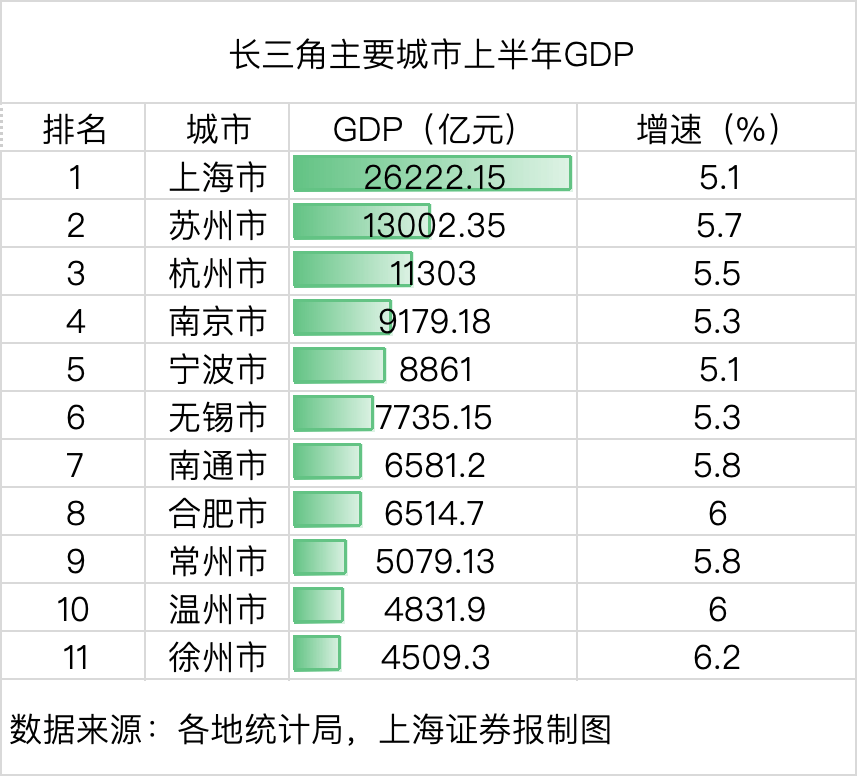
Core Insights - The economic data for 41 cities in the Yangtze River Delta for the first half of 2025 shows a stable GDP ranking, with some cities experiencing notable growth, particularly in the consumption sector, which exhibits internal differentiation [1][2]. GDP Performance - The Yangtze River Delta has nine cities with a GDP exceeding 1 trillion yuan, with Nantong moving up from 8th to 7th place, surpassing Hefei [2]. - Zhoushan leads in GDP growth with a reported GDP of 110.91 billion yuan, reflecting a year-on-year increase of 6.9%, driven primarily by industrial growth [2]. - Major cities' GDP figures for the first half of 2025 include: - Shanghai: 2622.215 billion yuan, growth of 5.1% - Suzhou: 1300.235 billion yuan, growth of 5.7% - Hangzhou: 1130.3 billion yuan, growth of 5.5% - Nanjing: 917.918 billion yuan, growth of 5.3% - Ningbo: 886.1 billion yuan, growth of 5.1% [3]. Consumption Trends - The overall retail sales growth in the Yangtze River Delta outpaced the national average of 5.0%, with Jiangsu province achieving a retail sales total of 2.39 trillion yuan, marking a net increase of 113.72 billion yuan [5]. - Consumption growth is uneven, with first-tier cities like Shanghai showing slower growth (1.7%) compared to third and fourth-tier cities, which are exhibiting stronger consumption dynamics [5][6]. - Notable retail sales figures include: - Shanghai: 826.041 billion yuan, growth of 1.7% - Suzhou: 463.5 billion yuan, growth of 3.8% - Hangzhou: 458.5 billion yuan, growth of 6% - Nanjing: 438.422 billion yuan, growth of 5.3% [8]. Regional Economic Challenges - Some traditional industries are facing slower growth, particularly in cities like Huainan and Huaibei, which reported GDP growth rates of 4.0% and 3.4%, respectively, indicating a need for economic transformation [4]. - Cities like Wenzhou and Xuzhou are approaching the 1 trillion yuan GDP target, with Wenzhou at 483.19 billion yuan and Xuzhou at 450.93 billion yuan, both showing promising growth rates [4].

长三角增速第一,为什么是它?
Mei Ri Jing Ji Xin Wen· 2025-08-08 23:41
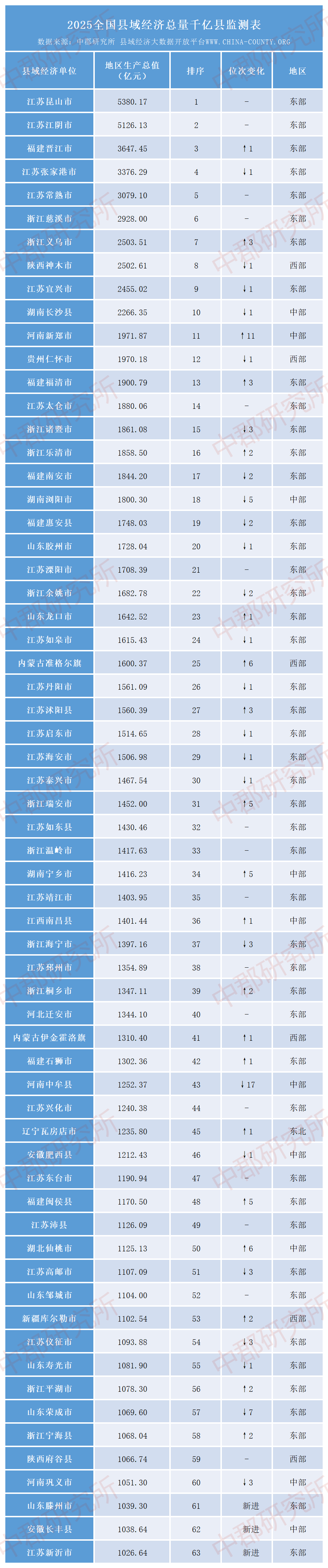
Economic Performance of the Yangtze River Delta - The economic total of the Yangtze River Delta region exceeded 16 trillion yuan in the first half of 2025, accounting for 24.8% of the national economy [1] - Nine cities in the region achieved a GDP exceeding 500 billion yuan, with Shanghai leading at 26,222.15 billion yuan, followed by Suzhou and Hangzhou at 13,002.35 billion yuan and 11,303 billion yuan respectively [1] - 34 cities in the Yangtze River Delta matched or exceeded the national GDP growth rate of 5.3%, with 17 cities achieving growth rates of 6% or higher [1] Economic Growth of Zhoushan - Zhoushan's economy grew by 6.9% in the first half of the year, the highest in the Yangtze River Delta, surpassing the growth of neighboring cities [2] - The city's industrial output value increased by 11.5%, significantly above the provincial average of 3.9%, with key industries such as power production and shipbuilding showing substantial growth [3] - Zhoushan's marine economy accounted for 69.72% of its GDP, making it one of the cities with the highest marine economic contribution in the country [3] Industrial Development in Zhoushan - The industrial output value of Zhoushan's major industries, including power supply, shipbuilding, and petrochemicals, contributed significantly to the city's overall industrial growth [3] - The green petrochemical and new materials industry is identified as the largest industrial sector in Zhoushan, contributing 61% to the city's industrial output [3] National Economic Trends - The report highlights that the number of "billion-county" economies in China has reached 63, with a total GDP exceeding 10 trillion yuan, representing 7.99% of the national economy [12] - The county-level economic growth is led by cities like Kunshan and Jiangyin, with significant contributions from other regions as well [17]