硫黄

Search documents
俄炼厂遭袭 中国成品油出口与硫黄市场迎机遇
Zhong Guo Hua Gong Bao· 2025-11-24 12:06
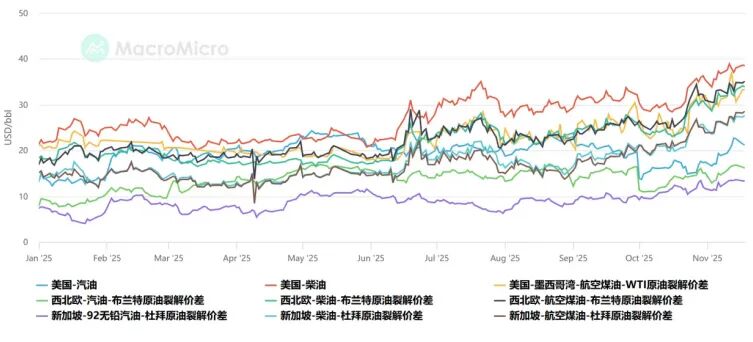
Core Viewpoint - The ongoing drone attacks by Ukraine on Russian energy infrastructure have significantly impacted Russia's refining capacity, leading to a surge in global oil product prices and creating new opportunities for China's oil product exports and sulfur industry [1][4][10]. Group 1: Impact on Russian Refining Capacity - Since November 2025, Ukraine has conducted multiple drone strikes targeting key Russian refineries, including Ryazan, Samara, and Volgograd, resulting in a 6% decrease in overall Russian refining output [1]. - The Ryazan refinery, one of Russia's four major refineries with an annual processing capacity of 13.1 million tons (340,000 barrels per day), suffered damage to its distillation units and fuel storage tanks [1]. - The Volgograd refinery, with an annual capacity of 15.7 million tons, has faced multiple shutdowns due to these attacks, further exacerbating the decline in Russian refining capacity [1]. Group 2: Global Oil Product Price Surge - The reduction in Russian refining capacity has led to a significant increase in overseas oil product crack spreads, with the 3-2-1 crack spread reaching $32.13 per barrel, the highest level since March 2024, reflecting a more than 30% increase from October's average [2]. - Diesel prices have seen the most substantial rise among oil products, indicating a high-profit cycle for the refining industry [2]. Group 3: Sulfur Market Dynamics - The attacks have also disrupted sulfur production, as Russia is the second-largest sulfur producer globally, accounting for 15%-20% of the world's supply [4]. - Domestic sulfur prices have surged, with the port spot index reaching 3,990 yuan per ton in late November, marking an increase of over 1,000 yuan per ton in just over a month and a rise of approximately 2,500 yuan per ton since the beginning of the year [4]. - Forecasts suggest that sulfur prices may exceed 5,000 yuan per ton in 2026 due to a tight supply-demand balance [4]. Group 4: Opportunities for Chinese Companies - The international supply gap has created a favorable window for China's oil product exports, with a total export quota of 40.195 million tons for 2025 [7]. - Major state-owned enterprises dominate China's oil product export market, with Sinopec and PetroChina holding significant shares [7]. - The sulfur industry in China is experiencing a dual benefit of rising prices and increasing demand, particularly due to the growth in the new energy sector and solid-state battery technology [7][8]. Group 5: Market Position of Leading Companies - China's total sulfur production capacity is approximately 16.8 million tons per year, with Sinopec, PetroChina, and Rongsheng Petrochemical being the top three producers, collectively holding over 70% of the market share [8][10]. - A price increase of 100 yuan in sulfur can lead to significant profit gains for leading companies, indicating a positive outlook for profitability in the current high-demand environment [8].