全球能源格局重构

Search documents
中国已经发出禁令,委内瑞拉石油不能靠岸,特朗普这才察觉不对劲
Sou Hu Cai Jing· 2026-02-04 13:53
Core Viewpoint - The article discusses the shift in the energy dynamics between the U.S. and China regarding Venezuelan oil, highlighting China's strategic decision to halt purchases in response to U.S. attempts to impose new trading rules, which China views as a violation of sovereign agreements [1][3][5]. Group 1: U.S. Actions and Responses - The U.S. introduced a new "export license" system requiring buyers to settle through designated accounts and accept a new price of $45 per barrel, nearly 50% higher than the original price [3]. - Trump's sudden shift in tone, inviting China to continue purchasing Venezuelan oil and suggesting price negotiations, indicates U.S. anxiety over unsold oil and rising inventory levels [5][7]. - The U.S. strategy of leveraging resource control to compel China back to negotiations has failed, as China is no longer reliant on a single oil source [7]. Group 2: China's Strategic Position - China's decision to suspend all related transactions is a calculated response to reject U.S. imposed rules, emphasizing that it will not engage in a framework that undermines its energy security [5][9]. - As of 2025, Venezuela's share in China's crude oil imports has decreased to 2.3%, with China diversifying its sources from countries like Russia, Saudi Arabia, and Iraq [9][11]. - The penetration of electric vehicles in China has surpassed 53%, leading to a decline in fuel vehicle sales and a shift in domestic oil demand [11]. Group 3: Implications for Global Energy Dynamics - The article suggests that the global energy landscape is shifting, with the true power now lying with those who accept the rules rather than those who control resources [17]. - China's ability to bypass the U.S. dollar system through alternative payment channels, such as the CIPS, demonstrates its strategic independence in energy trade [11][15]. - The situation illustrates that if major buyers like China withdraw, the new trading rules proposed by the U.S. become ineffective, leaving resources stranded [17].

印度拒收俄油后,俄罗斯的油轮在中国门口排队等,要对中国赔钱大甩卖?
Sou Hu Cai Jing· 2025-12-23 08:38
Group 1 - The core viewpoint of the articles highlights the significant impact of geopolitical tensions, particularly the Russia-Ukraine conflict, on global oil prices and the energy market dynamics [1][5][7] - Russia is experiencing a severe energy price crisis due to Western sanctions and market shifts, with oil revenues dropping by 34% year-on-year in November and expected to hit a new low since 2020 in December [1][3] - India's decision to refuse Russian oil imports is influenced by U.S. sanctions, yet the country still maintains high import levels, indicating a complex balance between geopolitical pressures and domestic energy needs [3][5] Group 2 - China is positioned to benefit from discounted Russian oil, with prices for Urals crude dropping nearly $35 per barrel, but Chinese refineries prefer higher quality oil, which may limit the attractiveness of Urals crude [3][5] - The dependency of Russia on China is increasing, giving China greater negotiating power, but this could lead to a vicious cycle of further price reductions from Russia to maintain cash flow [5][7] - The ongoing transformation in the international energy market suggests that while short-term price strategies may provide relief, they do not resolve Russia's long-term economic challenges, necessitating a diversified energy supply strategy for China to ensure energy security [5][7]
朱雀基金陈亚博:全球能源格局重构 拥抱电力三大机会
Shang Hai Zheng Quan Bao· 2025-12-21 18:19
Core Insights - The integration of AI technology into production and daily life is driving significant changes in the power industry, highlighting the increasing importance of electricity supply as a core element supporting this trend [1][2] - The demand for electricity is expected to rise due to AI's high consumption during training and inference processes, with specific examples indicating substantial energy requirements for models like OpenAI's GPT-3XL [1] - Aging infrastructure poses challenges for power grids, particularly in Europe and North America, which may affect the stability and safety of electricity supply [1] Group 1: Opportunities in the Power Industry - The power sector is witnessing three main areas of opportunity: grid-side, user-side, and power-source side [2] - On the grid side, the demand for overseas power equipment is increasing due to factors such as data center integration and aging infrastructure, creating favorable conditions for Chinese companies to expand internationally [2] - The integration of source-grid-load-storage models is expected to enhance energy efficiency and reliability, potentially serving as a green power solution for data centers [2] Group 2: Technological Upgrades and Innovations - The user side is experiencing a trend of technological upgrades, with increasing power density in data center racks, which may lead to a shift towards higher voltage and direct current supply architectures [2] - The adoption of 800V direct current systems and solid-state transformers (SST) is anticipated as potential solutions for powering intelligent computing centers [2] - On the power source side, various energy types such as gas power, nuclear power, solid oxide fuel cells (SOFC), and renewable sources are expected to enhance the power capabilities for data centers [2][3]
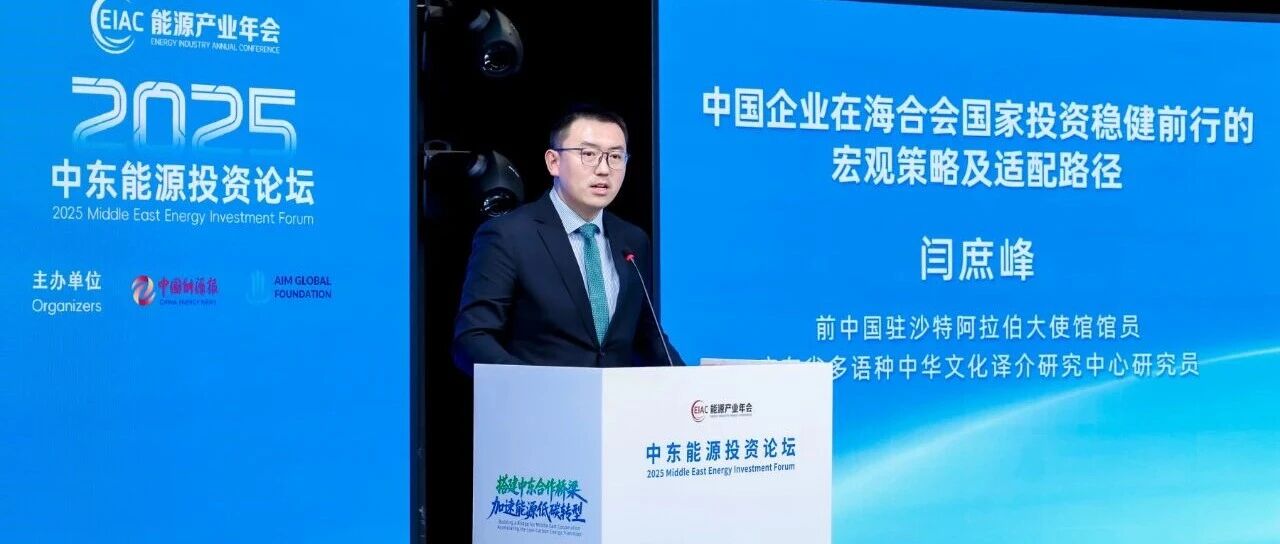
闫庶峰:海合会国家是中国能源企业全球化战略高地
中国能源报· 2025-12-04 11:58
Core Viewpoint - The global energy landscape is undergoing a transformation, creating historical intersections between China's mature renewable energy industry and the Gulf Cooperation Council (GCC) countries, which hold 45% of the world's oil reserves and manage nearly $5 trillion in sovereign wealth funds [4]. Group 1 - The GCC countries' industrial transformation strategies, such as Saudi Arabia's Vision 2030 and the UAE's updated National Energy Strategy 2050, provide a clear blueprint for Chinese enterprises to enter the region [4]. - The strong economic complementarity between China and the GCC countries has created favorable conditions for collaboration, moving from a one-way trade model to a deep integration of the entire energy industry chain [4]. - The combination of Chinese technology and Gulf capital is expected to create a powerful synergy, enhancing the potential for mutual benefits [4]. Group 2 - The internal and external environments for deepening cooperation are continuously improving, with stable political relations and an increasingly favorable business environment in the GCC countries [5]. - The GCC is not merely an overseas market but a strategic high ground for Chinese energy enterprises' globalization efforts [5]. - Chinese enterprises are encouraged to leverage high-level exchanges, adapt to local industry transformations, and ensure compliance with regulations to successfully establish a presence in the GCC [5].
俄炼厂遭袭 中国成品油出口与硫黄市场迎机遇
Zhong Guo Hua Gong Bao· 2025-11-24 12:06
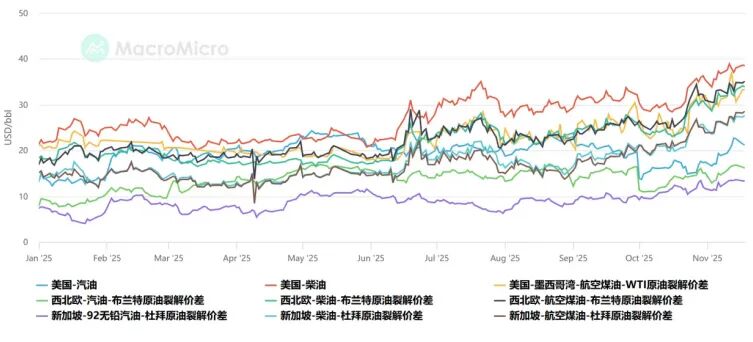
Core Viewpoint - The ongoing drone attacks by Ukraine on Russian energy infrastructure have significantly impacted Russia's refining capacity, leading to a surge in global oil product prices and creating new opportunities for China's oil product exports and sulfur industry [1][4][10]. Group 1: Impact on Russian Refining Capacity - Since November 2025, Ukraine has conducted multiple drone strikes targeting key Russian refineries, including Ryazan, Samara, and Volgograd, resulting in a 6% decrease in overall Russian refining output [1]. - The Ryazan refinery, one of Russia's four major refineries with an annual processing capacity of 13.1 million tons (340,000 barrels per day), suffered damage to its distillation units and fuel storage tanks [1]. - The Volgograd refinery, with an annual capacity of 15.7 million tons, has faced multiple shutdowns due to these attacks, further exacerbating the decline in Russian refining capacity [1]. Group 2: Global Oil Product Price Surge - The reduction in Russian refining capacity has led to a significant increase in overseas oil product crack spreads, with the 3-2-1 crack spread reaching $32.13 per barrel, the highest level since March 2024, reflecting a more than 30% increase from October's average [2]. - Diesel prices have seen the most substantial rise among oil products, indicating a high-profit cycle for the refining industry [2]. Group 3: Sulfur Market Dynamics - The attacks have also disrupted sulfur production, as Russia is the second-largest sulfur producer globally, accounting for 15%-20% of the world's supply [4]. - Domestic sulfur prices have surged, with the port spot index reaching 3,990 yuan per ton in late November, marking an increase of over 1,000 yuan per ton in just over a month and a rise of approximately 2,500 yuan per ton since the beginning of the year [4]. - Forecasts suggest that sulfur prices may exceed 5,000 yuan per ton in 2026 due to a tight supply-demand balance [4]. Group 4: Opportunities for Chinese Companies - The international supply gap has created a favorable window for China's oil product exports, with a total export quota of 40.195 million tons for 2025 [7]. - Major state-owned enterprises dominate China's oil product export market, with Sinopec and PetroChina holding significant shares [7]. - The sulfur industry in China is experiencing a dual benefit of rising prices and increasing demand, particularly due to the growth in the new energy sector and solid-state battery technology [7][8]. Group 5: Market Position of Leading Companies - China's total sulfur production capacity is approximately 16.8 million tons per year, with Sinopec, PetroChina, and Rongsheng Petrochemical being the top three producers, collectively holding over 70% of the market share [8][10]. - A price increase of 100 yuan in sulfur can lead to significant profit gains for leading companies, indicating a positive outlook for profitability in the current high-demand environment [8].



中美石油贸易史上最大断层,特朗普发声希望重启,中方态度明确
Sou Hu Cai Jing· 2025-06-27 03:46
Group 1 - The core point of the article highlights the dramatic decline in China's oil imports from the U.S., dropping from 29 million barrels to 3 million barrels, marking a 90% decrease, which is the largest drop in history for a single commodity in U.S.-China trade [1][3][5] - The U.S. shale oil industry is facing significant challenges due to this decline, with a surplus of 120 million barrels of crude oil and storage facilities operating at over 90% capacity [16][18] - Trump's contradictory statements regarding oil purchases from Iran and the U.S. have created confusion in the market, reflecting the U.S.'s passive position in the energy game [5][20][37] Group 2 - China's response to the situation emphasizes its independent energy security strategy, stating it will take reasonable measures based on national interests [7][10] - The article discusses China's strategic shift towards diversifying its oil supply sources, with imports from Canada reaching 7.3 million barrels per month, which is 2.5 times the peak U.S. export volume [24][25] - The cost disadvantage for U.S. oil, exacerbated by tariffs, has made it less competitive compared to alternatives from Russia and the Middle East, leading to a significant shift in China's sourcing strategy [11][13][14] Group 3 - The article outlines China's multi-faceted strategic responses, including the rise of the renminbi oil futures market, which has gained a 10% share globally, indicating a shift away from the dollar-dominated oil trade [27][39] - Technological advancements in renewable energy and electric vehicles position China favorably in the ongoing energy transition, reducing its reliance on imported crude oil [32][41] - The overall trend indicates a structural shift in global energy governance towards a multi-polar system, diminishing the U.S.'s previous dominance in energy diplomacy [34][43][45]