
硫黄

Search documents
美伊局势升级,商品市场如何演变?
An Liang Qi Huo· 2026-03-02 10:30
1. Report's Investment Rating for the Industry - No information about the report's investment rating for the industry is provided in the content [1][2][3] 2. Core Viewpoints of the Report - The current conflict between the US and Iran is a continuously escalating crisis, with the oil and chemical sectors being the core focus of market sentiment and funds [3] - The energy sector may be the next "pre - startup" sector in the commodity market's internal sector rotation [9] - The escalation of the Iranian situation is expected to drive up international oil prices through supply reduction and cost increase [14][15] - The Iranian situation will have an impact on the chemical, precious metal, and shipping sectors, with different driving logics for each [19][20][24] - The key to the market trend lies in whether the Iranian event continues to escalate and the degree of its penetration into the real - world industry [31] 3. Summary by Relevant Catalogs 3.1 Commodity Internal Sector Rotation - In typical upward trends of the Wenhua Finance Index, there is an obvious rotation rhythm among sectors: precious metals → non - ferrous metals → energy → agricultural products → black - series [9] - Precious metals and non - ferrous metals have shown a trend since April, and the energy sector is at a relatively low valuation after a previous correction and has shown signs of stabilization and recovery [9] 3.2 Pricing Logic of Geopolitical Conflicts - Although Iran's direct impact on global oil supply is limited (current daily crude oil exports are about 1.6 - 1.8 million barrels, accounting for less than 3% of global supply), the blockade of the Strait of Hormuz (through which about 19% of the world's crude oil is transported daily) will lead to a significant increase in short - term logistics costs and insurance rates, supporting the rise in oil prices [14] - After the Strait of Hormuz and the Red Sea were blocked, the detour route from the Port of Ras Tanura in Saudi Arabia to the Port of Shanghai in China is about 70% longer, and the shipping time is extended by about 14 - 16 days, with an estimated freight increase of 50% - 80% [15] 3.3 Impact on Other Sectors 3.3.1 Chemical Sector - Iran is the third - largest oil producer in OPEC and has the world's second - largest natural gas reserves and third - highest production. It converts a large amount of natural gas into downstream chemical products [19] - Iran is a major global supplier of methanol, urea, ethylene glycol, and sulfur, and changes in the Middle East situation will affect the prices of these chemical products [19] 3.3.2 Precious Metals - The Iranian event drives up the price of precious metals through three paths: direct explosion of safe - haven demand, pricing of inflation expectations, and long - term narrative of the US dollar's credit. These factors combine short - term and long - term effects, as well as emotions and expectations [20][21][23] 3.3.3 Shipping Index - After the Strait of Hormuz was blocked, ships had to detour around the Cape of Good Hope, resulting in a decrease in the efficiency of shipping capacity utilization [24] - The shipping index is driven by a complete chain of "route obstruction - longer voyage - tightened shipping capacity - rising freight rates", and this round of driving is not just short - term emotional speculation [29] 3.4 Summary - The crude oil sector is at a key "relay" position, and the escalation of the Iranian situation has catalyzed the market, with the entire crude - oil system rising [30] - Different assets have different rising logics. The key to the market trend depends on whether the Iranian event continues to escalate and the degree of its impact on the real - world industry [31]
春节我在岗,生产不打烊
Zhong Guo Hua Gong Bao· 2026-02-25 02:21
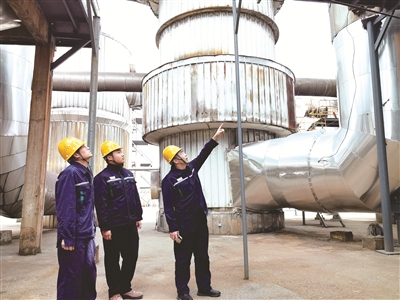
Core Viewpoint - The article highlights the dedication and responsibility of workers in the oil and chemical industries who continue to operate during the Spring Festival, ensuring safety and production efficiency while many others celebrate the holiday [1][7]. Group 1: Production Operations - Anhui Liuguo Chemical Company has implemented a detailed safety production plan and emergency response measures to ensure safe operations during the holiday, focusing on raw material reserves and product dispatch coordination [2]. - Zhuhai Guanyu Power Battery Company maintains 100% production capacity during the Spring Festival, aiming to fulfill a 20GWh battery order for domestic and international electric vehicle clients, contributing to a target of 1.5 billion yuan in output for the first quarter [2]. - The Central Plains Oilfield Puguang Branch's sulfur production facility operates at full capacity, producing over 5,000 tons of sulfur daily to support fertilizer production for spring farming [3]. Group 2: Safety Management - The Shengli Oilfield Gas Collection and Transportation Factory ensures continuous production and strict safety management during the holiday, with staff adhering to a 24-hour duty system and conducting regular inspections of critical equipment [5]. - The Fushun Petrochemical Company maintains a 24-hour duty rotation, with staff conducting equipment inspections and promptly addressing any safety issues to ensure stable operations during the holiday [6]. - The upgraded intelligent system at the Tonghua Group's production scheduling center allows for real-time monitoring and precise scheduling to ensure safe production during the Spring Festival [5]. Group 3: Employee Commitment - Workers in the petrochemical industry demonstrate commitment by choosing to remain on duty during the holiday, ensuring production safety and operational stability [7]. - Employees at the Qixiang Company conduct thorough inspections of equipment during the holiday, emphasizing the importance of maintaining operational stability even during festive times [8]. - Young employees at Huangmailing Phosphate Chemical New Materials Company have voluntarily given up their holiday breaks for two consecutive years to ensure safe and efficient production operations [9].

原料高位震荡、下游待启,磷酸一铵春节后行情怎么走?
Xin Lang Cai Jing· 2026-02-12 12:12
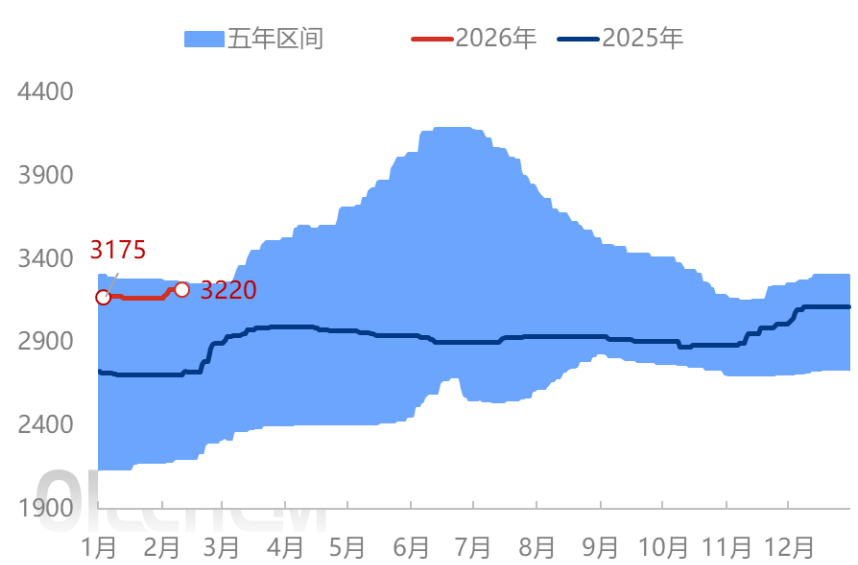
Core Viewpoint - The ammonium phosphate market is expected to maintain stability post-Spring Festival, with prices likely to remain firm due to high raw material costs and steady supply, despite potential fluctuations in demand from downstream compound fertilizer manufacturers [1][4][7]. Price Summary - As of January, the domestic spot price of ammonium phosphate averaged 3850 yuan, reflecting a month-on-month increase of 2.20% and a year-on-year increase of 28.88% [2][5]. - The price of sulfur, a key raw material, peaked at 4370 yuan per ton before falling to 4130 yuan, marking a decline of 5.49% [1][4]. Supply Summary - In February, domestic ammonium phosphate production is projected to be 930,000 tons, a decrease of 33,600 tons or 3.49% month-on-month, primarily due to fewer days in the month [1][4]. - The industry capacity utilization rate is expected to be 65% in early February, which is 7 percentage points higher than the average of previous years and at a three-year high [6]. Demand Summary - As of early February, the capacity utilization rate for compound fertilizers was 41.79%, showing a year-on-year increase of 15.45 percentage points [6]. - Downstream inventory for compound fertilizers was reported at 749,300 tons, a slight decrease of 630 tons or 0.83% [3][6]. Market Outlook - The ammonium phosphate market is anticipated to experience limited price fluctuations, with a likelihood of maintaining a stable outlook post-Spring Festival, contingent on the purchasing behavior of downstream compound fertilizer companies [1][7].
春节后复合肥价格怎么走?关注这两点
Xin Lang Cai Jing· 2026-02-11 10:32
Group 1 - In 2025, the compound fertilizer market is expected to see an increase in production capacity, leading to supply exceeding market demand significantly. Domestic demand is constrained by grain prices and terminal profits, resulting in uncertain release times and volumes, prompting low inventory strategies across production and distribution channels [1][11] - The price of 45% (15-15-15) sulfur-based compound fertilizer is projected to fluctuate, with the average price before and after the Spring Festival showing minor changes. For instance, the price in 2025 is expected to be 2705 yuan per ton before the festival and 2707 yuan after, reflecting a slight increase of 0.07% [3][14] - The compound fertilizer market has maintained high prices since the beginning of 2026, with the average price at 3175 yuan per ton, which is a 16.39% increase compared to the previous year [4][13] Group 2 - The supply side indicates that the production capacity utilization rate for compound fertilizers is expected to rise in January, but may decline in February as the Spring Festival approaches. The peak demand for spring fertilizers occurs from February to April, necessitating careful logistics and inventory management [6][17] - Inventory levels for compound fertilizers are projected to increase gradually, reaching 78.71 million tons before the Spring Festival, which is a 12.12% increase from the beginning of the year. This increase is attributed to a balance between production and sales, with limited inventory growth in January [6][17] - Profit margins for compound fertilizers are expected to remain low due to fluctuating raw material costs. In January and February 2026, profits for sulfur-based fertilizers may rise due to higher prices, but actual profits could be lower due to the execution of previous low-price orders [9][20] Group 3 - After the Spring Festival, both supply and demand for compound fertilizers are anticipated to improve, with a focus on the actual initiation of spring demand. Favorable weather conditions could lead to increased agricultural demand and higher production capacity utilization [10][21] - Cost factors to monitor post-festival include changes in sulfur prices, which could impact the prices of phosphate and sulfuric acid, subsequently affecting compound fertilizer costs. The expected price range for 45% (15-15-15) sulfur-based compound fertilizer post-festival is between 3150 and 3500 yuan [10][21]
硫黄,终于开跌了!一铵走向怎么看?
Xin Lang Cai Jing· 2026-02-03 12:52
Group 1 - The core point of the article is that the price of ammonium phosphate remains stable despite a recent decline in the price of sulfur, a key raw material, which has decreased by 220 yuan per ton, representing a drop of 9.28% [1][9][10] - As of February 2, the price of sulfur at Changjiang Port has fallen to 4150 yuan, down from a peak of 4370 yuan in mid-January, leading to a reduction of approximately 100 yuan in the production cost of ammonium phosphate per ton [3][12] - Despite the decrease in sulfur prices, they remain high compared to the same period last year, with an increase of 2570 yuan, or about 163% [3][12] Group 2 - Ammonium phosphate producers have a sufficient amount of orders to fulfill, with over 530,000 tons available for dispatch as of the end of January, reflecting a month-on-month increase of 2.26% [4][14] - Although market demand has softened and new orders are limited, the ample order backlog allows producers to maintain stable pricing, with some companies opting to pause or control new orders due to high costs [4][14] - The market for ammonium phosphate is expected to remain firm and experience narrow fluctuations, with limited potential for significant price volatility [8][18] Group 3 - The high production costs are supported by the elevated prices of sulfur and other raw materials, with the theoretical total production cost of ammonium phosphate in Hubei still reaching 4157 yuan [3][12] - External sulfur prices are also rising, with Qatar's sulfur contract for February 2026 priced at 520 USD, which translates to approximately 4393 to 4401 yuan in China [6][16] - The overall inventory levels are low, and while demand is currently subdued, there is an expectation for a new round of order replenishment after the Spring Festival [8][18]
川金诺2025年净利润同比倍增
Zhong Guo Hua Gong Bao· 2026-01-21 07:01
Core Viewpoint - The company Kunming Chuanjinno Chemical Co., Ltd. (referred to as Chuanjinno) forecasts significant revenue and profit growth for the year 2025, driven by strong market demand and improved product mix [1] Financial Performance - Chuanjinno expects to achieve revenue between 3.8 billion to 4.2 billion yuan in 2025, representing a year-on-year growth of 18.47% to 30.94% [1] - The net profit attributable to shareholders is projected to be between 430 million to 480 million yuan, indicating a substantial year-on-year increase of 144.24% to 172.64% [1] Strategic Focus - The company aims to enhance the proportion of high-margin products in its sales mix to drive revenue growth and improve profit levels [1] - Continuous cost control measures are being implemented to strengthen overall profitability [1] Market Conditions - In the first half of 2025, rising prices of key raw materials such as sulfur and sulfuric acid are expected to exert cost pressures, leading to price increases for downstream products [1]

2025年化工产品涨跌榜
Zhong Guo Hua Gong Bao· 2026-01-20 09:26
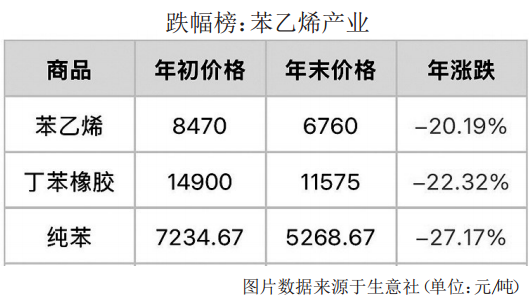
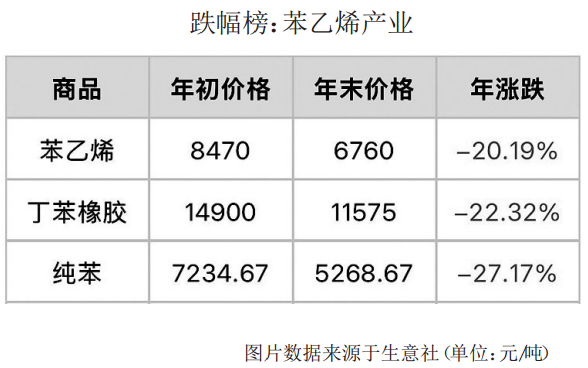
Group 1: Overall Market Trends - In 2025, the chemical industry experienced significant structural differentiation, moving away from uniform price fluctuations, with 71 out of 314 monitored chemical products showing price increases, while 236 products saw declines [1] - The overall market exhibited a "more drops than rises" pattern, with a notable 36.6% of products stabilizing within a 5% price change range by the fourth quarter [15][17] Group 2: Specific Product Performance - Styrene prices fell by 20.19% from 8,470 to 6,760 yuan, reflecting a broader downward trend across the industry due to supply pressures and weak demand [3][6] - Pure benzene saw a significant decline of 27.17%, with prices dropping from 7,234.67 to 5,268.67 yuan, driven by an imbalance in supply and demand [5][3] - The market for ABS experienced a dramatic 30.31% drop, with prices falling from 11,837.5 to 8,250 yuan, primarily due to increased supply and weak domestic demand [12][3] Group 3: Key Drivers of Price Changes - The rise in inorganic chemical products, particularly sulfur and sulfuric acid, was attributed to strong demand from agriculture and new energy sectors, with sulfur prices increasing by 116.5% [16][23] - The decline in organic chemical products was largely due to structural demand shrinkage and oversupply, with refrigerants like R22 dropping by 49.22% [16][27] - The lithium battery sector saw substantial growth, with lithium hydroxide and industrial-grade lithium carbonate prices rising by 59.11% and 53.18%, respectively, driven by strong downstream demand and supply constraints [17][18][20] Group 4: Future Outlook - The chemical industry is expected to continue facing a supply-demand imbalance, particularly in the organic sector, while inorganic products may benefit from ongoing structural upgrades and policy support [14][24] - The lithium market is projected to transition from a resource-driven cycle to a demand-driven cycle, with price fluctuations influenced by seasonal production and actual demand realization [21][19]
政策支持,化工板块全线拉升!券商:反内卷有望重估中国化工行业
Zheng Quan Shi Bao Wang· 2026-01-20 05:36
Group 1 - The A-share market experienced fluctuations on January 20, with the Shanghai Composite Index briefly falling below 4100 points, the Shenzhen Component testing the 14000-point support, and the ChiNext Index dropping below 3300 points [1] - The chemical industry chain saw a significant rise, with the polyurethane sector leading the gains, and the sector index increasing over 2%, reaching a historical high [1] - The Ministry of Industry and Information Technology, along with other departments, issued guidelines to expand zero-carbon factory construction to the petrochemical and chemical industries, providing policy support for green transformation and high-quality development [1] Group 2 - Recent monitoring data from the Lianyungang Development and Reform Commission indicated that chemical product prices have shown an overall trend of "more increases than decreases," with 11 out of 16 monitored products rising in price [2] - Significant price increases were reported for sulfur, sulfuric acid, and bromine, with respective increases of 116.5%, 111.86%, and 64.84% expected by 2025 [3] - Guohai Securities suggested that the re-evaluation of the Chinese chemical industry could lead to a substantial slowdown in global capacity expansion, potentially transforming the industry from a cash-consuming entity to a cash-generating one, with a focus on sectors like petrochemicals, coal chemicals, organic silicon, phosphate chemicals, and glyphosate [3]

2025年化工产品涨跌榜(上)
Zhong Guo Hua Gong Bao· 2026-01-14 02:57
Group 1: Overall Market Trends - In 2025, the chemical industry experienced significant structural differentiation, moving away from uniform price fluctuations to a more segmented market [1][17] - The overall market showed a "more declines than increases" pattern, with 22.6% of monitored products experiencing price increases, primarily in inorganic chemicals [17][18] - The market's recovery was supported by government policies, demand from emerging industries, and accelerated domestic substitution [17][18] Group 2: Price Movements of Key Chemicals - Sulfur, sulfuric acid, and bromine saw substantial price increases of 116.50%, 111.86%, and 64.84% respectively, driven by strong demand in agriculture, pharmaceuticals, and new energy sectors [15][18] - Conversely, organic chemicals faced significant price declines, with refrigerant R22 dropping by 49.22% and propanol by 40.23%, primarily due to environmental regulations and weak traditional demand [18][19] Group 3: Specific Chemical Market Analysis - The styrene market entered a deep adjustment phase with an average annual decline of 25%, driven by oversupply and weak demand [2][4] - Pure benzene prices fell by 27.17%, attributed to a supply-demand imbalance, with production capacity expected to reach 27 million tons in 2025 [5][6] - The ABS market experienced a 30.31% decline, influenced by increased supply and weak domestic demand, leading to heightened competition [11][18] Group 4: Future Outlook - The chemical industry is expected to recover with distinct structural characteristics, with traditional sectors like titanium dioxide and pesticides likely to see cyclical rebounds [19] - New materials such as electronic chemicals and high-performance fluorinated materials are anticipated to benefit from industry upgrades and domestic substitution trends, expanding market opportunities [19]
石油与化工指数涨跌分化
Zhong Guo Hua Gong Bao· 2026-01-06 04:26
Group 1: Chemical Sector Performance - The chemical sector indices experienced declines, with the chemical raw materials index down by 0.65%, chemical machinery index down by 2.97%, pharmaceutical index down by 2.19%, and pesticide and fertilizer index down by 0.73% [1] - In contrast, the oil sector indices showed positive performance, with the oil processing index up by 6.19%, oil extraction index up by 4.93%, and oil trading index up by 2.66% [1] Group 2: Oil Price Movements - International crude oil prices showed a strong fluctuation, with WTI settling at $57.32 per barrel, an increase of 1.02% from December 26, 2025, and Brent settling at $60.75 per barrel, an increase of 0.18% [1] Group 3: Petrochemical Product Price Changes - The top five petrochemical products with price increases included industrial-grade lithium carbonate up by 22.37%, purified terephthalic acid up by 8.32%, paraxylene (CFR China) up by 6.97%, polyester FDY up by 5.04%, and shale oil up by 4.98% [1] - The top five petrochemical products with price declines included liquid chlorine down by 37.72%, liquefied natural gas down by 6.69%, pure MDI down by 4.23%, sulfur down by 3.96%, and vitamin D3 down by 3.85% [1] Group 4: Capital Market Performance of Chemical Companies - The top five performing listed chemical companies included Guoli Technology up by 20.18%, Heshun Technology up by 19.11%, Longgao Co. up by 18.91%, Shuangwei New Materials up by 15.68%, and Cangzhou Dahua up by 14.56% [2] - The bottom five performing listed chemical companies included Qingshuiyuan down by 12.54%, Shilong Industrial down by 11.51%, Ruihua Tai down by 10.92%, Monte High-tech down by 10.21%, and Kaisheng New Materials down by 9.80% [2]