空气解决方案

Search documents
连续三年蝉联IAM亚洲知识产权精英,大金以创新生态引领用户空气价值升级
Jin Tou Wang· 2026-01-22 03:41
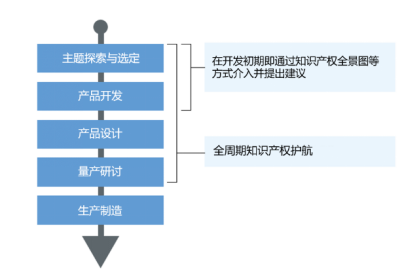
Core Insights - Daikin has been recognized as an "Asia IP Elite" for the third consecutive year by IAM, a leading global intellectual property media outlet, highlighting its excellence in intellectual property strategy, innovation, and commercialization [1] - Only 101 companies received this prestigious recognition, underscoring Daikin's strong performance in creating, protecting, utilizing, and managing intellectual property [1] Group 1: Intellectual Property Strategy - Daikin is actively enhancing its intellectual property portfolio to support business differentiation, establishing a dedicated intellectual property protection department that collaborates closely with R&D and business units [2] - The company implements a proactive intellectual property activity system, ensuring timely protection of innovations from the early stages of product development and sharing market analysis with relevant departments [2] - Tools like the intellectual property panorama are utilized to provide decision-making support for aligning business and intellectual property strategies [2] Group 2: Global Knowledge Enhancement - To strengthen its global intellectual property framework, Daikin is enhancing its overseas intellectual property systems and providing specialized education for global IP leaders and R&D personnel [4] - The company has established a patent reward system to incentivize teams that develop market-competitive innovations, fostering a culture of internal motivation and external collaboration [4] Group 3: Collaborative Innovation Ecosystem - Daikin is building a global collaborative innovation ecosystem through partnerships with universities, startups, and research institutions across six regions and 59 R&D centers [6] - The focus is on improving the efficiency of intellectual property conversion from joint research outcomes, utilizing various methods such as inventor rewards and joint patent portfolios [6] - Notable collaborations include projects with the University of Tokyo and Tsinghua University, aimed at exploring green low-carbon technologies and enhancing practical applications of academic research [6] Group 4: Recognition and Future Directions - Daikin's achievements in intellectual property have led to multiple accolades, including being listed in Clarivate's "Global Innovation 100" for nine consecutive years and receiving recognition from LexisNexis [7] - The company plans to continue deepening its intellectual property strategy, enhancing collaborative mechanisms, and improving operational efficiency to drive sustainable growth and contribute to global industry innovation [8]

大金碳减排净零目标获科学碳目标SBTi认证 双认证彰显百年企业气候担当
Jin Tou Wang· 2025-10-24 02:29
Core Insights - The Science Based Targets initiative (SBTi) is recognized as the authoritative body for corporate greenhouse gas reduction targets, aligning with the Paris Agreement to limit global temperature rise [2][3] - Daikin has achieved SBTi certification for its net-zero target, aiming for net-zero greenhouse gas emissions across its entire value chain by March 2050, with specific reduction targets set for 2030 [2][4] Group 1: SBTi Certification and Daikin's Commitment - SBTi certification is divided into "near-term targets" and "net-zero targets," with the latter requiring comprehensive emission coverage and a clear long-term pathway [2] - Daikin is among the few companies globally to hold both "near-term" and "net-zero" certifications, demonstrating its strategic commitment to climate action [3] Group 2: Daikin's Long-term Strategy - Daikin's climate action is rooted in a long-term strategic vision, having introduced the "Daikin Environmental Vision 2050" in 2018, which aims for net-zero emissions by 2050 [4] - The company has set specific interim targets, including a 30% reduction in greenhouse gas emissions by 2025 and a 50% reduction by 2030, using 2019 as a baseline [8] Group 3: Action Plans for Emission Reduction - Daikin's multi-faceted action plan includes developing energy-efficient and environmentally friendly refrigerants, and implementing energy management systems in buildings [7][8] - The company plans to address residual emissions through carbon offset initiatives, such as promoting heat pump heating and renewable energy projects [8] Group 4: Industry Impact and Future Outlook - Daikin's SBTi certification reflects its commitment to helping limit global temperature rise to within 1.5°C, setting an example for the industry in low-carbon transformation [8] - The company will continue to follow scientific carbon targets and contribute to sustainable development while providing comfortable air solutions [8]