
碳减排

Search documents
Beijing Shougang LanzaTech Technology Co., Ltd.(H0469) - Application Proof (1st submission)
2026-03-26 16:00
This Application Proof is in draft form. The information contained in it is incomplete and is subject to change which can be material. By viewing this document, you acknowledge, accept and agree with the Company, its sole sponsor, overall coordinator, advisers or members of the underwriting syndicate that: (the "Company") (A joint stock company incorporated in the People's Republic of China with limited liability) WARNING The publication of this Application Proof is required by The Stock Exchange of Hong Ko ...
未知机构:广发环保陈龙郭鹏两会明确碳减排要求原油涨价提振生柴赛道-20260309
未知机构· 2026-03-09 02:20
Summary of Conference Call Notes Industry Overview - The focus is on the environmental protection and renewable energy sectors, particularly in the context of carbon reduction and rising energy prices due to geopolitical tensions [1][2]. Key Points and Arguments - The Chinese government has set a target to reduce carbon emissions per unit of GDP by 17% cumulatively by 2026, with a year-on-year reduction of approximately 3.8% [1]. - The introduction of formal carbon assessments for local governments starting this year marks a significant shift towards stricter carbon control measures [1]. - The EU's carbon tariff, effective from January 1, 2026, is expected to accelerate the integration of global carbon markets [1]. Investment Recommendations - Companies to watch include: - **Renewable Energy**: Dadi Ocean, Zhuoyue New Energy, Haicui Chuangye, Weiming Environmental Protection, Jingjin Equipment, Hanlan Environment, Shanghai Industrial Holdings, and Shanggao Environmental Energy [1]. - **Recycling and Resource Recovery**: Inke Recycling (recycled plastics), Longkun Technology, and others focusing on biofuels and green methanol [2]. - The rising prices of oil, driven by geopolitical tensions, are expected to benefit sectors like biodiesel and green methanol [2]. - Recent price data indicates that UCO prices reached $1,080 per ton in March 2026, a 9.6% increase from early 2025, while SAF prices rose to $2,343 per ton, an 11.5% increase from previous lows [2]. Additional Insights - The high oil prices are driving the demand for green alternatives, emphasizing the importance of raw materials in the renewable energy sector [3]. - The value of waste-to-energy assets is being reassessed in the context of the AI era, highlighting the stability and long-term cash flow potential of infrastructure assets like electricity, water supply, and solid waste management [4]. - Specific characteristics of waste incineration assets include: - Secured local supply through exclusive operating rights, providing monopolistic advantages [5]. - Stable demand for waste management as a basic necessity, ensuring predictable cash flows despite capital expenditure reductions [5]. - The maturity of waste processing methods, with limited potential for technological disruption, supports long-term revenue generation from 30-year operating rights [5]. - Companies to focus on in the waste incineration sector include Hanlan Environment, Haicui Chuangye, and others involved in green electricity and metal recovery [5].


环保行业深度跟踪:两会明确碳减排要求,原油涨价提振生柴赛道
GF SECURITIES· 2026-03-08 13:17
Investment Rating - The report maintains an "Buy" rating for the environmental protection industry [2] Core Insights - The government work report for 2026 emphasizes the need for a 17% reduction in carbon emissions per unit of GDP and a 3.8% reduction in total carbon emissions, marking a shift towards dual control of carbon emissions [12][14] - The report highlights the increasing demand for green energy and biofuels, particularly biodiesel, driven by rising oil prices and geopolitical tensions [5][21] - The report suggests focusing on companies involved in the recycling and green energy sectors, such as biofuels and green methanol, as potential investment opportunities [5][13] Summary by Sections Government Work Report - The 2026 government work report sets higher targets for carbon emissions reduction and introduces a national low-carbon transition fund to support hydrogen and green fuel development [12][15] - The report indicates that 2026 will be the first year of formal carbon assessments for local governments [12][14] Biodiesel Market - The average export price of UCO (Used Cooking Oil) in 2025 was 7,742 CNY/ton, a year-on-year increase of 21.6% [21] - UCO export volume for 2025 was 2.7558 million tons, with a 6.6% decrease compared to the previous year [21] - The report notes that the price of UCO has been on an upward trend, reaching 8,125.54 CNY/ton by December 2025 [21] Carbon Market and Policies - The report tracks developments in the carbon market, noting a recent trading volume of 56.05 million tons and a closing price of 81.85 CNY/ton [36][39] - It highlights the establishment of a comprehensive recycling system for retired solar panels, aiming for a cumulative utilization of 250,000 tons by 2027 [34] Key Companies to Watch - The report recommends monitoring companies such as Langkun Technology, Shanhai Environment, and Huanxin Co., which are positioned to benefit from the growing demand for biofuels and recycling [5][33]




全国政协委员、中国东航原总经理李养民:加速可持续航空燃料产业化 助力民航业绿色转型
Shang Hai Zheng Quan Bao· 2026-03-06 20:31
Core Viewpoint - The aviation industry faces significant challenges in reducing carbon emissions, and Sustainable Aviation Fuel (SAF) is recognized as a key pathway for achieving this goal. The development of SAF in China has made positive progress, driven by national policies and market demand [3][4]. Group 1: Current Status of SAF in China - The aviation sector accounts for approximately 99% of its carbon emissions from fuel consumption, with SAF capable of reducing carbon emissions by 80% to 85% compared to traditional jet fuel [5]. - Currently, domestic SAF production only constitutes 0.17% of total aviation fuel, which is below the global average of 0.3%, indicating a supply capacity issue [5][6]. - The production cost of SAF in China is 3 to 5 times higher than traditional jet fuel, with SAF prices projected to reach 20,000 yuan per ton by 2025, compared to an average of 5,507 yuan per ton for domestic jet fuel [6]. Group 2: Challenges Facing SAF Development - The SAF industry in China is hindered by insufficient supply capacity, high application costs, and an incomplete carbon trading system, which limits large-scale commercial application [5][6]. - The current carbon market in China does not include SAF, lacking incentives for emission reductions and making it difficult for fuel producers and investors to expand their applications [6]. Group 3: Recommendations for SAF Advancement - To enhance SAF development, it is recommended to increase research funding and include SAF technology and process development in national key research plans, encouraging collaboration between universities, research institutions, and enterprises [7]. - Improving the pricing and procurement mechanisms for SAF is essential to create a competitive environment among suppliers and make prices more reasonable [7]. - Establishing a domestic SAF certification system that aligns with international standards is crucial for enhancing China's influence in international SAF regulations and facilitating the industry's international development [8].


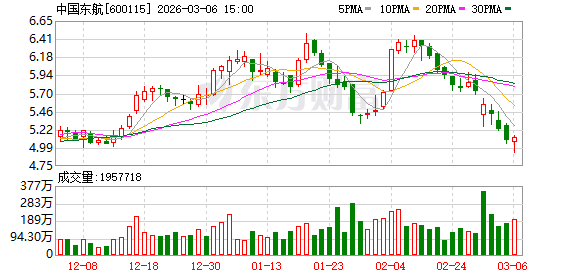
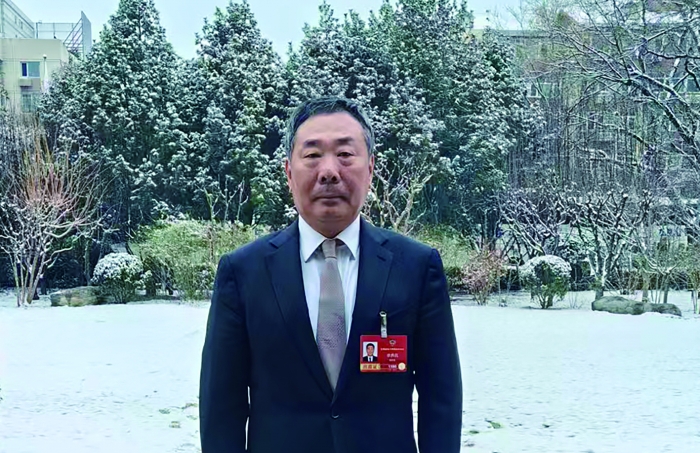
全国政协委员、中国东航原总经理李养民:加速可持续航空燃料产业化助力民航业绿色转型
Shang Hai Zheng Quan Bao· 2026-03-06 20:07
Core Viewpoint - The aviation industry faces significant challenges in reducing carbon emissions, and Sustainable Aviation Fuel (SAF) is recognized as a key pathway for achieving this goal. The development of SAF in China has made positive progress, driven by national policies and market demand [2][3]. Group 1: Current Status of SAF in China - The aviation sector accounts for approximately 99% of its carbon emissions from fuel consumption, with SAF capable of reducing carbon emissions by 80% to 85% compared to traditional jet fuel [3]. - Currently, domestic SAF production only constitutes 0.17% of total aviation fuel, which is below the global average of 0.3%, indicating a supply capacity issue [4]. - The production cost of SAF in China is 3 to 5 times higher than traditional jet fuel, with SAF prices projected to be around 20,000 yuan per ton by 2025, compared to an average of 5,507 yuan per ton for domestic jet fuel [4]. Group 2: Challenges Facing SAF Development - The SAF industry in China is hindered by insufficient supply capacity, high application costs, and an incomplete carbon trading system [4]. - There is currently no market-based pricing and procurement mechanism for SAF, which limits the willingness of airlines to adopt it [4]. - The lack of a domestic SAF certification standard means that Chinese producers rely on foreign certification, weakening their competitive position internationally [5]. Group 3: Recommendations for SAF Advancement - To overcome development bottlenecks, it is suggested to enhance research and development of new SAF technologies and processes, integrating them into national key research plans [6]. - Improving supply capacity involves increasing research investment and developing alternative raw materials such as agricultural waste and algae [6]. - Establishing a market-oriented pricing and procurement mechanism for SAF is essential, along with providing financial subsidies and tax reductions for eligible SAF producers and users [6]. - The SAF application should be included in the national carbon market, with a focus on creating a market mechanism for carbon reduction benefits [6]. - Developing a domestic SAF certification system that aligns with international standards is crucial for enhancing China's influence in international SAF regulations [7].
四部门助力防止返贫致贫和乡村全面振兴,中德续签《关于延续气候变化和绿色转型对话合作机制的联合声明》
GUOTAI HAITONG SECURITIES· 2026-03-03 04:35
Investment Rating - The report does not explicitly provide an investment rating for the industry Core Insights - The report highlights the establishment of a normalized financial support mechanism by four departments to prevent poverty and promote rural revitalization, indicating a shift towards a systematic and long-term financial support framework for rural areas [5][6] - The National Energy Administration is actively promoting the revision of important laws such as the Electricity Law and Renewable Energy Law, aiming to enhance the legal framework for the new energy system [7][9] - The Ministry of Ecology and Environment, along with the State Administration for Market Regulation, has released a revised Air Quality Standard, tightening limits on pollutants like PM2.5, which reflects a commitment to public health and environmental quality [10][12] Policy Trends - Four departments have issued opinions to establish a normalized financial support mechanism to assist in preventing poverty and promoting rural revitalization, focusing on optimizing small loans for impoverished populations and enhancing financial resources for underdeveloped areas [5][6] - The National Energy Administration is focusing on scientific legislation and strict enforcement to support the construction of a new energy system, with an emphasis on revising key energy laws [7][9] - The revised Air Quality Standard will implement stricter limits on PM2.5 and other pollutants, with a phased approach to enforcement starting in March 2026 [10][12] Industry Trends - The Shanghai Environmental Exchange has launched a carbon emissions quota administrative management service trust, marking a significant step in carbon market innovation and financial tool design [13][17] - The first forestry carbon credit insurance has been implemented in China, covering 3,760 acres and involving a carbon reduction of 32,200 tons, showcasing innovation in green finance products [18][19] International Events - The National Development and Reform Commission of China and the German Federal Ministry of Economic Affairs and Energy signed a joint statement to continue cooperation on climate change and green transition, emphasizing collaboration in energy and industrial sectors [20] - BusinessEurope, the largest business lobbying group in Europe, has called for a complete reform of the EU carbon market, highlighting the financial burden of carbon costs on industries [21][22] Corporate Developments - CATL and BMW signed a memorandum of understanding to collaborate on battery passport pilot projects, aiming to enhance supply chain carbon footprint reduction [24] - Microsoft announced it achieved 100% renewable energy consumption five years ahead of its target, reflecting its commitment to sustainability [24]
AMG 2025Q4 锂精矿销售量环比增长 84%至2.5483 万吨,锂精矿平均成本环比上涨 16%至489美元/吨(CIF,中国)
HUAXI Securities· 2026-03-02 12:04
Investment Rating - The report recommends a "Buy" rating for the industry, indicating a positive outlook for investment opportunities [4]. Core Insights - AMG Lithium's Q4 2025 sales volume of lithium concentrate increased by 84% quarter-on-quarter to 28,326 tons, although it decreased by 15% year-on-year. The average selling price rose by 30% quarter-on-quarter to $689 per ton, while the average cost increased by 16% to $489 per ton [1][2]. - For the full year 2025, total sales of lithium concentrate were 69,180 tons, a decline of 22% from 2024, primarily due to equipment failure during expansion projects. The average selling price for the year was $632 per ton, with an average cost of $488 per ton, down 6.6% from 2024 [2]. - AMG Lithium's revenue for Q4 2025 was $61.39 million, a 16% increase year-on-year, but the full-year revenue decreased by 10% to $163.14 million due to lower lithium market prices and sales volume [12][22]. - AMG Vanadium's Q4 2025 revenue grew by 8% to $157 million, driven by increased sales of chromium and titanium alloys, although offset by a decline in vanadium sales [13]. - AMG Technologies experienced a 40% revenue increase in Q4 2025, reaching $228.63 million, attributed to higher antimony sales prices and strong engineering sales [15][23]. - The company anticipates a reduction in workforce to approximately 3,200 employees by 2026 due to the sale of AMG Graphite and the closure of AMG Silicon [18]. Summary by Sections Production and Operations - AMG Lithium's Q4 2025 production was impacted by lower ore grades, leading to a decrease in recovery rates and overall production [1]. - The Bitterfeld facility is enhancing its capacity to produce battery-grade lithium hydroxide and is progressing with customer certification [2]. Financial Performance - Q4 2025 total revenue was $439 million, a 24% increase year-on-year, but adjusted gross profit decreased by 33% [8][19]. - The net loss attributable to shareholders in Q4 2025 was $48.26 million, significantly affected by high tax expenses [9][20]. Future Outlook - The company expects capital expenditures of $70 million to $90 million in 2026, primarily driven by targeted growth investments in vanadium and lithium [18]. - The projected adjusted EBITDA for 2026 is estimated to range between $210 million and $240 million, supported by strong order backlogs and rising raw material prices [18][19].
太阳纸业20260228
2026-03-01 17:22
Summary of the Conference Call for Sun Paper Industry Industry Overview - The cultural paper market is expected to remain weak, with prices at low levels. The rising pulp prices have led to industry losses, creating a motivation for price increases. It is anticipated that attempts to pass on costs will occur in March-April, depending on whether paper prices can absorb these costs [2][4] - The boxboard paper market is expected to perform well in October-November 2025, but prices fell sharply in October. A slight increase was observed after the Spring Festival, indicating potential demand growth in the second half of the year if consumer recovery occurs [2][5] - Overseas pulp prices are strong due to supply constraints, changes in Indonesian logging policies, and currency appreciation. The trend of pulp prices will depend on the transmission of paper prices after March [2][6] Company Insights - The Nanning project is expected to reach full production by the end of 2025, while the Yantian project is anticipated to start production around the National Day in 2026. The main incremental contributions in 2026 will come from the full production release of the Nanning project, and in 2027 from the Yanbian base project [2][7][8] - 2025 is projected to be a significant investment year with total investments exceeding 7-8 billion. Capital expenditures for 2026 are estimated at around 5 billion, with a noticeable decrease in 2027. Shareholder returns will focus on stability [2][9] Market Dynamics - The cultural paper prices have been declining since October 2025, reaching new lows. The industry is facing significant operational pressure, with pulp prices rising from 500 to 620, while paper prices remain low, leading to overall industry losses and cash flow pressures [4][12] - The boxboard paper market is expected to see better performance in the second half of 2026 due to increased demand from logistics and express delivery sectors, with a slight increase in demand observed after the Spring Festival [5] Pulp Supply and Pricing - The overseas pulp price is under pressure due to supply constraints and seasonal factors. The rising exchange rate of the RMB also supports pulp prices. Future trends will depend on the successful transmission of paper prices [6] - The company is shifting its strategy from focusing on quantity to quality in wood chip supply, with potential supply issues expected to emerge in the long term as demand for wood chips grows [10][11] Capital Expenditure and Shareholder Returns - The capital expenditure for 2025 is expected to exceed 7-8 billion, with significant investments in the Nanning and Yantian projects. The capital expenditure for 2026 is projected to be around 5 billion, with a decrease expected in 2027 [9] - Shareholder returns will focus on stability, with dividends or buybacks being the primary approach [9] Environmental and Regulatory Considerations - The "3060" carbon reduction target is expected to impact the paper industry significantly by 2027, with stricter regulations on new capacity approvals anticipated. This may lead to increased industry concentration as smaller companies struggle to meet carbon reduction requirements [13][14][17] - The company is actively working on carbon reduction initiatives and aims to achieve zero-carbon factory goals, particularly in its Thai industrial park [13][17] Conclusion - The company is navigating a challenging market environment with rising costs and operational pressures. Strategic investments and a focus on quality in supply chains are key to maintaining competitiveness. The anticipated regulatory changes regarding carbon emissions will also shape future operational strategies and market dynamics.

沈阳市辽中区鹏赫能源科技有限公司成立,注册资本500万人民币
Sou Hu Cai Jing· 2026-02-27 03:33
Group 1 - The company Shenyan City Liao Zhong District Penghe Energy Technology Co., Ltd. has been established with a registered capital of 5 million RMB [1] - The legal representative of the company is Zhang Zhaofeng, and it is wholly owned by Penghui Lihe (Liaoning Province) Energy Technology Co., Ltd. [1] - The business scope includes solar power generation technology services, energy storage technology services, contract energy management, wind power generation technology services, and research and development of carbon reduction, carbon transformation, carbon capture, and carbon storage technologies [1] Group 2 - The company is classified under the national standard industry of electricity, heat, gas, and water production and supply, specifically in electricity production [1] - The registered address of the company is Room 215, No. 1 Jinhai Street, Liao Zhong Economic Development Zone, Shenyang City, Liaoning Province [1] - The company is a limited liability company with a business term lasting until February 26, 2026, with no fixed term thereafter [1]
荷兰迎来最年轻首相
Xin Lang Cai Jing· 2026-02-25 06:37
Core Points - Rob Jetten has become the youngest Prime Minister in Dutch history at the age of 39, leading a minority government with less than half of the seats in the House of Representatives, marking it as one of the weakest governments in decades [1][4] - Jetten's political career began early, and he has been involved in various roles within the D66 party, including serving as a spokesperson and later as the Minister for Climate and Energy Policy [2] - The D66 party achieved its best-ever performance in the last election, winning 26 seats, and formed a coalition with the Christian Democratic Appeal and the People's Party for Freedom and Democracy [3] Political Landscape - Jetten's government holds only 66 out of 150 seats in the lower house, indicating limited autonomy and a challenging environment for legislative initiatives [4] - His political agenda includes increasing defense spending and reducing carbon emissions from livestock, reflecting a commitment to European cooperation and environmental issues [3][4] - Jetten's ambitious plans, such as building new cities and increasing housing supply, have faced criticism for being unrealistic and potentially exacerbating social inequalities [4]