
创新生态

Search documents
今天,投资人集体去浙江
投资界· 2026-03-24 09:37
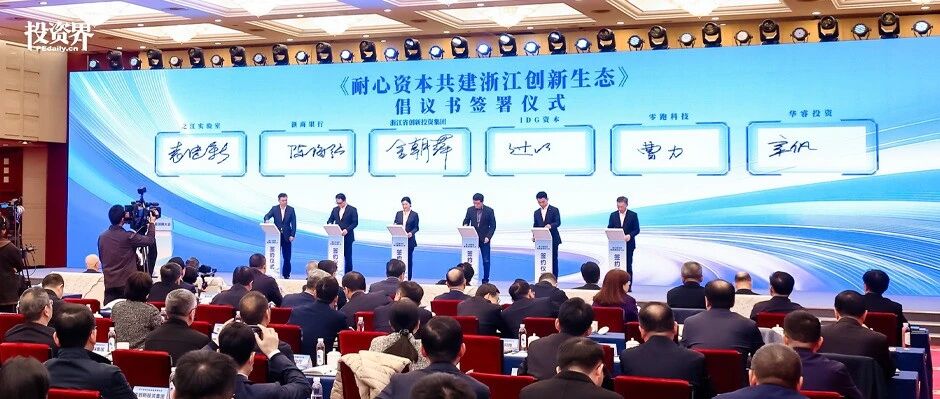
Core Viewpoint - Zhejiang Province has established itself as a vibrant hub for venture capital and innovation, with a total provincial fund scale exceeding 3000 billion yuan, supporting over 1800 local enterprises and facilitating the successful listing of more than 100 companies [2][5][6]. Group 1: Fund Structure and Scale - The provincial fund system in Zhejiang has surpassed 3000 billion yuan, covering all stages from seed to growth and mergers [5]. - The Zhejiang Social Security Science and Technology Fund, established in October last year with an initial scale of 500 billion yuan, has already invested in 8 projects totaling 1.3 billion yuan and is in the process of selecting sub-funds exceeding 300 billion yuan [5][6]. - The "4+1" special fund group, focused on advanced manufacturing and technological innovation, has a scale of 745 billion yuan and has invested in over 500 projects totaling 450 billion yuan [6]. Group 2: Investment Philosophy and Ecosystem - Zhejiang aims to cultivate "patient capital" that allows various funds to enter, invest effectively, manage well, and exit smoothly, thereby enhancing the investment ecosystem [4][11]. - The province's fund system emphasizes long-term investment horizons, with some funds having a maximum duration of 20 years, which is rare in the current venture capital landscape [6][10]. - The government is committed to creating a supportive environment for innovation, allowing for a collaborative ecosystem where venture capital can thrive [8][10]. Group 3: Strategic Partnerships and Future Goals - Strategic partnerships have been formed, such as the collaboration between the Zhejiang Innovation Investment Group and Zhejiang University, aimed at building a robust innovation ecosystem [2][11]. - By 2030, the provincial fund scale is projected to exceed 5000 billion yuan, aiming to leverage various capital sources to invest over one trillion yuan in Zhejiang [7][11]. - The focus is on creating a conducive climate for innovation, with a significant influx of high-end resources and capital into the region [9][10]. Group 4: Case Studies and Success Stories - Companies like Blue Arrow Aerospace and Qianxun Intelligent have benefited from the provincial government's investment strategies, showcasing the effectiveness of the supportive capital environment [10]. - The collaboration between local venture capital firms and government funds has led to significant investments in emerging sectors, reinforcing Zhejiang's position as a leading innovation hub [9][10]. Group 5: Vision for the Future - Zhejiang's approach to innovation is not just about immediate gains but about building a sustainable ecosystem that fosters long-term growth and development [13][16]. - The province is committed to enhancing its core competitive advantages in technology and industry, ensuring that venture capital is willing to invest in hard technology and innovative projects [16].

美国特别竞争研究项目:《中美技术竞争中谁领先、谁落后及未来走向》
欧米伽未来研究所2025· 2026-03-19 15:40
Core Viewpoint - The SCSP report highlights the competitive landscape between the U.S. and China in key technology sectors, indicating a complex, fluid, and uncertain multi-dimensional competition rather than a clear-cut dominance by either side [2]. Group 1: China's Strengths - China leads in four strategic technology areas: advanced batteries, advanced manufacturing, commercial drones, and 5G infrastructure, with high confidence ratings [4]. - In the battery sector, China's manufacturing capacity reached 1,705 GWh in 2023, compared to the U.S. at 93 GWh, marking an 18-fold difference. China controls 80% of global lithium-ion battery component shipments and holds about 60% of the global electric vehicle battery market [4]. - China accounts for approximately 35% of global manufacturing output, while the U.S. is at about 12%. The number of industrial robots deployed by Chinese companies in 2023 matches the total of all other countries combined [5]. - China has deployed over 4 million 5G base stations, averaging 206 per 100,000 people, compared to the U.S. with about 100,000 base stations or 77 per 100,000 people. By 2024, China is expected to have over 1 billion 5G users, covering 88% of its mobile users [5]. Group 2: U.S. Strengths - The U.S. maintains a lead in artificial intelligence, quantum computing, semiconductors, fusion energy, and internet platforms, relying on foundational research breakthroughs and private sector innovation [6]. - In AI, U.S. private investment reached $67.2 billion in 2023, compared to China's $7.76 billion, a nearly 9-fold difference. Most foundational AI models have originated from U.S. private companies [6]. - The semiconductor sector is rated as "U.S. leading, high confidence," with the CHIPS Act expected to drive over $400 billion in private investment, projecting that the U.S. will hold 28% of global advanced logic chip capacity by 2032 [7]. Group 3: Structural Weaknesses - A recurring structural pattern is observed: U.S. innovation versus Chinese commercialization. The U.S. holds 39% of global biotechnology patents but has seen a shift in the production side, with Chinese companies supplying about 17% of U.S. active pharmaceutical ingredients (APIs) [9]. - In synthetic biology, the U.S. market is valued at $16.3 billion compared to China's $1.05 billion, yet China controls 70% of global fermentation capacity, highlighting a significant production bottleneck for U.S. firms [10]. - DJI dominates the global consumer drone market with over 90% share, raising national security concerns for the U.S. as it lacks comparable domestic alternatives [10]. Group 4: Strategic Recommendations - The report suggests establishing a "Technology Competition Council" to unify strategic direction and coordinate responses across departments, addressing the misalignment between private sector focus and government priorities [11]. - The trajectory of fusion energy illustrates the competitive dynamics, with the U.S. currently leading but facing significant investment from China, which may narrow the gap in the coming years [12].

西湖区探索“顾问式”服务,建设一流创新生态
Hang Zhou Ri Bao· 2026-02-28 02:05
Core Insights - The West Lake District aims to establish a first-class innovation ecosystem through "consultative" services, providing a model for a competitive business environment in the province [1] - The "consultative" service model integrates resources from leading enterprises, industry experts, and government departments to address personalized challenges faced by businesses [1][2] - The focus on five key industries—artificial intelligence, commercial aerospace, life sciences, platform economy, and cultural creativity—reflects the district's strategic ambition and existing strengths [2] Group 1 - The "consultative" service framework includes the formation of advisory groups and service teams to support businesses throughout their lifecycle [1] - By 2025, the artificial intelligence sector in West Lake District is projected to generate revenue of 140.6 billion yuan, leading the city [2] - The commercial aerospace industry is experiencing explosive growth, with the launch of the first commercial satellite supply chain "supermarket" in the country [2] Group 2 - The life sciences sector is accelerating its development through top-tier innovation platforms [2] - The platform economy has attracted 82 leading enterprises, becoming a core support for modern services [2] - The cultural sector has seen successful projects like "Black Myth: Wukong" and "Taiping Year," showcasing the district's creative potential [2] Group 3 - The West Lake District has evolved its service approach from merely solving problems to creating opportunities for businesses [2] - The district is transitioning from attracting and nurturing enterprises to a deeper engagement with research, application, and collaboration [2] - Future initiatives will continue to explore "consultative" services to drive high-quality development and support the construction of a common prosperity demonstration zone [3]
长三角经济总量达34.66万亿元
Ren Min Ri Bao· 2026-02-26 22:43
Core Viewpoint - The Yangtze River Delta region is projected to have an economic total of 34.66 trillion yuan by 2025, highlighting its role as a significant growth engine in China's economy [1] Economic Performance - By 2025, the total export volume of Shanghai, Jiangsu, Zhejiang, and Anhui is expected to reach 10.85 trillion yuan [1] - The proportion of listed companies on the Sci-Tech Innovation Board from the Yangtze River Delta is anticipated to reach 48% [1] Innovation and Collaboration - The Yangtze River Delta's joint tackling mechanism is deepening, with 212 cross-regional tackling demands collected for 2025, and 69 key tasks published [1] - A record 227 cross-regional joint solutions have been collected, indicating a robust collaborative environment [1] - The establishment of innovation alliances is accelerating, with 24 alliances announced in two batches [1] Industry Development - The implementation of measures to accelerate the construction of advanced manufacturing clusters in the low-altitude economy has been initiated [1] - The Yangtze River Delta's technology innovation vouchers have achieved interconnectivity across Shanghai, Zhejiang, Jiangsu, and parts of Anhui, with over 5,000 companies applying and more than 11,000 purchases of technology services [1] - The total support amount from innovation vouchers has exceeded 250 million yuan [1] - The Shanghai Technology Exchange is leading the establishment of a service center for technology rights registration, with over 600 new transformation projects expected in the Yangtze River Delta by 2025 [1]
培育未来产业,如何发挥企业主体作用?
Xin Hua She· 2026-02-22 12:04
Group 1 - The core viewpoint emphasizes the importance of cultivating future industries as a strategic choice to seize technological and industrial advantages, with a focus on enterprise-driven innovation [1] - Experts suggest building an enterprise-centered future industry cultivation system to gather various innovative resources around companies [1] - The competition in future industries is fundamentally a competition of innovation ecosystems, advocating for collaboration between leading enterprises, startups, and academic institutions to form interdisciplinary innovation teams [1] Group 2 - Companies are seen as the leaders and ultimate bearers of technological innovation and industrialization, necessitating their central role in a fusion innovation ecosystem [2] - The dual-driven innovation engine of "technology-scenario" is proposed, with real-world demands acting as the driving force for technological evolution in key areas like smart manufacturing and low-carbon energy [2] - Recommendations include establishing national-level future industry integration application demonstration zones and enhancing the role of enterprises in R&D decision-making and results transformation [2]
营造创新生态 发展新质生产力
Xin Lang Cai Jing· 2026-02-21 20:16
Group 1 - The core viewpoint emphasizes the need to enhance the national innovation system's overall effectiveness and strengthen independent innovation capabilities to seize technological development opportunities and continuously foster new productive forces [1] - The relationship between innovation ecology and new productive forces is described as a symbiotic one, where a healthy innovation ecosystem is essential for economic development driven by innovation rather than by factors or investment [1] - The article outlines that innovation ecology consists of diverse innovation entities, resource elements, and supportive environments, while new productive forces arise from technological breakthroughs, innovative resource allocation, and industrial upgrades [2] Group 2 - Collaborative innovation among enterprises, universities, research institutions, and government is identified as the central mechanism for generating new productive forces, with each entity playing a crucial role in the innovation ecosystem [2] - The article highlights that the effective aggregation and allocation of innovation elements such as talent, capital, technology, and data are vital for the growth of new productive forces [2] - A supportive environment, including robust intellectual property protection and a transparent market access system, is necessary to foster a thriving innovation ecosystem [2] Group 3 - The article suggests that the city should focus on the "one base and three areas" strategic positioning to cultivate a distinctive innovation ecosystem, integrating the collaborative development of the Beijing-Tianjin-Hebei region and traditional industry upgrades [3] - It emphasizes the importance of establishing a solid foundation for "R&D + transformation" by focusing on national strategies and key local industries, and creating high-standard platforms for technology maturation and market feasibility verification [3] - The article advocates for building a "tropical rainforest" of original innovation by fostering a regulatory framework that supports disruptive technologies and creating a culture that encourages risk-taking and innovation [3] Group 4 - The article calls for the establishment of a regional open innovation ecosystem by promoting the integration of innovation factor markets in the Beijing-Tianjin-Hebei region, facilitating the sharing of large scientific instruments and mutual recognition of talent qualifications [4] - It discusses the need to enhance the city's role as a hub for technology transfer and industrialization by creating major functional platforms for technology transaction and jointly establishing national laboratories [5] - The article proposes a practical and efficient transformation service ecosystem to support traditional industries, integrating various financial tools and providing one-stop services for technology adoption [5] Group 5 - The integration of technological and industrial innovation is deemed essential for developing new productive forces, with the quality of the innovation ecosystem being a critical factor in this integration [6] - The article concludes that achieving breakthroughs in innovation ecosystem construction is necessary for building a modern metropolis and fostering new productive forces through deep reforms and opening up [6]
西方专家集体懵圈!一年时间,中国怎么就成了 “看不懂的奇迹”?
Sou Hu Cai Jing· 2026-02-21 09:26
Economic Performance - China's GDP growth reached 5% with a total economic output exceeding 140 trillion yuan, contributing approximately 30% to global growth [3][5] - Manufacturing value added has been the highest globally for 16 consecutive years, with industrial added value increasing by 5.9% [3][5] - China's export total reached 45.47 trillion yuan, marking a year-on-year increase of 3.8%, with high-tech product exports rising by 13.2% [3][5] Trade and Foreign Relations - China achieved a trade surplus of 1.2 trillion USD despite predictions of a trade downturn, with exports to ASEAN and Latin America growing faster than overall exports, particularly an 11.2% increase to Latin America [3][5] - The Belt and Road Initiative emphasizes mutual benefit and cooperation, with investments in partner countries increasing by 20% [9] Technological Advancements - Despite Western technological blockades, Chinese companies have made significant advancements, such as the DeepSeek-R1 model, which performs competitively with Western counterparts [7] - China's R&D investment reached 39.262 billion yuan, ranking second globally, with the highest number of PCT patent applications [7] Industrial and Economic Structure - The share of the service sector in China's economy reached 57.7%, while the proportion of high-tech manufacturing in industrial output rose to 17.1% [5] - China has maintained a complete industrial system and a large-scale market, with a strong focus on innovation and industrial upgrading [5][9]

年终压轴会 浙江瞄准一流创新生态
Zhong Guo Xin Wen Wang· 2026-02-09 14:25
Core Viewpoint - Zhejiang province is prioritizing the construction of a first-class innovation ecosystem, aiming to establish a highly competitive, attractive, and influential environment by 2030 [1][3]. Group 1: Historical Context - The meeting is a response to historical initiatives, including the 2006 call for a self-innovation conference, which set a goal for Zhejiang to become an innovative province by 2020 [2]. - Key indicators of technological innovation in Zhejiang have significantly improved over the past 20 years, with R&D investment intensity rising from 1.44% in 2006 to 3.22% in 2024, and regional innovation capability climbing from 6th to 4th in the nation [2]. Group 2: Current Situation - The meeting reflects a deep understanding of the current landscape, where a new wave of technological revolution, particularly in artificial intelligence, is intensifying competition [3]. - The innovation ecosystem's quality is crucial for Zhejiang to leverage technology for new development advantages, especially given its resource limitations [3]. Group 3: New Concepts - The province has equated "innovation ecosystem" with its "golden business card," emphasizing the importance of a favorable business environment [5]. - Recent evaluations have shown Zhejiang leading in four key business environment indicators: market, legal, innovation, and government affairs [5]. Group 4: Four "Best" Proposals - The meeting introduced four "best" proposals: the best nurturing ground for talent, the best cradle for enterprise development, the highest efficiency in collaboration, and the most perceptible policy services [8]. - These proposals aim to enhance the overall innovation ecosystem, focusing on attracting and retaining high-level talent and fostering enterprise growth [9]. Group 5: Specific Initiatives - Zhejiang plans to strengthen the construction of high-level innovative talent and entrepreneur teams, creating a comprehensive support system for talent [9]. - The province will encourage collaboration among various entities, including universities and enterprises, to enhance technological finance and promote mutual empowerment [9]. - Policy services will be improved to create a stable, fair, transparent, and predictable development environment, particularly in areas like artificial intelligence and intellectual property protection [10].
牢牢把握培育壮大新动能的两个关键
Xin Lang Cai Jing· 2026-02-08 18:31
Core Viewpoint - The Central Economic Work Conference emphasizes "innovation-driven development and accelerating the cultivation of new momentum" as a key task for economic work in 2026 [1] Group 1: Key Tasks and Focus Areas - Accelerating the cultivation of new momentum is a systematic project that requires coordinated advancement of technological innovation, industrial innovation, and scenario innovation [1] - The focus should be on the deep integration of technological innovation and industrial innovation, addressing institutional barriers, and solving the disconnection between the innovation chain and the industrial chain [1] - Systematic optimization of resource allocation, collaboration between industry, academia, and research, and industrial layout mechanisms are essential to fully connect the transformation channels from strong technology to strong industry and strong economy [1] Group 2: Implementation Strategies - The approach should be tailored to local conditions, leveraging existing foundations to cultivate and expand new momentum [1] - Regions should develop differentiated strategies based on their development levels, foundational conditions, and practical situations, focusing on innovation priorities and industrial layouts [1] - Active exploration in practice is encouraged to gradually form distinctive, vibrant, and sustainable new momentum cultivation models [1]
宁夏宁东科技创业投资有限公司现代煤化工中试平台:打造煤化工产业的“西部试验田”
Zhong Guo Hua Gong Bao· 2026-02-06 04:01
Core Insights - The Ningxia Ningdong Energy and Chemical Base plays a crucial role in the national energy strategy, with its modern coal chemical pilot platform serving as a key hub for connecting laboratory research and industrialization [1] Group 1: Importance of the Pilot Platform - The pilot platform is the first of its kind in the Northwest region and addresses common challenges in chemical pilot projects, such as lengthy approvals and slow implementation [1] - It employs a collaborative model of "Eastern R&D + Western maturation" and a "1+N+X" service system to attract innovation resources to the West, fostering the development of coal-based new materials and green chemicals [1] Group 2: Policy Innovations for Accelerating Technology Transfer - The platform has introduced innovative policies to streamline the approval process, allowing pilot projects to be completed within two months from initiation to entry [2] - It has successfully attracted 41 projects, with 70% sourced from Eastern regions, and established a technology investment model that promotes rapid industrialization of high-tech achievements [2] Group 3: Comprehensive Support Infrastructure - The platform features a production operation center, collaborative innovation center, and testing center, along with advanced facilities and a shared equipment platform to support enterprises from small trials to industrialization [3] - It has invested approximately 188 million yuan in advanced equipment, achieving domestic and international standards in various technologies [3] Group 4: Deep Engagement in Project Development - The platform actively collaborates with companies to optimize processes and improve product yields, exemplified by a lithium battery project that increased yield from 78% to 82% [4] - It has also addressed production challenges in other projects, demonstrating its role as an "innovation partner" rather than just a service provider [4] Group 5: Building a Sustainable Innovation Ecosystem - The platform aims to create a sustainable innovation ecosystem by linking a core pilot platform with multiple enterprise pilot workshops and national research institutions [5] - It focuses on a comprehensive R&D transformation system, targeting key areas such as industrial catalysis and green chemistry to support high-quality development in the Ningdong coal chemical industry [6] Group 6: Future Development Goals - The platform's short-term goal is to become a leading pilot platform in China, covering key industrial chains and meeting diverse technological needs [6] - In the long term, it aims to establish multiple public pilot lines for low-risk common technologies, supporting the transition of the modern coal chemical industry towards high-end and green development [6]
