绿色可持续发展

Search documents
万科企业股份有限公司2025年度报告摘要
Shang Hai Zheng Quan Bao· 2026-03-31 19:47
Core Viewpoint - The company reported significant losses in 2025 due to various factors, including high land costs and operational missteps, and aims to improve management and financial stability while focusing on risk mitigation and operational efficiency [3][4][15]. Financial Performance - The company did not distribute dividends for 2025 due to operational losses, which resulted in unremedied losses at the parent company level [2]. - The company achieved a total revenue of 2,334.3 billion yuan, a year-on-year decrease of 32.0%, with a net loss attributable to shareholders of 885.6 billion yuan, down 79.0% [23][16]. - The gross profit margin for real estate development was 8.6%, a decrease of 0.9 percentage points from 2024, while the gross profit margin for property services was 12.3%, also down by 0.9 percentage points [24][26]. Operational Highlights - The company delivered 117,000 housing units in 2025, with 73 batches achieving "zero waiting" for delivery [3][15]. - The company signed contracts worth 1,340.6 billion yuan in its development business, with 18 new projects launched [5][15]. - The company actively engaged in asset transactions, completing 31 major asset transactions with a total value of 11.3 billion yuan [4][15]. Strategic Focus - In 2026, the company will focus on risk mitigation and development, emphasizing the exit from underperforming cities and business areas while enhancing product and service capabilities [6][7]. - The company aims to innovate its business model and leverage technology, including AI, to improve operational efficiency and customer experience [6][39]. Market Context - The real estate market in 2025 saw a decline in sales area and value, with new housing sales down 8.7% and 12.6% respectively compared to 2024 [16][17]. - The property service sector faced increased competition and declining service rates, with the average service fee dropping slightly [19]. - The rental housing market experienced a slight decrease in average rent, with the implementation of the Housing Rental Regulations promoting industry standardization [20][45]. Future Outlook - The company plans to enhance its operational capabilities and focus on sustainable development, with a commitment to delivering quality housing and services [7][6]. - The company will continue to optimize its asset structure and enhance its development capabilities through strategic investments and partnerships [37][38].

金隅集团(02009) - 2025年年度报告
2026-03-30 14:46
香港交易及結算所有限公司及香港聯合交易所有限公司對本公告的內容概不負責,對其準確 性或完整性亦不發表任何聲明,並明確表示,概不會就本公告全部或任何部分內容而產生或 因依賴該等內容而引致的任何損失承擔任何責任。 北 京 金 隅 集 團 股 份 有 限 公 司 BBMG Corporation* 本公告乃北京金隅集團股份有限公司(「本公司」)按香港聯合交易所有限公司證券上市規則 第13.10B條發出。 茲載列本公司於二零二六年三月三十日在中華人民共和國上海證券交易所網站刊登之2025 年年度報告,僅供參閱。 承董事會命 北京金隅集團股份有限公司 主席 姜英武 中國北京,二零二六年三月三十日 於本公告日期,本公司執行董事為姜英武、顧昱及鄭寶金;非執行董事為孔慶輝、顧鐵民及 趙新軍;以及獨立非執行董事為劉太剛、洪永淼、譚建方及尹援平。 (於中華人民共和國註冊成立的股份有限公司) (股份代號:2009) 海外監管公告 * 僅供識別 北京金隅集团股份有限公司2025 年年度报告 1 / 290 北京金隅集团股份有限公司2025 年年度报告 重要提示 一、本公司董事会及董事、高级管理人员保证年度报告内容的真实性、准确性、完 ...
比亚迪:公司以创新为核心驱动力,持续不断地推出一系列具有原创性、颠覆性的技术和产品
Zheng Quan Ri Bao· 2026-03-26 11:16
Group 1 - The company emphasizes innovation as its core driving force, continuously launching a series of original and disruptive technologies and products [1] - The company is committed to promoting global green and sustainable development [1] - The company aims to develop itself while addressing social issues [1]


华润国际医药供应链(广东)项目在花都区全面启动建设 打造湾区医药物流新枢纽
Guang Zhou Ri Bao· 2026-02-27 01:56
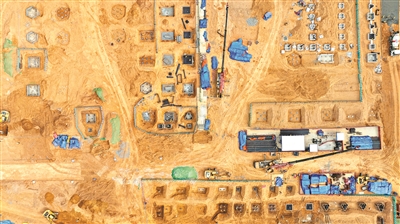
Core Insights - The project by China Resources Pharmaceutical Group aims to establish a modern pharmaceutical health logistics hub in Huadu District, Guangzhou, which will serve the Guangdong-Hong Kong-Macau Greater Bay Area and radiate nationwide [1][7]. Group 1: Project Overview - The total investment for the project is approximately 936 million yuan, covering an area of about 109 acres with a total construction area exceeding 100,000 square meters [7]. - The project is designed as a smart, green, and multifunctional logistics hub, recognized as a key project by Guangdong Province and Guangzhou City, and included in the national cold chain logistics base [7]. Group 2: Technological and Operational Features - The hub will feature four main buildings, including single-layer and multi-layer warehouses, integrating advanced logistics technologies such as AS/RS automation, multi-channel dense storage, and digital twin management [7]. - The project aims to enhance sorting efficiency by approximately 40% through the application of automation and intelligent systems, while also striving to become a "near-zero carbon demonstration park" [7]. Group 3: Strategic Importance - The project is a core component of China Resources Pharmaceutical's "Healthy China" strategy and is expected to significantly improve the supply capacity of pharmaceuticals, especially emergency and cold chain medicines in the South China region [8]. - It is projected to be completed and operational by April 2028, enhancing China Resources' competitiveness in the South China pharmaceutical logistics sector and creating numerous job opportunities [8]. Group 4: Future Prospects - The logistics hub is expected to contribute to the development of a new highland for the biopharmaceutical industry in Guangzhou and the Greater Bay Area, positioning itself as a strategic point for global resource allocation [9].

澳媒记者感叹:中国决心办的事,就能以惊人速度完成
Xin Lang Cai Jing· 2026-02-26 22:49
Core Insights - The Chinese government has significantly reduced urban traffic noise pollution through a combination of incentives and strict regulations, particularly in major cities like Beijing [1][2] - The transition to electric vehicles (EVs) has played a crucial role in this noise reduction, with many traditional fuel vehicles being replaced [1] - The overall urban experience in cities like Beijing has improved, making walking a pleasant activity due to lower noise levels and better air quality [2] Group 1 - The implementation of policies encouraging the purchase and use of electric vehicles, along with measures like vehicle license plate restrictions, has contributed to the reduction of traffic noise [1] - The transformation in Beijing's noise levels is notable given its population of over 20 million, indicating a rapid and effective change [1] - The Chinese government's commitment to reducing carbon footprints and promoting sustainable development is evident through substantial investments in clean energy sources such as wind, solar, and hydropower [2] Group 2 - The experience of walking in Beijing is described as enjoyable due to the improved air quality and reduced noise, reflecting the effectiveness of the government's initiatives [2] - The ability of the Chinese government to implement changes swiftly when determined is highlighted as a positive aspect of its governance [2]
抗菌又环保:汉麻纤维未来大有可为
Ren Min Ri Bao· 2026-02-24 22:35
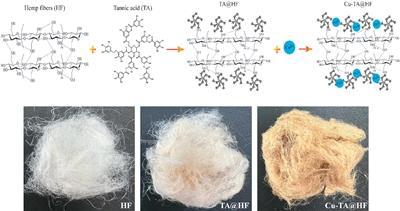
Core Viewpoint - The research team at the Chinese Academy of Agricultural Sciences has made significant advancements in transforming hemp fiber into a multifunctional new material with high antibacterial properties and good mechanical performance, opening new application possibilities in medical health and high-end textiles [2][4]. Group 1: Research and Development - The innovative team has developed a green, low-energy functional modification process that enhances the antibacterial efficacy of hemp fiber, achieving over 99% inhibition rates against Staphylococcus aureus and Escherichia coli [2][6]. - The new modification method, termed "functional SPA," utilizes plant-derived tannic acid and copper ions to create a stable antibacterial structure without damaging the fiber's internal structure [5][6]. Group 2: Sustainability and Environmental Impact - Hemp fiber demonstrates significant sustainability advantages, with lifecycle carbon emissions approximately 60% lower than cotton and 90% lower than chemical fibers, while sequestering over 1.6 tons of carbon per acre annually [4]. - The cultivation of hemp requires minimal water, only one-third of that needed for cotton, and does not necessitate pesticides or fertilizers, making it an environmentally friendly option [4]. Group 3: Market Applications - The new hemp fiber is expected to have broad applications in high-end textiles and medical protection, including antibacterial underwear, surgical gowns, medical masks, and high-absorbency bandages [7]. - In the construction and automotive industries, hemp fiber can serve as a reinforcement material, enhancing performance while reducing volatile organic compound emissions [7]. - The advancements in hemp fiber technology not only support its high-value utilization but also set a new benchmark for the functionalization of natural fibers and the green transformation of the textile industry [7].
政策、技术、市场齐发力,规范废旧电池回收利用
Jing Ji Ri Bao· 2026-02-24 10:16
Core Insights - The production and sales of new energy vehicles in China are expected to grow by nearly 30% by 2025, while the volume of retired batteries is also increasing significantly [1] - By 2028, the retired volume of power batteries in China is projected to exceed 4 million tons, with the waste battery recycling industry expected to exceed 280 billion yuan in value [1] - The current standardized recycling rate of waste power batteries in China is still below 50%, indicating both pressure for recycling and significant market opportunities [1] Group 1: Policy and Regulatory Framework - In 2018, the Ministry of Industry and Information Technology introduced interim measures for the recycling and utilization of new energy vehicle power batteries, establishing a battery coding traceability system and designating automobile manufacturers as the main entities responsible for recycling [2] - The State Council approved an action plan in February 2025 to improve the recycling system for power batteries, emphasizing the need for a standardized, safe, and efficient recycling process [2] - The upcoming interim measures for the management of waste power battery recycling and comprehensive utilization, effective April 1, aim to create a full lifecycle regulatory system for power batteries [2] Group 2: Industry Development and Market Opportunities - The construction of a waste power battery recycling system is crucial, requiring a closed-loop model that integrates production, use, recycling, and regeneration [3] - The comprehensive utilization of waste power batteries in China is expected to exceed 400,000 tons by 2025, reflecting a year-on-year growth of 32.9%, driven by market demand and technological advancements [3] - The application of digital traceability technology is transforming traditional recycling models, while innovations in production processes are reducing costs and improving recovery efficiency [3] Group 3: Market Environment and Competition - The recycling of power batteries has transcended industrial boundaries, becoming a battleground for global strategic resource competition [3] - A standardized and orderly market environment is essential to prevent a large number of waste batteries from flowing into informal recycling channels, thereby promoting the transformation of waste battery recycling into a new industry with significant commercial value [3]
规范废旧动力电池回收利用
Jing Ji Ri Bao· 2026-02-23 22:15
Core Insights - The recycling and utilization of retired power batteries is crucial for reducing environmental pollution and promoting resource circulation [1][2] - By 2025, China's new energy vehicle production and sales are expected to grow by nearly 30%, leading to an increase in retired battery volume [1] - The retired battery volume in China is projected to exceed 4 million tons by 2028, with the industry value surpassing 280 billion yuan [1] Group 1: Policy and Regulatory Framework - In 2018, the Ministry of Industry and Information Technology introduced interim measures for the recycling and utilization of new energy vehicle batteries, establishing a battery coding traceability system [2] - The State Council approved an action plan in February 2025 to improve the recycling system, emphasizing the need for a standardized, safe, and efficient recycling process [2] - A new interim measure for the management of retired batteries will be implemented on April 1, aiming to create a full lifecycle regulatory system for battery recycling [2] Group 2: Market Dynamics and Opportunities - The recycling rate of retired power batteries in China is currently below 50%, indicating significant pressure for recycling and disposal, but also a substantial market opportunity [1][3] - By 2025, the comprehensive utilization of retired batteries is expected to exceed 400,000 tons, reflecting a year-on-year growth of 32.9% driven by market demand and technological advancements [3] - The application of digital traceability technology is transforming traditional recycling models, enhancing recovery efficiency and reducing processing costs [3] Group 3: Industry Structure and Innovation - There is a need to resolve structural contradictions between segmented industry layouts and full lifecycle management requirements, establishing a closed-loop system from production to recycling [3] - Encouraging resource comprehensive utilization of retired batteries is essential for achieving sustainable development in the new energy sector [3] - The competition for strategic resources in battery recycling has escalated, necessitating the creation of a regulated market environment to prevent informal recycling channels [3]
广州增绿减排,昔日烂泥坑蝶变生态明珠
Zhong Guo Xin Wen Wang· 2026-02-21 03:07
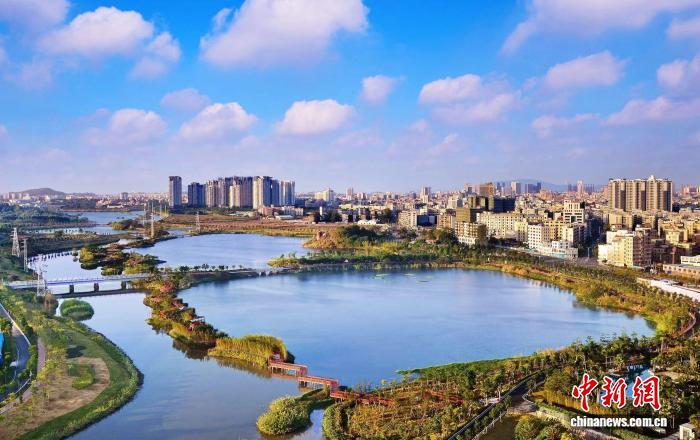
Core Viewpoint - The Guangdong Huadu Lake National Wetland Park has transformed from a heavily polluted area due to cement production into a model of ecological protection, scientific education, and cultural heritage, showcasing effective pollution reduction and carbon neutrality efforts in Guangzhou [1][3][4]. Group 1: Historical Context - The Huadu Lake area was once the core of the cement industry in Huadu District, with major factories producing 600,000 tons of cement annually in the 1990s [3]. - The closure of cement plants and inadequate sewage infrastructure led to severe environmental degradation, turning the area into a "city scar" with deteriorating water quality [3]. Group 2: Pollution Control Measures - The local government implemented a systematic approach to wetland restoration, focusing on pollution control through the elimination of heavy polluting industries and comprehensive measures like rainwater and sewage separation [3]. - Significant improvements were made to the water quality of the Xin Street River and Huadu Lake, with 60,000 square meters of wetland restoration completed [3]. Group 3: Ecological Enhancements - The park features a theme of "Water City Coexistence," integrating various ecological functions, including health water belts and green corridors, while preserving the original landscape [4]. - The park has created habitats for birds and introduced 43 new vascular plant species and 58 wild vertebrate species, including rare protected species [4]. Group 4: Carbon Neutrality Efforts - The wetland area has reached a 56.9% wetland rate, with an annual carbon fixation of 1,296.59 tons, equivalent to a reduction of approximately 3,000 tons of carbon emissions [4]. - The park has been included in the national botanical garden system as a model for translocation protection [4]. Group 5: Future Implications - The transformation of Huadu Lake serves as a valuable experience for the restoration of industrial sites and the construction of ecological corridors in densely populated urban areas [4]. - The park is expected to continue providing ecological benefits and promote harmonious coexistence between humans and nature [4].
中国电力附属潍坊新能源分别与国核院及山东院订立三份独立的总承包合同
Zhi Tong Cai Jing· 2026-02-13 11:37
Core Viewpoint - China Power (02380) announced the signing of three independent general contracting agreements for the development of the Lubei Phase I project, which includes the construction of photovoltaic and wind power facilities, a booster station, and connecting transmission lines, with a total cost of RMB 768 million (approximately HKD 863 million) [1] Group 1: Project Details - The Lubei project is located in the saline-alkali land of Weifang, Shandong Province, and adopts a "photovoltaic and salt field" complementary model for synergistic development [1] - The project aims to enhance local energy structure and contribute to the national goal of building a "green energy belt in the lower Yellow River" while assisting the region's transition to a high-tech chemical industry [1] - The investment aligns with the company's green sustainable development strategy and is expected to enhance the group's long-term profitability [1] Group 2: Contracting Process - The company awarded the general contracting agreements through a rigorous competitive public bidding process on China's procurement and bidding platforms [2] - The costs associated with the three general contracting agreements are consistent with current market prices for comparable projects [2] - The board believes that the terms and costs of the general contracting agreements are not inferior to those offered by independent third parties [2]