
综合交通运输

Search documents
外联一体、内聚成核、安全高效、绿色智能 镇江“十五五”将加快完善现代化综合交通运输体系
Zhen Jiang Ri Bao· 2026-01-27 23:38
Core Insights - The 2026 Transportation Work Conference emphasizes the development of a modern comprehensive transportation system in Zhenjiang, focusing on creating a network that connects various regions and enhances efficiency and sustainability [1][2] Group 1: Development Goals - During the "14th Five-Year Plan" period, Zhenjiang completed a construction investment of 41.69 billion yuan, significantly enhancing the role of transportation in regional development and improving service quality for citizens [2] - The "15th Five-Year Plan" will prioritize enhancing water transport hub capabilities, optimizing the structure and efficiency of the transportation network, and improving public travel services [2] Group 2: Key Projects and Achievements - By 2025, several key projects will be completed, including the rapid transformation of the 312 National Highway and the expansion of the Yangli Highway, with a historic cargo throughput of over 300 million tons at Zhenjiang Port [1] - The city plans to add 30 low-altitude flight takeoff and landing points and successfully test a low-altitude travel route connecting Zhenjiang and Nanjing [1] Group 3: Strategic Focus Areas - The transportation system will focus on six key areas: planning and construction, enhancing water transport hubs, improving public services, fostering innovation, deepening governance efficiency, and strengthening party leadership [2]
智慧绿色双擎驱动,苏州全力构建现代化综合交通运输体系
Xin Lang Cai Jing· 2026-01-25 14:09
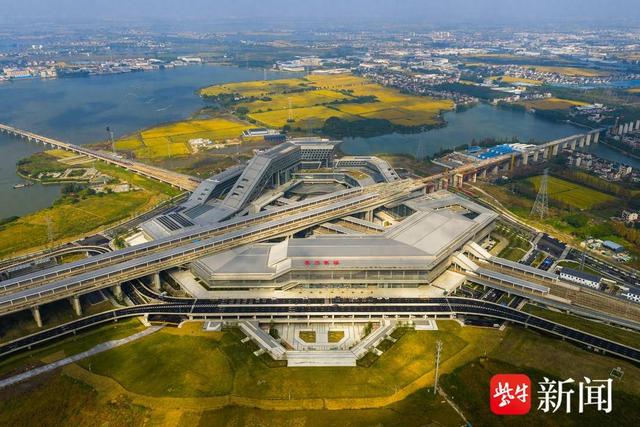
Core Viewpoint - Suzhou has made significant advancements in building a modern comprehensive transportation system over the past five years, achieving a prominent position as a national transportation hub, which supports high-quality urban development and enhances public welfare. Group 1: Infrastructure Investment - During the "14th Five-Year Plan" period, Suzhou invested over 130 billion yuan in transportation infrastructure, leading to a historic leap in railway development with 168.17 kilometers of new rail lines, creating a rapid access network for all county-level nodes within 30 minutes of high-speed rail [3][5]. Group 2: Road and Water Transport - The highway network has expanded to 638 kilometers, ranking first in the province, with 34 inter-regional roads completed to enhance connectivity [5]. - Suzhou's water transport capabilities have been significantly enhanced, with the addition of 69.2 kilometers of new third-level waterways and a total of 242.4 kilometers of thousand-ton-level waterways, establishing Suzhou Port as a benchmark for inland ports [7]. Group 3: Air Transport and Logistics - Suzhou has proactively developed low-altitude economy, becoming one of the first cities in the country to manage air traffic, with 297 low-altitude takeoff and landing points and 476 low-altitude routes established [8]. - The city has seen a more than 10% annual growth in container multimodal transport, with the Suzhou Port's container shipping network covering over 30 ports in countries such as Russia, Japan, and Vietnam [8][9]. Group 4: Public Transportation and Accessibility - The urban rail transit system has reached 346 kilometers, the longest among prefecture-level cities in China, facilitating seamless connections with Shanghai's metro [10]. - Public transport services have been diversified, achieving 100% connectivity for neighboring districts and counties, with innovative routes catering to various community needs [10]. Group 5: Smart and Green Transportation - Suzhou is committed to innovation and sustainable development in transportation, having successfully implemented smart traffic projects and hosted the 29th Intelligent Transportation World Congress [12]. - The city has made significant strides in green transportation, eliminating 12,000 old high-emission trucks and achieving 100% coverage of shore power facilities at ports [14]. Group 6: Future Goals - Looking ahead to the "15th Five-Year Plan," Suzhou aims to transform its transportation development from scale expansion to quality and efficiency, targeting the establishment of an international railway hub and a national container trunk port by 2030 [16].

苏州263名“科技副总”上岗
Su Zhou Ri Bao· 2025-08-22 00:40
Core Insights - The appointment of Wang Xiang as the deputy chief engineer at Suzhou Transportation Investment Group marks a significant step in integrating artificial intelligence with transportation in Suzhou [1] - The "Technology Deputy" initiative in Jiangsu aims to enhance the collaboration between academic institutions and industries, facilitating the application of scientific research in real-world scenarios [1] Group 1 - Suzhou has selected 263 individuals for the "Technology Deputy" program this year, accounting for 11.27% of the total in Jiangsu, representing a 20.1% increase from the previous year, and setting a historical high for the number of appointees [1] - Since 2013, Suzhou has dispatched 1,192 technology talents from 174 universities and research institutions to 1,091 local enterprises, serving in roles such as technical deputy and deputy chief engineer [1] Group 2 - The collaboration between Suzhou Transportation Investment Group and Suzhou University focuses on smart transportation and digital transformation, establishing laboratories for data innovation and artificial intelligence applications [2] - The team is analyzing data from electric vehicle charging operations to enhance user experience and operational efficiency, with future efforts directed towards smart highways and new materials for transportation infrastructure [2] - The addition of the "Technology Deputy" is expected to stimulate innovation and accelerate the implementation of research outcomes, contributing to a more intelligent, efficient, and green modern transportation system [2]