
自动化系统集成

Search documents
君屹工业港股IPO:流动性隐忧、大客户依赖与全球化路径的现实落差
Sou Hu Cai Jing· 2026-02-14 05:23
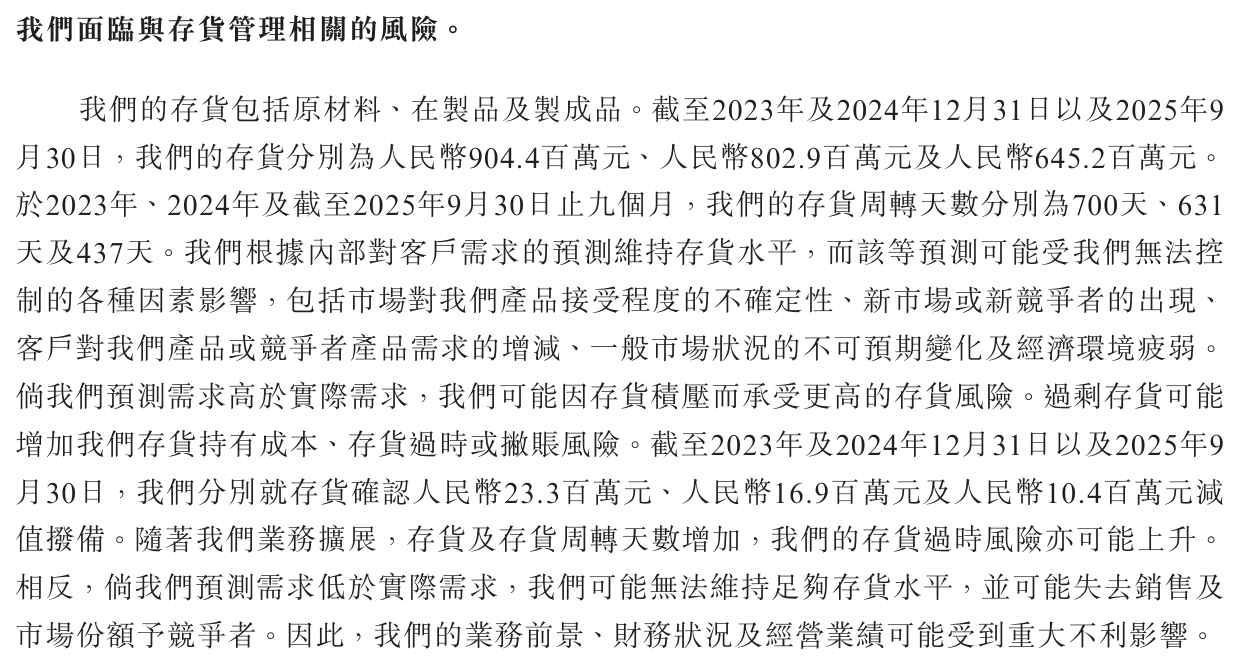
Core Viewpoint - Junyi Industrial is pursuing an IPO on the Hong Kong main board, facing challenges such as significant cash flow and profit divergence, high customer concentration, and a rapid decline in overseas revenue proportion, which are constraining its expansion pace [1]. Group 1: Financial Performance and Cash Flow - As of September 30, 2025, the company's inventory balance reached 645 million RMB, accounting for over 55% of total current assets, indicating a high level of cash being locked in work-in-progress and inventory [2]. - The net cash flow from operating activities was negative 10.5 million RMB in 2023, despite achieving a net profit of 26.71 million RMB, primarily due to inventory stocking for future orders [4]. - The company’s cash flow improved to a net inflow of 3.495 million RMB in 2024 and 8.747 million RMB in the first three quarters of 2025, but this improvement was mainly due to a temporary increase in contract liabilities rather than a fundamental change in the operating model [4][6]. Group 2: Customer Concentration and Revenue Dependence - The company’s revenue is highly dependent on a few major clients, with the top five customers accounting for 70.3% of revenue in 2023, 75.3% in 2024, and 68.7% in the first three quarters of 2025 [10]. - The largest single customer contributed between 28.6% and 31.6% of total revenue, indicating a significant operational constraint [10][11]. - The company’s bargaining power is relatively weak, which is reflected in its gross margin improvement from 17.1% to 19.1%, still remaining in a low range [11]. Group 3: Research and Development - Although R&D spending has increased in absolute terms, the proportion of R&D expenses relative to revenue has decreased from 6.1% in 2023 to 4.6% in the first three quarters of 2025, raising concerns about the sustainability of technological advancements [15]. - The company has accumulated experience in automotive welding and battery tray welding, successfully transitioning to the new energy battery sector, which has improved revenue structure [15]. Group 4: International Expansion and Market Position - The company aims to accelerate global market expansion, having established branches in Germany and the United States, with overseas revenue peaking at 46.9% in 2023 but declining to 18.3% by the first three quarters of 2025 [13]. - The decline in overseas revenue proportion contrasts sharply with the company's stated globalization ambitions, raising questions about the sustainability of its international strategy [13][14]. - The company ranks 11th in China for new energy battery module and PACK automation production line solutions, with a market share of 1.3%, indicating limited competitive positioning in a fragmented market [16]. Group 5: Path Forward and Market Challenges - Junyi Industrial's transition to the Hong Kong market is seen as a critical step to overcome liquidity constraints and address pre-IPO investor exit pressures [17]. - The company must balance improving cash flow stability, diversifying customer reliance, enhancing overseas execution, and maintaining necessary technological investments [17].

上海君屹闯关港股 计划加速拓展全球市场
Zhong Guo Jing Ying Bao· 2026-02-05 23:49
Core Viewpoint - Shanghai Junyi Industrial Automation Co., Ltd. has submitted its IPO application to the Hong Kong Stock Exchange, showcasing rapid growth driven by a successful transition to automation solutions for new energy battery modules and PACK production lines, with a net profit increase of 88.3% year-on-year in the first three quarters of 2025 [1][3]. Group 1: Business Transformation and Growth - The company started in the traditional automotive welding sector and has successfully transformed its business focus towards new energy battery automation solutions, capitalizing on the booming market for electric vehicles [2][3]. - Revenue from new energy battery module and PACK automation solutions surged from 14% in 2023 to 64.3% in the first three quarters of 2025, while traditional automotive welding revenue dropped from 82.2% to 34.3% [3]. - From 2023 to the first three quarters of 2025, the company's revenue increased from 511 million to 614 million yuan, and net profit rose from 26.71 million to 58.17 million yuan, with a gross margin improvement from 17.1% to 19.1% [3]. Group 2: Financial Concerns - Despite the profit growth, the company reported negative operating cash flow, with net cash outflows of 105 million yuan in 2023 and only 3.495 million yuan in 2024, indicating potential issues with working capital management [3][4]. - As of September 30, 2025, inventory reached 645 million yuan, accounting for over 55% of current assets, with inventory turnover days improving but still high at 437 days [4]. - Trade receivables increased to 204 million yuan by the end of November 2025, raising concerns about cash flow and potential bad debts [4]. Group 3: Customer Concentration Risks - The company relies heavily on a few major clients, with the top five customers contributing 70.3% to 68.7% of revenue from 2023 to the first three quarters of 2025, which poses risks to financial stability [4][5]. - The dependence on a limited customer base may affect the company's bargaining power and profit margins, making it vulnerable to changes in client relationships [5]. Group 4: Market Position and Global Strategy - Shanghai Junyi holds a low market share in its main business areas, ranking 11th and 12th in the respective markets for new energy battery automation and automotive welding solutions, with shares of 1.3% and 0.6% [6]. - The company aims to expand its global presence, but revenue from markets outside mainland China has decreased from 46.9% in 2023 to 18.3% in the first three quarters of 2025, contradicting its stated global expansion strategy [6][7]. - R&D expenditure as a percentage of total revenue has declined from 6.1% in 2023 to 4.6% in the first three quarters of 2025, raising concerns about the company's innovation capabilities [7]. Group 5: Industry Trends and Challenges - The global automation system integration market is experiencing significant growth, with a projected increase from approximately 120.7 billion yuan in 2019 to 223.9 billion yuan by 2024, driven by the demand for automation in the electric vehicle sector [8]. - However, the industry faces challenges such as project-based business models, reliance on core technical personnel, and the cyclical nature of client capital expenditures, which can impact order stability [8].