航天飞行器制造

Search documents
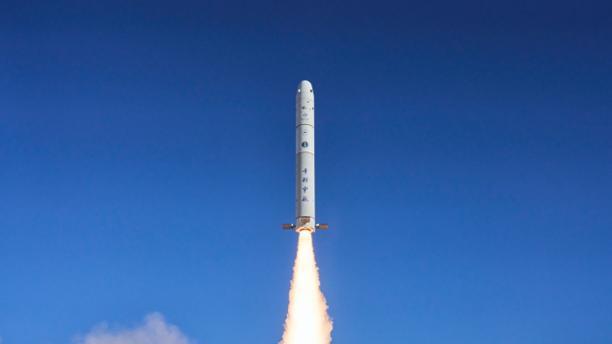
力鸿一号遥一飞行器圆满完成亚轨道飞行任务
Zhong Guo Xin Wen Wang· 2026-01-13 03:18
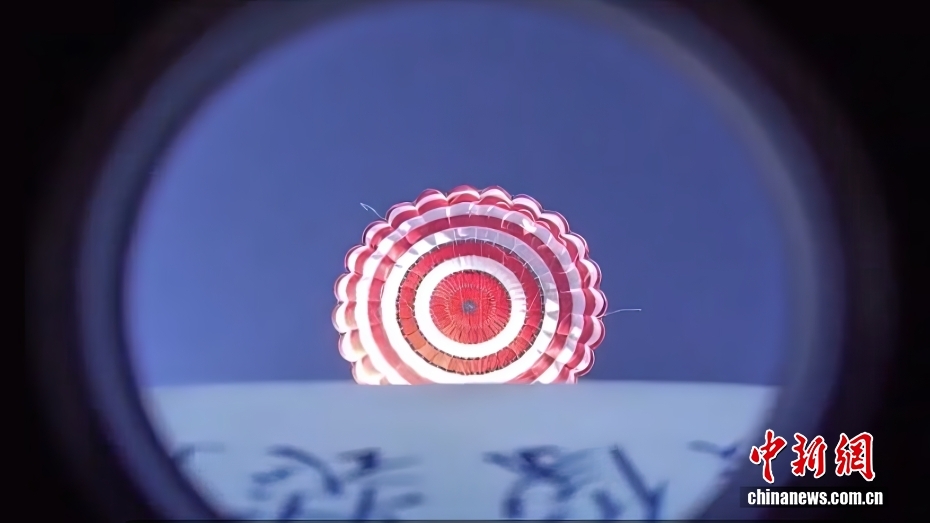
Core Insights - The core point of the article is the successful launch and completion of the suborbital flight test by the Li Hong No.1 remote-controlled vehicle from the Jiuquan Satellite Launch Center on January 12 at 16:00 [2] Company Highlights - The Li Hong No.1 vehicle successfully completed its mission, which included a return payload capsule that landed safely through a parachute system and was recovered [2]

培育“航天月季” 力鸿一号完成亚轨道飞行试验任务
Xin Hua She· 2026-01-12 13:21
Core Viewpoint - The successful return of the Lihong-1 suborbital flight experiment, which carried rose seeds, aims to explore the effects of space radiation on plant genetics and establish a unique brand of "space roses" for industry upgrades [1][3]. Group 1: Mission Overview - The Lihong-1 vehicle completed its suborbital flight test on January 12, reaching an altitude of approximately 120 kilometers and providing over 300 seconds of stable experimental conditions for scientific research [1]. - The mission's primary payload was a self-developed microgravity laser additive manufacturing device from the Chinese Academy of Mechanics, which preliminarily verified the feasibility of space manufacturing supported by rocket platforms [3]. Group 2: Technical Achievements - The design team optimized the aerodynamic shape of the payload capsule to enhance deceleration and stability during re-entry, ensuring safe parachute deployment [3]. - The flight vehicle achieved a landing accuracy of within a hundred meters, thanks to extensive analysis of the parachute dynamics and its impact on the capsule's flight trajectory [3]. Group 3: Future Developments - The Lihong series of vehicles will expand in scale for multiple reuses, with ongoing reliability tests to enhance capabilities for manned life support and high-reliability escape technologies [3]. - The goal is to achieve long-term orbital presence and reliable re-entry by 2028, transforming the Lihong series into a routine space manufacturing and scientific research platform [3].
力鸿一号遥一飞行器亚轨道飞行试验圆满成功 为太空制造等奠定坚实技术基础
Zheng Quan Shi Bao Wang· 2026-01-12 13:06
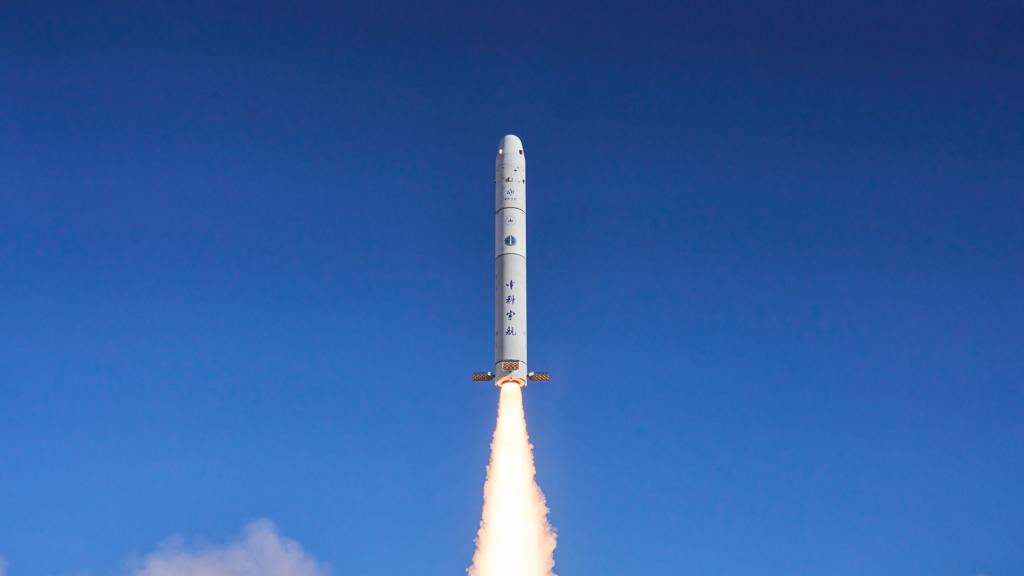
Core Insights - The successful suborbital flight test of the ZK Aerospace Li Hong No. 1 spacecraft marks a significant advancement in space manufacturing technology, transitioning from "concept validation" to "engineering validation" [1] - The flight achieved a return point accuracy of within 100 meters, demonstrating the capability for precise landing control, which is crucial for future applications in space manufacturing, experiments, medicine, and tourism [1] Group 1 - The Li Hong No. 1 spacecraft reached an altitude of approximately 120 kilometers, crossing the Kármán line into space, and successfully completed the return of its payload capsule through a parachute system [1] - The spacecraft is designed for low launch costs and high flexibility, supporting the recovery of experimental payloads, and provides over 300 seconds of stable and reliable experimental conditions in microgravity [1] - The flight test validated high-reliability parachute aerodynamic deceleration technology and precise landing control technology for the sub-stage of the spacecraft [1] Group 2 - The microgravity laser additive manufacturing payload (LAM-MG-R1) carried on the first flight is a self-developed technology verification payload by the Institute of Mechanics, Chinese Academy of Sciences, aimed at validating the feasibility of laser wire metal additive manufacturing in space [2] - This mission is expected to provide critical scientific data on key process parameters and performance characteristics of metal additive manufacturing in microgravity, laying a solid foundation for the development of space metal additive manufacturing technologies [2] - ZK Aerospace and the Institute of Mechanics have completed ground tests for the "reconfigurable flexible on-orbit manufacturing platform," achieving breakthroughs in key technologies necessary for reliable connections and stability in space manufacturing [2]
力鸿一号遥一飞行器亚轨道飞行试验任务取得圆满成功
Huan Qiu Wang Zi Xun· 2026-01-12 11:29
Core Viewpoint - The successful test flight of the PH-1 spacecraft marks a significant advancement in space manufacturing technology, transitioning from concept validation to engineering validation, laying a solid technical foundation for future developments in space manufacturing, experiments, medicine, and tourism [1]. Group 1: Test Flight Achievements - The PH-1 spacecraft completed its first flight test, reaching an altitude of approximately 120 kilometers and crossing the Kármán line into space, successfully demonstrating the return and recovery of its payload capsule [1]. - The flight verified high-reliability parachute aerodynamic deceleration technology and precise landing control technology for the sub-stage of the spacecraft, achieving a landing accuracy of within 100 meters [2][3]. Group 2: Technological Innovations - The parachute recovery system utilized during the landing process involved advanced trajectory prediction and reliability modeling techniques, which will support the development of reusable flight vehicles like the PH-2 [3][4]. - The precise landing control technology is crucial for the vertical return and reuse of rocket sub-stages, employing real-time trajectory optimization algorithms to address complex landing conditions [4]. Group 3: Scientific Experiments and Applications - The flight carried a microgravity laser additive manufacturing payload, which aims to validate the feasibility of laser melting wire metal additive manufacturing in microgravity, providing essential data for future space manufacturing technologies [6]. - The mission also included the space radiation mutation of rose seeds, which will contribute to the development of new rose varieties with improved traits, thus paving the way for advancements in space agriculture [7]. Group 4: Future Developments - The collaboration between the China Aerospace Science and Technology Corporation and the Chinese Academy of Sciences aims to develop a reconfigurable flexible on-orbit manufacturing platform, enhancing the capabilities for long-duration missions and multiple reuses [6][7]. - The upgraded payload capsule is expected to support missions with a minimum operational duration of one year and at least ten reuse cycles, facilitating a wide range of scientific experiments and manufacturing processes in space [6].