航天辐射诱变月季种子

Search documents
南阳月季上太空了
He Nan Ri Bao· 2026-01-12 23:22
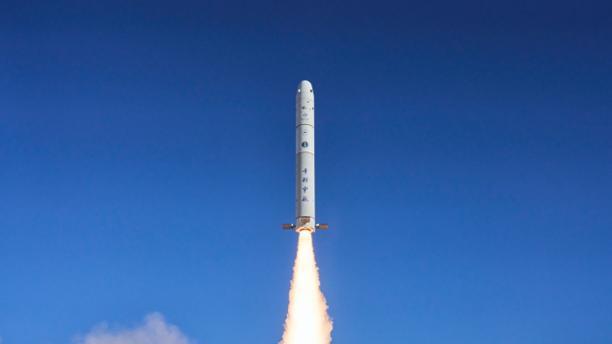
Core Viewpoint - The successful suborbital flight test of the Zhongke Yuhang Lihong-1 remote vehicle marks a significant advancement in space manufacturing and experimentation, transitioning from "concept validation" to "engineering validation" [1] Group 1: Flight Test Achievements - The flight test was completed successfully at the Jiuquan Satellite Launch Center, with the return capsule landing and recovery executed flawlessly [1] - The test validated the re-entry atmospheric return deceleration and recovery of the return capsule, achieving a precision landing accuracy of within 100 meters over a distance of 100 kilometers [1] Group 2: Scientific Experiments - The flight carried scientific payloads including microgravity laser additive manufacturing experiments and space radiation-induced mutation rose seeds [1] - The rose seeds were developed through artificial hybridization of wild roses and ancient Chinese rose germplasm resources, selected for their strong resistance traits [1] Group 3: Future Implications - The experiment opens new pathways for space breeding and lays a solid foundation for the future development of space agriculture [1] - The research aims to create new rose varieties with multiple resistances and clear genetic backgrounds, providing technical and theoretical support for breeding goals [1]
力鸿一号遥一飞行器亚轨道飞行试验任务取得圆满成功
Huan Qiu Wang Zi Xun· 2026-01-12 11:29
Core Viewpoint - The successful test flight of the PH-1 spacecraft marks a significant advancement in space manufacturing technology, transitioning from concept validation to engineering validation, laying a solid technical foundation for future developments in space manufacturing, experiments, medicine, and tourism [1]. Group 1: Test Flight Achievements - The PH-1 spacecraft completed its first flight test, reaching an altitude of approximately 120 kilometers and crossing the Kármán line into space, successfully demonstrating the return and recovery of its payload capsule [1]. - The flight verified high-reliability parachute aerodynamic deceleration technology and precise landing control technology for the sub-stage of the spacecraft, achieving a landing accuracy of within 100 meters [2][3]. Group 2: Technological Innovations - The parachute recovery system utilized during the landing process involved advanced trajectory prediction and reliability modeling techniques, which will support the development of reusable flight vehicles like the PH-2 [3][4]. - The precise landing control technology is crucial for the vertical return and reuse of rocket sub-stages, employing real-time trajectory optimization algorithms to address complex landing conditions [4]. Group 3: Scientific Experiments and Applications - The flight carried a microgravity laser additive manufacturing payload, which aims to validate the feasibility of laser melting wire metal additive manufacturing in microgravity, providing essential data for future space manufacturing technologies [6]. - The mission also included the space radiation mutation of rose seeds, which will contribute to the development of new rose varieties with improved traits, thus paving the way for advancements in space agriculture [7]. Group 4: Future Developments - The collaboration between the China Aerospace Science and Technology Corporation and the Chinese Academy of Sciences aims to develop a reconfigurable flexible on-orbit manufacturing platform, enhancing the capabilities for long-duration missions and multiple reuses [6][7]. - The upgraded payload capsule is expected to support missions with a minimum operational duration of one year and at least ten reuse cycles, facilitating a wide range of scientific experiments and manufacturing processes in space [6].