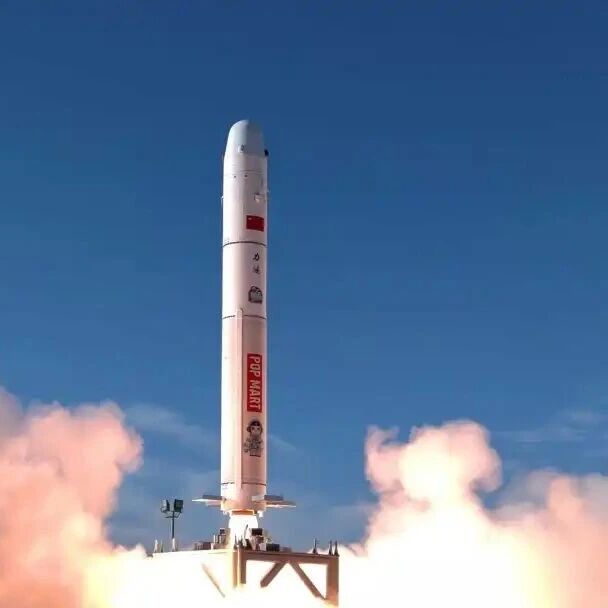
力鸿一号遥一飞行器

Search documents
潮玩成为“太空乘客”,“航天+”探索更多可玩性
第一财经· 2026-02-05 11:36
Core Viewpoint - The collaboration between China Aerospace Technology Co., Ltd. and Pop Mart has successfully launched the SPACE MOLLY toy, marking a significant milestone in the intersection of space technology and cultural consumption, enhancing public interest in space tourism [2][3]. Group 1: Company Developments - China Aerospace Technology Co., Ltd. is the first mixed-ownership rocket enterprise in China, involved in the development, production, and launch of medium to large rockets, suborbital scientific experiments, and space tourism [3]. - The company has completed the counseling work for its IPO with Guotai Junan Securities, as confirmed by the China Securities Regulatory Commission [3]. - The "Lihong No. 2" is a reusable spacecraft developed by the company, designed for space tourism with the capability of over 30 flights, serving as a platform for scientific research and supporting major national projects like manned lunar missions [5]. Group 2: Industry Trends - The commercial space sector is focusing on space tourism as a key emerging business model, with initiatives to develop suborbital and orbital space tourism vehicles and establish a comprehensive operational system for space tourism [6]. - The China Aerospace Science and Technology Corporation plans to implement five major projects during the 14th Five-Year Plan period, including the development of space tourism and related infrastructure [6]. - The National Space Administration's action plan for 2025-2027 emphasizes support for commercial space entities in areas such as space resource development, space manufacturing, and space tourism, promoting innovation and new business models [6].


“商业航天”成中国新年热词
Zhong Guo Xin Wen Wang· 2026-01-28 07:40
Core Insights - "Commercial space" has rapidly become a hot topic in China, highlighted by significant achievements in January 2023, including the successful suborbital recovery of the Lihong-1 remote sensing vehicle and the announcement of actor Huang Jingyu as one of China's first commercial space tourists [1] Group 1: Industry Developments - In 2023, China conducted 67 launches, placing 270 satellites into orbit, with 137 of these being commercial satellites, accounting for 65% of the total [1] - By 2025, it is projected that China will conduct 92 launches, with 50 being commercial, representing 54% of the total launches, and 311 commercial satellites will be placed into orbit, making up 84% of all satellites launched that year [1] Group 2: Technological Advancements - The deployment of low Earth orbit satellite constellations is gaining momentum, with China applying to the International Telecommunication Union for approximately 200,000 low Earth orbit satellite orbits and frequency resources [2] - The Hainan satellite super factory is designed to produce 1,000 satellites annually, while a flexible intelligent satellite production line in Jinan has reduced manufacturing costs to between 100,000 to 200,000 RMB per kilogram [2] Group 3: Challenges and Opportunities - The main challenge in the industry is the mismatch between demand and production capacity, despite the establishment of foundational infrastructure [2] - The commercialization of space services is seen as a long-term goal, with the potential for 200,000 satellites to create an integrated information network that supports digital transformation across various industries [3] Group 4: Policy and Strategic Initiatives - The "14th Five-Year Plan" emphasizes the construction of a modern industrial system and the acceleration of building a strong space nation, marking a significant focus on commercial space as a strategic pillar [3] - Multiple provinces in China are implementing industrial policies to accelerate the development of the entire space industry chain, with Beijing emerging as a global hub for commercial space, housing over 300 high-tech enterprises in the sector [3][4]
独家揭秘中国首个星际航行学院:从近地到深空,星际航行梦何以照进现实
Xin Jing Bao· 2026-01-27 12:36
Core Insights - The establishment of the "Interstellar Navigation" college at the University of Chinese Academy of Sciences marks a significant step in addressing the shortage of top interdisciplinary talent in China's space exploration efforts [1][2][4] - The college aims to integrate various disciplines, including aerospace engineering, physics, chemistry, biology, artificial intelligence, and materials science, to foster collaboration among scientists and engineers [2][3] - A total of 22 new core courses have been introduced, focusing on cutting-edge topics such as interstellar dynamics, planetary habitability, and interstellar sociology, enhancing the curriculum to support interdisciplinary learning [3][5] Talent Acquisition and Funding - The college is actively recruiting talent with substantial funding support, offering project funding ranging from 10 million to 100 million yuan for individual research projects [4][5] - Innovative training models will be implemented, emphasizing real-world problem-solving and practical skills, moving away from traditional paper-based evaluation systems [5][6] Future Prospects - The college's initiatives are expected to cultivate a new generation of versatile talents equipped with both solid foundations and strategic vision, crucial for advancing China's space exploration capabilities [6][7] - The next 10 to 20 years are identified as a critical window for breakthroughs in interstellar navigation, with the college positioned to play a pivotal role in transforming the landscape of deep space exploration [7][8]
【中国新闻网】中国成功实现太空金属3D打印 首次制造出完整金属构件
Zhong Guo Xin Wen Wang· 2026-01-26 02:31
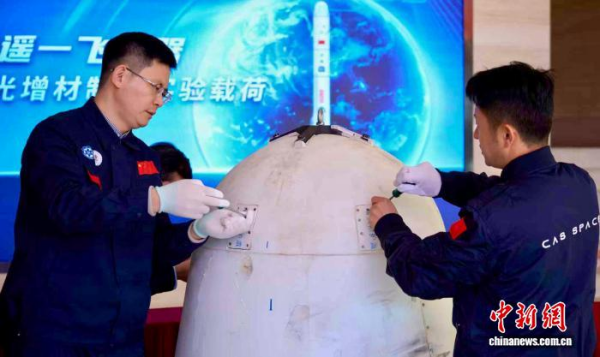
Core Insights - The Chinese Academy of Sciences has successfully developed a microgravity laser additive manufacturing (3D printing) payload, marking a significant advancement in China's space metal manufacturing technology from "ground verification" to "space engineering verification" [3] Group 1: Technology Development - The microgravity laser additive manufacturing payload was launched aboard the "Lihong-1" remote-controlled vehicle, successfully producing complete metal components in a microgravity environment [3] - The experiment achieved breakthroughs in key technologies such as metal additive manufacturing shaping and control under microgravity conditions, closed-loop control throughout the process, and high-reliability collaboration between payload and rocket [3] Group 2: Future Applications - Space metal 3D printing is viewed as a critical enabling technology for future space missions, allowing for rapid manufacturing and autonomous repair of spacecraft components in orbit, significantly enhancing the flexibility and sustainability of deep space exploration, long-term space station operations, and lunar base construction [3] - The success of this experiment establishes China at the forefront of this technology globally, laying a solid foundation for future development in on-orbit manufacturing and maintenance technologies [3] Group 3: Vehicle Capabilities - The "Lihong-1" vehicle operates at an altitude of approximately 120 kilometers, providing over 300 seconds of high-quality microgravity environment [4] - Future upgrades aim for a minimum orbital stay of one year and at least ten reuse cycles, supporting high-precision requirements for on-orbit manufacturing and advancing research in microgravity physics, space life sciences, and space materials science [4] Group 4: Strategic Importance - The Chinese Academy of Sciences is a key player in national strategic technology, focusing on cutting-edge space technology and gradually building a foundational theoretical framework and process database for space metal manufacturing [4] - Key technologies such as flexible cabin deployment and on-orbit stability control have been successfully developed, contributing to the future establishment of a "space factory" [4]
中科宇航IPO辅导工作完成,今年将进行可复用飞行器百公里回收技术验证
Sou Hu Cai Jing· 2026-01-24 11:09
Core Viewpoint - Zhongke Aerospace Technology Co., Ltd. has completed its listing guidance process, marking a significant step towards its public offering [1][2]. Group 1: Company Overview - Zhongke Aerospace was established in December 2018 and is a high-tech enterprise incubated by the Institute of Mechanics, Chinese Academy of Sciences, focusing on the development of medium and large rockets, customized space launches, suborbital scientific experiments, and space tourism [2]. - The company is controlled by Beijing Pengyi Junlian Space Technology Center (Limited Partnership), which holds a 27.7476% stake [3]. - The founder and chairman, Yang Yiqiang, has extensive experience in rocket technology and management, having worked at the China Academy of Launch Vehicle Technology since 1987 [4]. Group 2: Financial Performance - As of 2024, Zhongke Aerospace reported a revenue of 243 million yuan and a net loss of 748 million yuan. In the first half of 2025, the company generated 36.2413 million yuan in revenue with a net loss of 311 million yuan [4]. Group 3: Product Development - The main product line includes the "Liqiang" series of launch vehicles. The Liqiang-1 successfully completed a mission on December 10, 2025, launching nine satellites, including three for international clients, and has placed a total of 84 satellites into orbit with a total payload mass exceeding 11 tons [6]. - The company is developing the Liuhong-1 return vehicle, which aims to support various scientific experiments and manufacturing in space, with plans for upgrades to enhance its capabilities [6][8]. - The Liqing-1 engine has achieved significant milestones in thrust modulation technology, demonstrating a range of thrust adjustment capabilities and marking a breakthrough in liquid oxygen and kerosene engine technology [7]. Group 4: Future Plans - Zhongke Aerospace plans to utilize the Liuhong-2 reusable vehicle, powered by three Liqing-1 engines, for a recovery technology verification mission in 2026 [8]. - The company aims to develop the Liqiang-2 and Liqiang-3 heavy launch vehicles, focusing on low-cost and high-reliability technologies to facilitate rapid deployment and sustainable operation of space infrastructure in China [8].

中国成功实现太空金属3D打印 首次制造出完整金属构件
Xin Lang Cai Jing· 2026-01-24 09:18
Core Insights - The Chinese Academy of Sciences' Institute of Mechanics has successfully manufactured a complete metal component in microgravity using laser additive manufacturing technology, marking a significant advancement in China's space metal manufacturing capabilities [1][3]. Group 1: Technological Advancements - The microgravity laser additive manufacturing experiment was conducted aboard the "Lihong-1" suborbital vehicle, successfully obtaining data on metal component manufacturing in space [3]. - The experiment overcame key technical challenges related to metal additive manufacturing in microgravity, including shape control, closed-loop regulation, and high-reliability collaboration between payload and rocket [3][5]. - The success of this experiment positions China at the forefront of space metal 3D printing technology, laying a solid foundation for future in-orbit manufacturing and maintenance technologies [3][7]. Group 2: Future Applications - Space metal 3D printing is viewed as a critical enabling technology for future space missions, allowing for rapid manufacturing and autonomous repair of spacecraft components, thereby enhancing mission flexibility and sustainability for deep space exploration and long-term space station operations [3][5]. - The "Lihong-1" vehicle currently operates at an altitude of approximately 120 kilometers, providing over 300 seconds of high-quality microgravity environment, with plans for future upgrades to support longer missions and higher precision manufacturing needs [5][7]. - The Institute of Mechanics is building a theoretical framework and process database for space metal manufacturing, which will support the development of future "space factories" [7].
3D打印立功了!我国成功在太空制备零部件
财联社· 2026-01-23 08:14
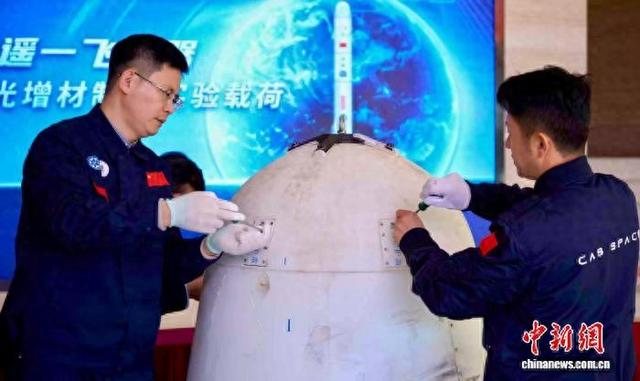
Core Viewpoint - The article highlights the advancements in space metal 3D printing technology, particularly through the successful completion of a microgravity metal additive manufacturing experiment by the China Academy of Sciences, marking a significant milestone in China's aerospace capabilities [2]. Group 1: Technology and Innovation - The microgravity metal additive manufacturing experiment was conducted using the "Li Hong No. 1" spacecraft, which successfully demonstrated the stability of material transport and forming, as well as high-reliability collaboration between the payload and rocket [2]. - This experiment is the first of its kind in China, showcasing the ability to produce metal components in space, which can enhance the autonomy of spacecraft maintenance and reduce reliance on ground supplies [2]. - 3D printing, also known as additive manufacturing, allows for the construction of objects layer by layer from digital models, significantly lowering initial costs by eliminating the need for molds or tooling [3]. Group 2: Market Potential and Applications - The global 3D printing rocket market is projected to reach approximately $2.9 billion by 2032, indicating strong growth potential in the commercial aerospace sector [5]. - The use of 3D printing in rocket engines, such as the "Tianque" series by Blue Arrow Aerospace, has achieved thrust adjustment ranges of 40% to 110%, demonstrating the technology's versatility [4]. - The integration of 3D printing in satellite manufacturing is rapidly evolving, with applications in optimizing structural design, reducing weight, and integrating functions, which are critical for small satellites [5].

国泰海通晨报-20260121
GUOTAI HAITONG SECURITIES· 2026-01-21 02:57
Macro Research - The GDP growth rate for Q4 2025 is projected at 4.5%, showing a slight decline due to base effects, with a dual differentiation of supply exceeding demand and external demand outperforming internal demand [1][2] Real Estate Research - In 2025, the real estate sector is expected to experience a noticeable decline, aligning with earlier predictions that real estate companies will maintain positive cash flow and that the year will be risk-free [1][3] - The rental yield in first-tier cities has increased from 1.6% in 2020 to 1.9% in 2025, while the "rental yield + CPI" has decreased from 4.5% in 2019 to 2.0% in 2025, which is below mortgage rates but slightly above risk-free rates [5][32] - Second-tier cities are showing signs of price stabilization, with rental yields plus CPI improving from 2.3% in 2023 to 2.6% in 2024 and maintaining that level in 2025 [6][33] - By the end of 2025, the proportion of residents willing to buy homes has increased to approximately 16%, with a notable rise in the percentage of declining listing prices [7][34] - The real estate investment is expected to decrease by 17.2% year-on-year, while sales are projected to decline by 12.6%, leading to a positive cash flow for the industry [8] Military Industry Research - The launch cycle of the Long March 12 rocket has been shortened, indicating a potential acceleration in China's commercial space launch schedule [12][13] - In 2025, China is expected to achieve multiple breakthroughs in manned spaceflight, deep space exploration, and commercial space, with a record 92 launches throughout the year [14][27] - The commercial space sector is anticipated to become a core investment direction in the military industry during the 14th Five-Year Plan period, with new rocket types expected to enhance launch capabilities [15][28]
商业航天跟踪 29 期:力鸿一号遥一飞行器亚轨道飞行任务圆满成功
GUOTAI HAITONG SECURITIES· 2026-01-20 07:59
Investment Rating - The report does not explicitly state an investment rating for the commercial aerospace industry Core Insights - The commercial aerospace sector is experiencing significant advancements, with successful launches and developments in various projects, indicating a robust growth trajectory for the industry [3][4][5][9][14][19] Industry Developments - The successful launch of the Lihong-1 suborbital vehicle on January 12, 2026, marked a significant milestone, demonstrating capabilities for microgravity scientific experiments and in-situ exploration [5][6] - The successful launch of the Vesta-1 rocket on January 16, 2026, which deployed four satellites into low Earth orbit, highlights the growing capabilities of China's commercial space sector [9][10] - The completion of the static fire test for the Long March 12B rocket on January 16, 2026, confirms the reliability and feasibility of this new generation reusable rocket [14] - The Beijing Rocket Street project, the first common testing and research production base for commercial aerospace in China, has been completed and is set to enhance the industry ecosystem [16][17] - Zhongke Aerospace has completed its IPO guidance work, indicating a positive trend for capital market participation in the commercial aerospace sector [19] Financing Progress - Sade Satellite completed a B-round financing on January 14, 2026, which will accelerate its development in the commercial satellite manufacturing sector [20][21] Capital Market Performance - The Wind Commercial Aerospace Index experienced a weekly decline of 4.39% during the week of January 12-16, 2026, with a trading volume decrease of 2.64% [25][28] - Among the listed companies in the commercial aerospace sector, 25.40% saw their stock prices increase during the same week, indicating some resilience in the market despite the overall decline [25][28] Industry Conference Preview - Upcoming conferences include the Third Beijing Commercial Aerospace Industry High-Quality Development Conference from January 23-25, 2026, and the Second Commercial Aerospace Industry Development Conference in March 2026 [32][33]




东方证券:商业航天近期调整不改中长期产业趋势
Xin Lang Cai Jing· 2026-01-19 09:18
Core Viewpoint - The recent report from Dongfang Securities highlights that the recent adjustments in the commercial aerospace sector do not alter the long-term industry trends, with the C919 large aircraft's international certification process accelerating, and the military industry sector showing a resonance of internal and external demand, emphasizing its investment value [1][7]. Group 1: C919 Aircraft Development - The C919 has received flight test recognition from the European Union Aviation Safety Agency (EASA), which is crucial for its entry into European and international markets [2][8]. - EASA's certification is considered a key pass for the C919, which has already completed passenger transport for millions domestically, validating its market potential [2][8]. Group 2: Commercial Aerospace and Technological Advancements - The China Aerospace Science and Technology Corporation's 2026 annual meeting emphasized the need to advance major projects like manned moon landings and deep space exploration, while also focusing on breakthroughs in reusable rocket technology [3][9]. - Recent technological breakthroughs in the commercial aerospace sector include successful static fire tests and suborbital flight tests, indicating a rapid development trajectory for the industry [3][9]. - The competition for near-Earth orbital resources is intensifying, with low Earth orbit satellite constellations becoming a new arena for major powers, prompting China to accelerate the large-scale and systematic construction of these constellations [3][9]. Group 3: Military Industry Investment Opportunities - Dongfang Securities indicates that the "14th Five-Year Plan" has commenced, with new equipment construction plans soon to be clarified, highlighting the military sector's investment value [4][10]. - In the short term, attention should be given to areas related to unmanned and counter-unmanned equipment, deep-sea technology, and operational information technology following the implementation of the "14th Five-Year Plan" [4][10]. - In the long term, military enterprises have significant growth potential in civil aviation and commercial aerospace, with the acceleration of high-end Chinese equipment exports likely to expand the military trade market [4][10]. - Investment targets include various fields such as commercial aerospace, aerospace engines and turbines, new domains, military electronics, and military trade/main equipment [4][10].