
花卉育种

Search documents
“宝华月季”背后 是“中国芯”月季的飞速进展
Yang Shi Wang· 2026-01-07 16:10
Core Viewpoint - The recent popularity of the new Chinese rose variety "Baohua" highlights the intersection of agricultural research and public engagement, showcasing the importance of culturally resonant naming in the industry [1][5][11]. Group 1: Naming Process and Public Engagement - The Yunnan Academy of Agricultural Sciences has faced challenges in naming over 2,000 new rose varieties, leading to a public naming campaign that generated significant interest [3][11]. - A suggestion from a netizen to name a rose "Baohua" after their uncle resonated with the public, leading to its selection as the official name due to its cultural significance [5][11]. - The naming process for another variety, "Wenxiu," was inspired by a netizen's tribute to a local hero, reflecting deep public sentiment and engagement [6][8]. Group 2: Cultural Significance and Market Positioning - The name "Baohua" aligns with the concept of "Chinese core" roses, emphasizing the importance of using culturally relevant names for domestic varieties [5][15]. - The research team aims to create a series of roses named after female heroes, indicating a strategy to enhance cultural connections and market appeal [13]. - The team has successfully registered 110 new rose varieties since 2022, with over 30 already in large-scale cultivation, indicating a strong market presence [13]. Group 3: Future Aspirations and Industry Impact - The initiative to involve the public in naming has not only increased awareness of agricultural technology but also inspired the research team to continue innovating [11][15]. - The overarching goal of the team is to compete with international rose varieties, encapsulated in the vision of "Chinese core, Chinese style, Chinese manufacturing" [15].

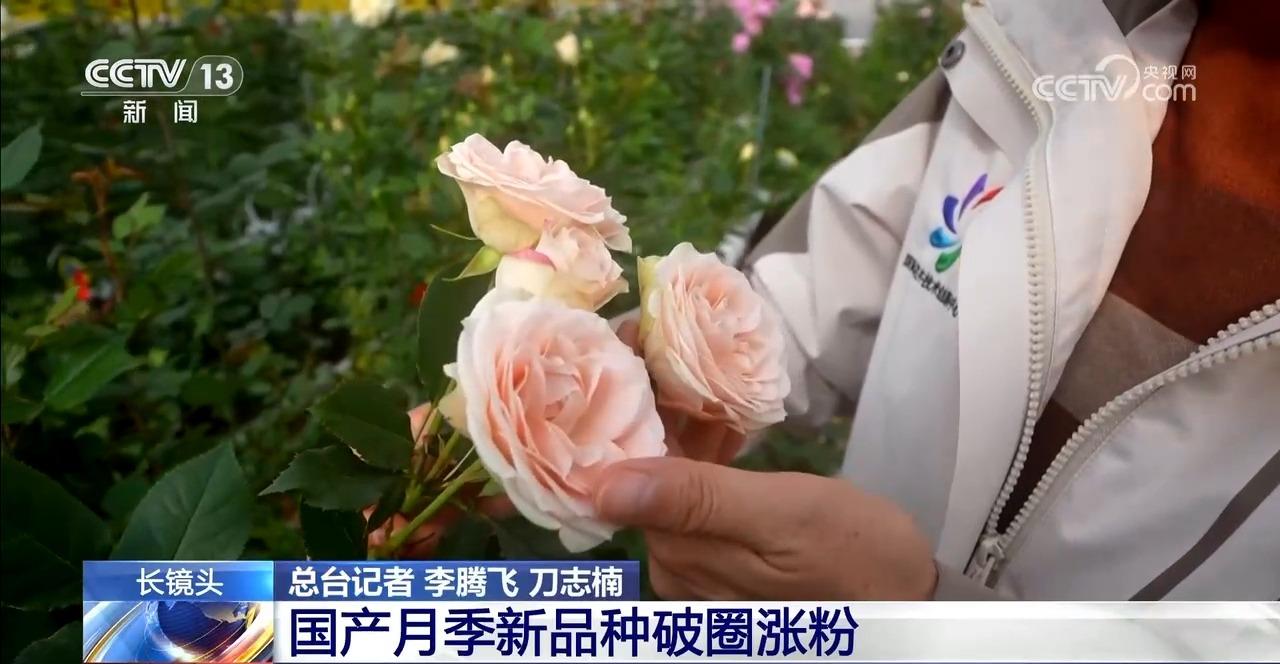
从“宝华”到“文秀” 月季命名全民“整活”,有梗又有情
Xin Lang Cai Jing· 2026-01-04 19:01
Core Viewpoint - The article discusses the innovative approach taken by the Yunnan Academy of Agricultural Sciences' flower research team to engage the public in naming a new rose variety, leading to the name "Baohua" being adopted after a humorous suggestion from a netizen, and the subsequent emergence of the name "Wenxiu" to honor a local hero [4][7][9]. Group 1: Naming Process - The flower research team initiated a public naming campaign for a new rose variety, aiming to enhance public awareness of agricultural science [4]. - Initial responses to the naming campaign were lukewarm until a netizen suggested the name "Liu Baohua," which was initially dismissed by the team due to its informal nature [6]. - After a live-streaming session where the name "Baohua" gained support, the team reconsidered and ultimately submitted the name for official registration [6][9]. Group 2: Emergence of "Wenxiu" - Following the popularity of "Baohua," many netizens began suggesting names based on personal connections, leading to the emergence of "Wenxiu" to honor Huang Wenxiu, a local community leader [7]. - The research team expressed a commitment to ensuring that the rose variety named "Wenxiu" would possess strong disease resistance and aesthetic qualities, reflecting both scientific rigor and respect for the individual being honored [7][9]. - The media coverage of the naming process highlighted the emotional connection and community spirit surrounding the initiative, with plans to plant "Wenxiu" roses in Huang's hometown [8][9]. Group 3: Broader Implications - The campaign sparked a broader discussion about the intersection of science and public engagement, emphasizing the importance of connecting scientific endeavors with human emotions [9][10]. - The team recognized the challenges of naming new varieties, with thousands of new rose cultivars being developed annually, and the need for a more structured approach to future naming initiatives [9]. - The initiative illustrates how emotional narratives can enhance the impact of scientific advancements, making them more relatable to the public [10].
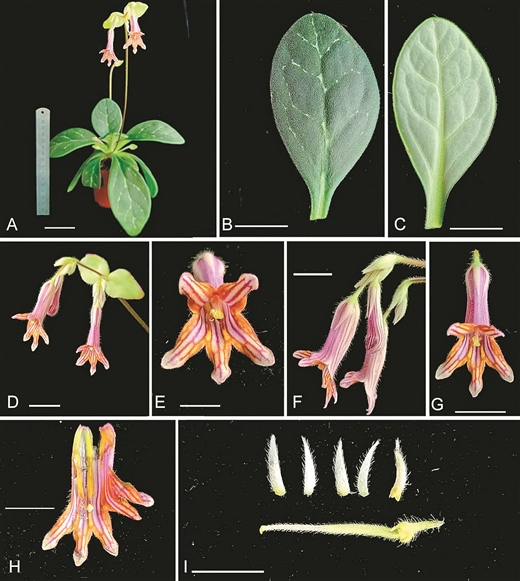
两种稀有小花在广西发现
Guang Xi Ri Bao· 2026-01-04 02:38
Core Insights - The discovery of two new species of the genus Primulina, namely Weiquan Primulina and Huadian Primulina, highlights the biodiversity of the karst landscape in Guangxi, China, and emphasizes its significance in species formation [2][3] - Both new species are classified as critically endangered (CR), with known distribution points limited to one and very few individuals in the wild, necessitating immediate conservation measures [3] Group 1 - The research team from Guangxi Institute of Botany published their findings in the international journal "The Journal of Japanese Botany" [2] - The Primulina genus is known for its high species diversity, with over 250 species globally, 85% of which are found in the karst regions of southern China, making Guangxi a modern distribution center for this genus [2] - The naming of Weiquan Primulina honors a Taiwanese plant enthusiast, Zhou Weiquan, for his contributions to plant breeding and hybridization within the Primulina genus [2] Group 2 - Both new species possess high aesthetic appeal and scientific potential, offering significant market and research value [3] - The ornamental traits of these species provide excellent genetic material for horticulturists, suggesting that cultivating them could showcase the unique charm of native Chinese flowers while also serving as a conservation strategy through industrial means [3]
最高法发布涉蝴蝶兰知产案 平等保护台资企业合法权益
Zhong Guo Xin Wen Wang· 2025-10-14 13:23
Core Viewpoint - The Supreme People's Court has ruled in a case involving the intellectual property rights of the "Jubao Purple Crystal" orchid variety, affirming the protection of legal rights for Taiwanese-invested enterprises in China [1][2]. Group 1: Case Details - The case involved a Taiwanese-invested company, which holds exclusive rights to the "Jubao Purple Crystal" orchid variety, claiming that another company sold a similar variety called "Purple Crystal" without authorization [1]. - The first-instance court ordered the infringing company to cease infringement and pay damages of 120,000 RMB [1]. - The infringing company appealed, arguing that the evidence presented was insufficient and lacked legal proof of the sample's origin [1]. Group 2: Court Ruling and Implications - The Supreme Court upheld the first-instance ruling, stating that the evidence indicated a high probability that the infringing "Purple Crystal" variety is the same as the authorized "Jubao Purple Crystal" variety [2]. - The ruling emphasizes the protection of breeding innovations and sends a clear message that innovators will be protected while infringers will be held accountable [2]. - Since the establishment of the Supreme Court's Intellectual Property Court, there have been 3,100 new first-instance civil cases related to plant variety rights from January 2019 to December 2024, with 887 new cases in 2024 alone, marking a 5.5 times increase compared to the average annual cases in 2017-2018 [2].
“万里挑一”育新种
Ren Min Ri Bao· 2025-05-27 22:40
Core Viewpoint - The Beijing Academy of Landscape and Gardening Science is focused on breeding new varieties of roses, particularly the Chinese rose, to enhance local biodiversity and reduce maintenance costs in urban greening efforts [1][2]. Group 1: Breeding Process - The breeding team at the Beijing Academy conducted artificial pollination on over 50,000 roses last May, averaging nearly 2,000 flowers per day [2]. - The process of breeding involves selecting parent flowers, performing artificial pollination, and eventually producing about 100,000 hybrid offspring, with only a few selected for further cultivation after 8 to 10 years [2]. Group 2: Research and Development - The Beijing Academy has been engaged in rose research, breeding, and promotion for over 30 years, improving breeding techniques and expanding cultivation areas [2]. - Recent efforts have led to the development of new rose varieties such as "New Era," "Red May," and "Spring Tide," with a total of 46 self-bred varieties receiving certification from the National Forestry and Grassland Administration [2]. Group 3: Community Involvement and Environmental Impact - The breeding program has involved community engagement, with volunteers participating in the pollination process, enhancing the breeding efforts [2]. - The focus on developing low-maintenance, eco-friendly rose varieties aims to reduce pesticide use and maintenance costs, contributing positively to the ecological environment [2].