花卉育种

Search documents
“粤”上新台阶丨老广的春节限定仪式感 为何成为外国人的心头好?
Yang Shi Xin Wen Ke Hu Duan· 2026-02-13 13:08
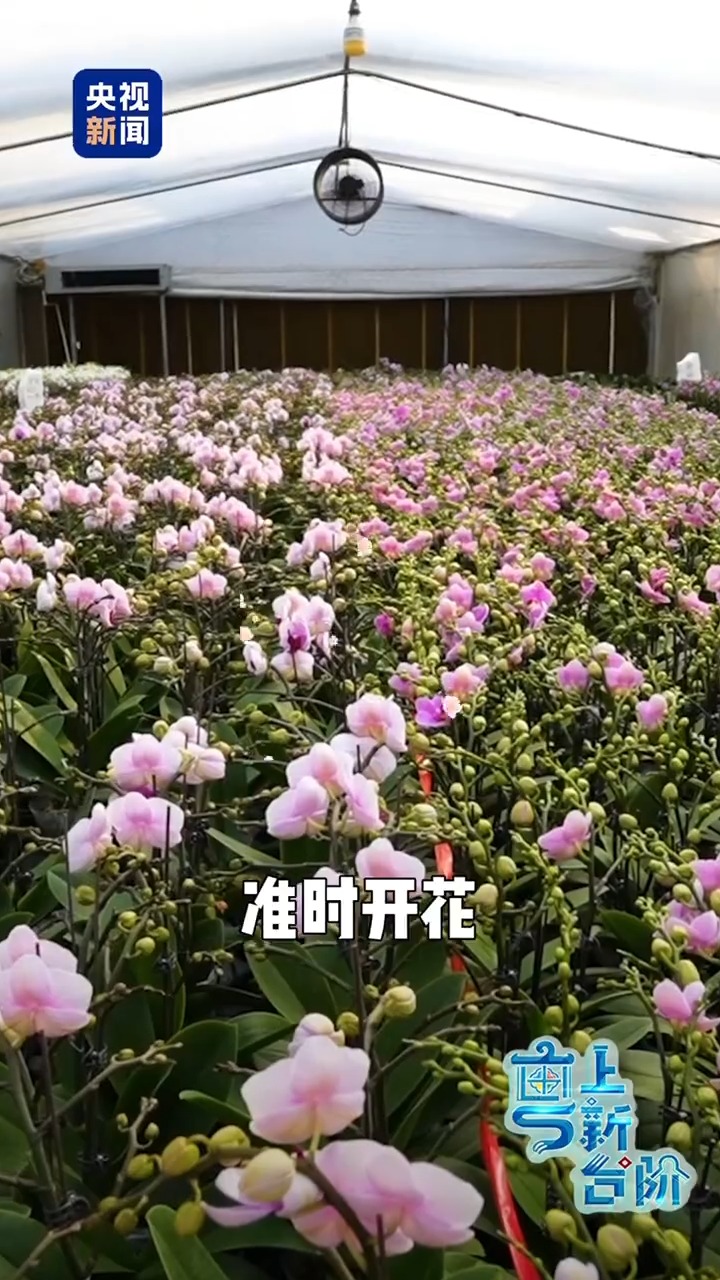
Group 1 - The core idea of the article emphasizes the cultural significance and commercial potential of the Chinese New Year flower market, particularly in Guangdong, where various flowers symbolize good fortune and are integral to the celebrations [1][4][10] - In Foshan, a significant portion of the national supply of orchids, specifically butterfly orchids, is produced, with the town ensuring timely delivery of around 10,000 orchids daily to meet demand during the festive season [4] - The sales of New Year flowers have expanded beyond national borders, leveraging advanced logistics and flower control technology to reach markets in Southeast Asia, such as Vietnam and Singapore, thus enhancing their market presence [7] Group 2 - The introduction of the Amaryllis flower from Dongguan to the northern market during the Beijing Orchid Cultural Carnival showcases the adaptability of flower varieties to different climates, with careful cultivation practices implemented three months in advance [10] - The collaboration of various Guangdong New Year flowers, including kumquat, peach blossom, butterfly orchid, and anthurium, in replicating traditional flower markets in Beijing highlights the cultural exchange and continuity of traditions across regions [10] - The trend towards smaller, more compact flower varieties reflects consumer preferences and ongoing research in breeding, ensuring that the New Year flowers remain fashionable and appealing [7]

春花“赶春”有新招(年味里的新质生产力)
Ren Min Ri Bao· 2026-02-10 22:37
Core Insights - The article highlights the transformation of the flower industry in Yunnan, particularly in Kunming, where technology and innovative practices are reshaping the production and sale of flowers, especially during the Spring Festival season. Group 1: Industry Overview - The Kunming flower auction center covers over 4,000 varieties across 65 categories, with a significant market reach extending to Southeast Asia, facilitating competitive pricing for flowers like peonies from Shandong [4][5]. - In 2025, the flower industry in Dou Nan is projected to trade 15.476 billion stems of flowers, generating a transaction value of 13.484 billion yuan, maintaining its position as the top flower trading hub in China for over 20 years [4][5]. Group 2: Technological Advancements - The introduction of smart greenhouses and automated systems in flower cultivation has led to a significant increase in production efficiency, with yields per acre rising to three times that of traditional methods [8][9]. - The use of big data in the flower auction center allows for better market insights and production planning, benefiting both farmers and policymakers [4][5]. Group 3: Market Dynamics - The daily supply of flowers in Dou Nan exceeds 6 million stems, with peak days approaching 7 million, reflecting a nearly 30% increase compared to the previous year [5][6]. - The auction model combines online bidding, direct sourcing from bases, and offline transactions, ensuring a steady supply of flowers at competitive prices for merchants [5][6]. Group 4: Breeding and Innovation - The breeding process for new flower varieties is lengthy and selective, with only 0.1% to 0.2% of varieties making it to market after rigorous testing [10][11]. - The focus on local genetic resources and the development of unique Chinese flower varieties is seen as a key strategy for reducing dependency on imported flower seeds, which currently account for about 85% of the market [10][11].
东方母亲花萱草
Xin Lang Cai Jing· 2026-01-31 07:07
Group 1 - The core viewpoint of the articles highlights the historical significance and cultural value of daylilies (Hemerocallis), particularly in East Asia, where they have been consumed for thousands of years and are recognized for their medicinal properties [3][4]. - Daylilies are known for their adaptability to various climates and their entire plant is edible, making them a unique addition to the category of edible plants [3]. - The cultivation of daylilies in Japan has a long history, but unlike in the West, they have not been developed into ornamental plants, showcasing a contrast in horticultural practices [4]. Group 2 - The American geneticist and breeder Stout was the first to conduct large-scale breeding of daylilies, leading to the creation of approximately 80,000 registered cultivars in the American Hemerocallis Society [4]. - The breeding process for daylilies is diverse, focusing on various traits such as color and flower shape, although there are limitations in achieving certain colors like pure pink, blue, or white [5]. - The use of colchicine in breeding has allowed for the doubling of chromosome numbers, resulting in more vibrant and fuller flower colors in polyploid daylilies [4].
两种稀有小花在广西发现
Guang Xi Ri Bao· 2026-01-04 02:38
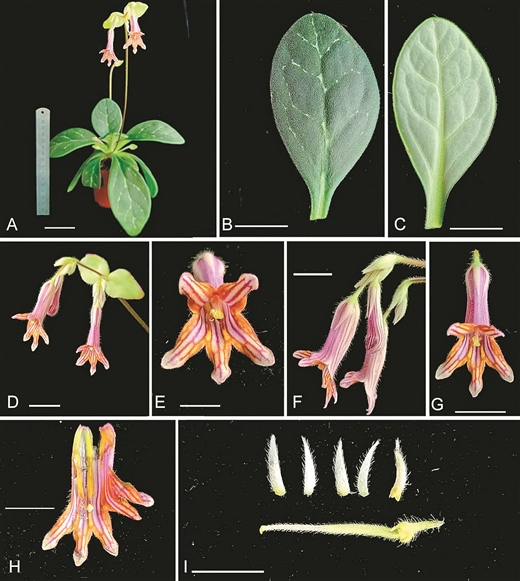
Core Insights - The discovery of two new species of the genus Primulina, namely Weiquan Primulina and Huadian Primulina, highlights the biodiversity of the karst landscape in Guangxi, China, and emphasizes its significance in species formation [2][3] - Both new species are classified as critically endangered (CR), with known distribution points limited to one and very few individuals in the wild, necessitating immediate conservation measures [3] Group 1 - The research team from Guangxi Institute of Botany published their findings in the international journal "The Journal of Japanese Botany" [2] - The Primulina genus is known for its high species diversity, with over 250 species globally, 85% of which are found in the karst regions of southern China, making Guangxi a modern distribution center for this genus [2] - The naming of Weiquan Primulina honors a Taiwanese plant enthusiast, Zhou Weiquan, for his contributions to plant breeding and hybridization within the Primulina genus [2] Group 2 - Both new species possess high aesthetic appeal and scientific potential, offering significant market and research value [3] - The ornamental traits of these species provide excellent genetic material for horticulturists, suggesting that cultivating them could showcase the unique charm of native Chinese flowers while also serving as a conservation strategy through industrial means [3]