草本健康

Search documents
东方草本“遇见”现代科技
Huan Qiu Wang Zi Xun· 2025-07-11 09:48
Group 1 - The global economy is transitioning from "globalization" to "de-globalization," with China emerging as a core market for international brands due to its openness and innovation [1] - The China Brand Index (CBI) is projected to increase from 59.42 in Q1 2023 to 63.38 in Q1 2025, indicating a significant recovery in consumer quality [1] - China's large-scale market advantages are becoming increasingly prominent, making it a key market for international business expansion [1] Group 2 - Xian Ni Lei De has been operating in China for over 30 years, leveraging traditional Chinese dietary culture to localize its brand [2][4] - The company has established a global supply chain with high-tech production bases in Texas, USA, and Huangpu, Guangzhou, China, along with nearly 300 franchise stores in China [5] - The health industry in China is expected to exceed 20 trillion yuan by 2025, accounting for over 10% of GDP, driven by market demand and technological innovation [6] Group 3 - Xian Ni Lei De is focusing on both online and offline strategies to tap into the health market, with initiatives like the "Xian Ni Hui" membership e-commerce platform achieving over 10,000 registrations and a 40% repurchase rate [6] - The company's experience in China is influencing its global market strategies, showcasing the potential for "Chinese innovation to radiate globally" [8] - The global health economy is projected to reach $9 trillion by 2028, with Xian Ni Lei De's innovative approach contributing to sustainable development in the health industry [10][12]

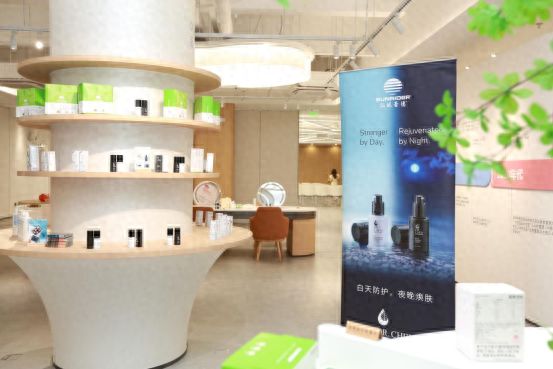
健康消费新浪潮下,仙妮蕾德如何走出持续增长路径?
财联社· 2025-06-12 04:38
Core Insights - The article highlights the transformation of China's health industry from "quantity" to "quality," with herbal health consumption emerging as a significant choice for consumers [1] - Sunrider, a multinational company with over 30 years in the Chinese market, is experiencing steady growth, having opened over 40 franchise stores since 2024 and achieving a year-on-year revenue increase of over 15% [1][3] - The "Healthy China 2030" strategy is driving the health industry, with predictions that the market size will exceed 15 trillion yuan by 2025 [1] Group 1: Market Environment and Company Strategy - The health consumption sector is becoming a crucial driver of domestic demand, but there are still gaps in service quality and health knowledge dissemination [4] - Sunrider has established a value ecosystem centered around "herbal health," focusing on product development, consumer experience, membership systems, and distribution networks [3][4] - The company has opened experience centers in major cities to create new health consumption scenarios, responding to the growing demand for health services [4][6] Group 2: Experience Centers and Consumer Engagement - The experience centers serve as immersive health education platforms, enhancing consumer trust in herbal health concepts [6] - These centers act as a hub for brands, distributors, and consumers, improving operational efficiency and establishing a strong brand identity [6][8] - Sunrider plans to open a third experience center within the year, indicating a commitment to expanding its health consumption landscape [8] Group 3: Digital Integration and User Engagement - Sunrider launched the "Xian Ni Hui" mini-program to enhance its digital strategy, integrating physical stores and experience centers into a cohesive operational model [9][10] - The mini-program facilitates a closed-loop system for brand experience, user conversion, and repurchase mechanisms, enhancing customer engagement [10][11] - The platform has seen over 10,000 registered members within six months, with a repurchase rate of 40% and an average transaction value 50% higher than the company average [11] Group 4: Long-term Commitment and Local Adaptation - Sunrider has been deeply rooted in the Chinese market for over 30 years, with two factories supporting its supply chain [12] - The company emphasizes a "self-built R&D + long-termism" approach, continuously expanding its product and service ecosystem [12][14] - The strategic upgrade involves expanding store networks, enhancing consumer experience through centers, and leveraging digital tools to create a sustainable private domain asset [14]