
草莓产业

Search documents
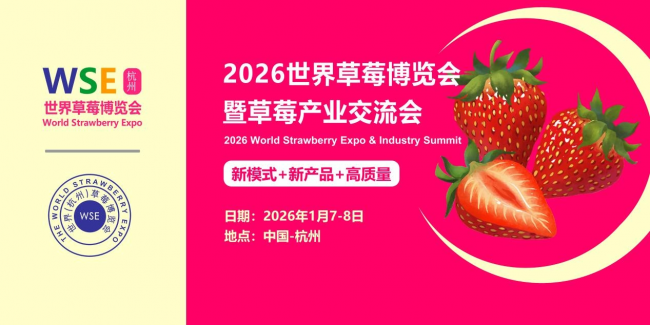
草莓产业盛会即将登陆杭州,聚焦草莓产业新模式,新产品,高质量,引领产业创新发展!
Zhong Guo Shi Pin Wang· 2025-12-01 05:56
Group 1 - The "2026 World Strawberry Expo and Strawberry Industry Exchange Conference" will be held in Hangzhou, China, on January 7-8, 2026, focusing on "New Models, New Products, High Quality" [2] - The event aims to attract 500 industry professionals, corporate representatives, and experts from both domestic and international markets to discuss technological innovation and sustainable development in the strawberry industry [2] - The conference will feature representatives from countries such as Russia, South Korea, Azerbaijan, and Georgia, promoting global resource integration and cooperation [2] Group 2 - The event will cover the entire strawberry industry chain, including planting, processing, sales, and distribution, with several key cooperation projects and activity segments [4] - Specific projects include the procurement of greenhouse construction in Russia's Far East, complete equipment for factory cultivation, strawberry sorting and packaging, and autumn strawberry seedling procurement [4] - Additional activities will include the procurement of new strawberry varieties, a tasting event for new strawberry varieties, and a comprehensive exhibition of the strawberry industry [5] Group 3 - The conference will gather government agencies, planting enterprises, buyers (supermarkets, fresh e-commerce, wholesale markets), restaurants, hotels, and industry media to create a closed-loop of production and sales [7] - The expo aims to promote the strawberry industry towards standardization, branding, and technological upgrades through international collaboration, injecting new momentum into the global strawberry industry [7] - The event will celebrate the 20th anniversary of China's participation in the World Strawberry Conference, inviting past participants to share highlights from previous conferences [7]

农科青年如何知农爱农
Zhong Guo Qing Nian Bao· 2025-11-04 02:01
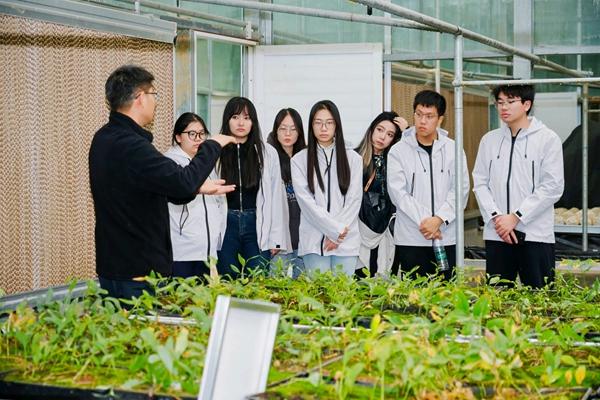
Core Insights - The "1+5" Agricultural Science and Technology Innovation Alliance is actively engaging youth in agricultural practices and research, emphasizing the importance of hands-on experience in understanding agricultural technology and its applications [1][2][4]. Group 1: Youth Engagement and Activities - The "1+5" Agricultural Science and Technology Innovation Alliance organized a youth event in Anhui, where students from various agricultural universities participated in field activities to connect with local agricultural practices [1]. - A significant youth research initiative, the "Hundred Schools, Thousand Towns, Ten Thousand Villages" survey, has been launched, involving over 30,000 students from 107 universities, covering 104 counties in Anhui [2]. Group 2: Practical Learning and Insights - Students realized that agricultural technology must be tailored to local conditions, considering factors like land size and crop types, rather than solely focusing on advanced technology [4][5]. - The importance of effective communication with farmers was highlighted, as students learned to simplify technical language to engage better with local agricultural communities [5][6]. Group 3: Cultural and Human Aspects of Agriculture - The activities underscored that agriculture is not just about technology but also involves cultural heritage and human connections, requiring a blend of scientific and humanistic approaches [6]. - The experiences shared by students reflect a deeper understanding of the challenges faced by farmers, emphasizing the need for practical, cost-effective solutions that resonate with local needs [5][6].
姜堰:创新“点团片”梯次发展模式,建设宜居宜业和美乡村
Xin Hua Ri Bao· 2025-07-02 21:56
Core Viewpoint - The article discusses the innovative development path of Jiangyan District in Taizhou City, focusing on the "point, group, and area" construction model to promote rural revitalization and enhance the quality of life and work in rural areas [1]. Group 1: Point-based Development - The district has established a closed-loop management system for cultivating high-quality rural areas, emphasizing a selection mechanism based on "basic conditions, creation willingness, and development potential" to ensure high starting points and quality [2]. - Currently, 19 provincial-level livable and workable rural areas have been created, with all 17 villages expected to pass provincial assessments in 2024 [2]. - Plans are in place to cultivate approximately 14 additional livable rural areas by 2025 [2]. Group 2: Group-based Development - The district connects around three surrounding villages to create distinctive demonstration groups, such as the strawberry industry group in Jiangdu Town, which promotes new varieties and technologies to increase farmers' income [3]. - Another example is the small grain chain development group in Zhangdian Town, which focuses on large-scale planting and deep processing of small grains to enhance the value chain [3]. Group 3: Area-based Development - The district is planning two major demonstration areas, "Qinhu Bay" and "Tongnan Gaosha Soil," to create a coordinated development pattern [4]. - The Qinhu Bay area features ecological and cultural functions, with a significant increase in tourist visits, reaching 181,000 during the May Day holiday in 2025, a 5.4% increase year-on-year [4]. - The Tongnan Gaosha Soil area focuses on modern agricultural resources, establishing a five-industry system and a precise spatial structure to enhance living conditions and aesthetics [4]. - The district aims to address fragmented rural development through systematic approaches, optimizing land use, upgrading industries, and improving governance [4].