
锂加工

Search documents
美股异动 | 美国雅保(ALB.US)涨逾5% 宣布闲置澳洲Kemerton锂加工厂 增强财务灵活性
智通财经网· 2026-02-13 15:32
Core Viewpoint - Albemarle Corporation (ALB.US) has announced the immediate idling of its Kemerton lithium hydroxide processing plant in Western Australia to enhance financial flexibility, despite a recent rebound in lithium prices not being sufficient to offset challenges in its Australian hard rock lithium processing business [1] Group 1 - Albemarle's stock rose over 5% to $167.32 following the announcement [1] - The company had previously planned to invest over $1 billion to expand the Kemerton lithium hydroxide capacity but has now scaled back this plan to improve operating cash flow and reduce capital expenditures [1] - The fourth-quarter earnings report indicated that while lithium prices have recently increased, the gains are not enough to mitigate the operational challenges faced by the company [1]

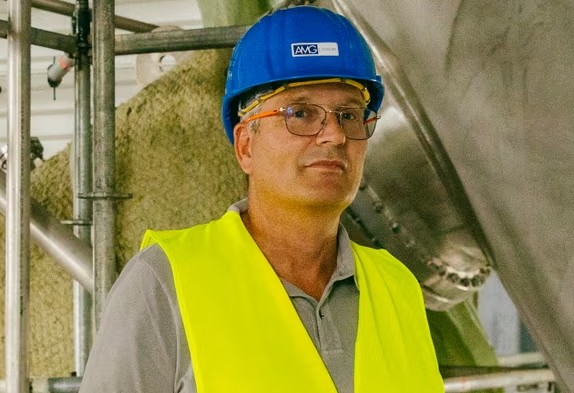
“不如申请成中国一省” ,德国锂企竟如此“激将”欧盟
Guan Cha Zhe Wang· 2025-07-02 12:13
Core Viewpoint - The CEO of AMG Lithium, Stephan Scherer, is leveraging the EU's focus on critical minerals to advocate for reduced dependency on China, suggesting that without action, the EU may as well apply to become a province of China [1][2]. Group 1: Company Developments - AMG Lithium is constructing Europe's first lithium refining plant in Saxony-Anhalt, Germany, expected to produce 20,000 tons of lithium hydroxide annually, sufficient for 500,000 electric vehicles [1]. - The company has invested £150 million over five years to reach its current status and has not faced competition in the last two to three years [4]. - AMG Lithium aims to achieve commercial production of its first test products later this year [1]. Group 2: Industry Challenges - Scherer criticizes the EU's current policies and the 2024 Critical Raw Materials Act (CRMA), claiming they are ineffective in reducing dependency on China [5]. - He highlights that China controls 60% of global lithium refining and battery component production, posing a significant challenge for EU manufacturers [5]. - The EU's lack of incentives for local mining and production is contrasted with the U.S. approach, which enforces localization policies [5]. Group 3: Strategic Recommendations - Scherer suggests that the EU should implement temporary tariffs or tax incentives to protect local industries and encourage investment from Chinese companies [5]. - He emphasizes the need for strategic investments in critical technology sectors, particularly in the automotive industry, to ensure competitiveness [5]. Group 4: Market Dynamics - The global lithium industry is intertwined with Chinese capital, making it difficult for Western countries to sever ties without significant economic implications [6]. - The demand for rare earth materials in Europe is increasing, but production capacity is lagging behind, leading to frustration among local manufacturers [7].

对话津巴布韦财长:期待中国零关税政策惠及津巴布韦
2 1 Shi Ji Jing Ji Bao Dao· 2025-06-28 12:36
Group 1 - Zimbabwe is transitioning from mining to high-value mineral products, with active participation from Chinese investors and companies [1] - Chinese enterprises are involved in lithium concentrate processing in Zimbabwe, contributing to infrastructure development and job creation [1] - The long-standing friendship between China and Zimbabwe has led to various infrastructure projects funded by China, including the construction of government buildings, sports facilities, and airport expansions [1] Group 2 - Zimbabwe has rich mineral resources and has implemented a series of incentives, such as tax benefits, to attract foreign investment [2] - The bilateral trade volume between China and Zimbabwe is projected to reach $3.802 billion in 2024, reflecting a year-on-year growth of 23.9% [2] - The Chinese government has announced a zero-tariff policy on 100% of products for 53 African countries, which is expected to benefit Zimbabwe [2]