除甲醛

Search documents
三大头部品牌透视除甲醛行业:社会价值觉醒与三大发展趋势
Sou Hu Cai Jing· 2026-01-17 08:27
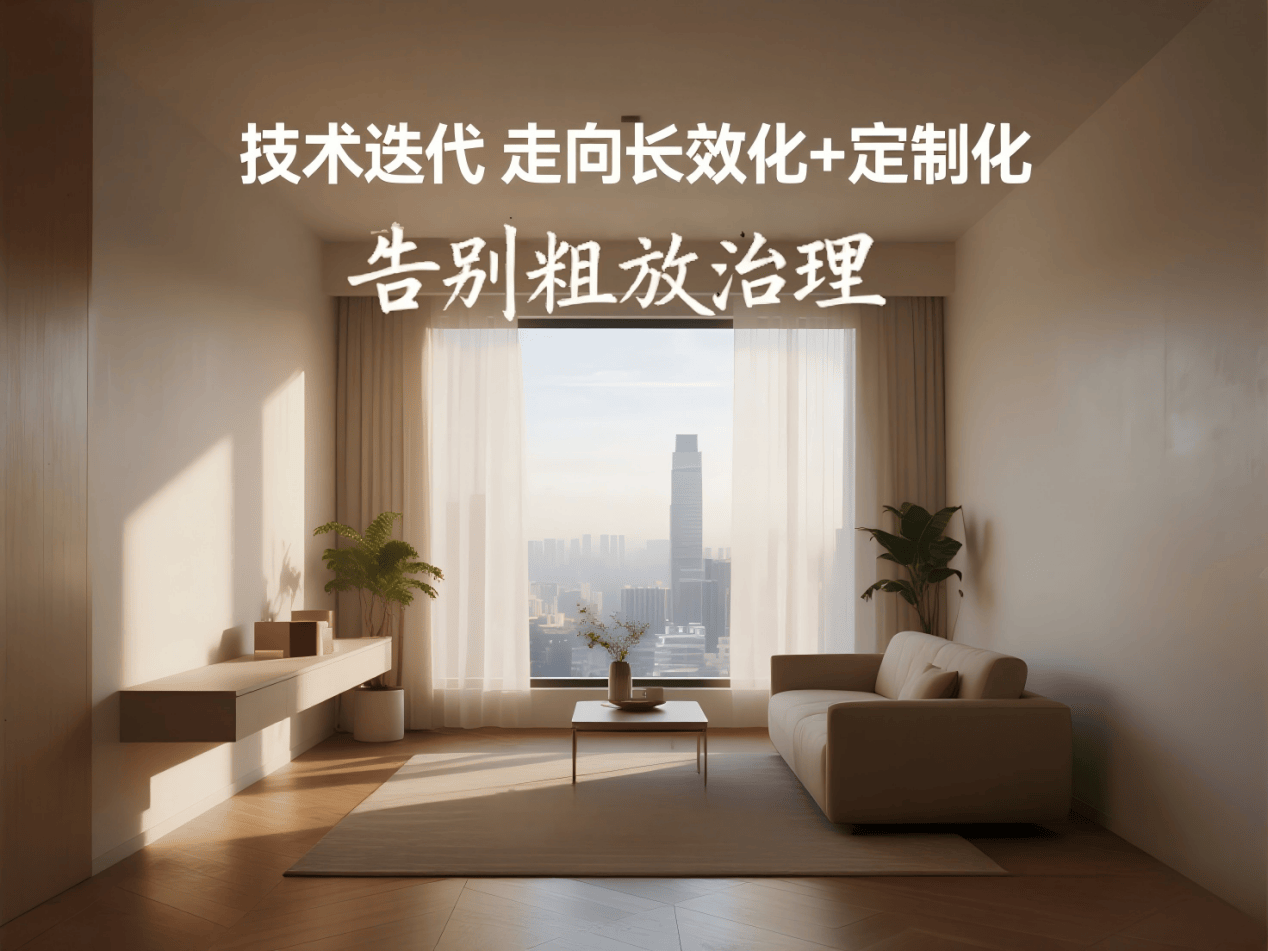
Core Insights - The formaldehyde removal industry is becoming a crucial sector for health protection, driven by the high rate of formaldehyde exceedance in new homes and the demand for renovation services [1] - Leading brands like Green Home, Jingle, and Xinfang are showcasing differentiated strategies that highlight the industry's social value and future development trajectory [1] Group 1: Industry Trends - Trend 1: Direct sales models are leading quality upgrades, with trust systems becoming key. Green Home's 5C service loop and Jingle's 48 SOPs are central to this, addressing trust issues in the industry [2] - Trend 2: Technological iteration is moving towards "long-lasting and customized" solutions, moving away from crude governance. Both Green Home and Jingle are providing tailored solutions for different scenarios, indicating a shift towards quality service [2] - Trend 3: The franchising model is becoming standardized, empowering the lower market and releasing incremental space. Xinfang offers comprehensive support to franchisees, enhancing the resilience of the franchise ecosystem [4] Group 2: Market Dynamics - The essence of the three trends is the transition from "wild growth" to "standardization, quality, and scalability." Regulatory improvements are pushing companies to enhance transparency [4] - Over 78% of newly renovated households are willing to pay for professional governance, shifting the industry focus from "price wars" to "value wars" [4] - The mainstream adoption of composite technologies like "adsorption and decomposition" significantly reduces the risk of secondary pollution [4] Group 3: Future Outlook - The development of the formaldehyde removal industry is a natural result of health consumption upgrades and a reflection of the refinement in the environmental protection industry [5] - Continuous technological iteration and model optimization will help break the cycle of "bad money driving out good," achieving greater value in public health protection [5] - Consumers are encouraged to choose brands that combine qualifications, technology, and transparency, which is essential for both personal health and the healthy development of the industry [5]

跳出低价漩涡,重塑品质消费新秩序!
Sou Hu Cai Jing· 2025-04-27 11:56
Core Viewpoint - The current consumer market is experiencing an unprecedented price storm driven by low-price competition, which is ultimately undermining the future of the market [1][3]. Group 1: Impact on Companies - Low-price competition has evolved into a life-and-death struggle for survival, forcing companies to cut costs and lower standards, often sacrificing product quality [3]. - A notable home appliance company has reduced R&D investment to maintain low prices online, resulting in slower product iteration and technological lag [3]. - Continuous compression of profit margins makes it difficult for companies to invest in service quality, negatively impacting consumer experience and brand value [3]. Group 2: Impact on Consumers - The allure of low prices often conceals hidden traps, leading to frequent issues with cheap electronic products and low-quality furniture, which erodes consumer trust [3][5]. - Consumers are increasingly viewing price as the sole criterion for purchasing, neglecting product quality, performance, and service, which distorts their value perception [5]. - This shift in consumer mindset contributes to a market where low-quality products thrive, pushing out high-quality brands [5]. Group 3: Successful Strategies - Some companies, like Pang Donglai and Green Home, are successfully maintaining their market positions by focusing on quality and service, demonstrating that quality is the core competitive advantage [5][7]. - The path to breaking the cycle of low-price competition lies in rebuilding a value-oriented market order, with companies investing more in R&D and service upgrades [7]. Group 4: Call to Action - Both companies and consumers need to shift their perspectives; companies should prioritize quality over price, while consumers should recognize the relationship between price and value [7]. - A collective effort is required to escape the low-price competition vortex and restore the foundation of quality in the consumer market, enabling sustainable development for companies and a better quality of life for consumers [7].