高分子发泡材料

Search documents
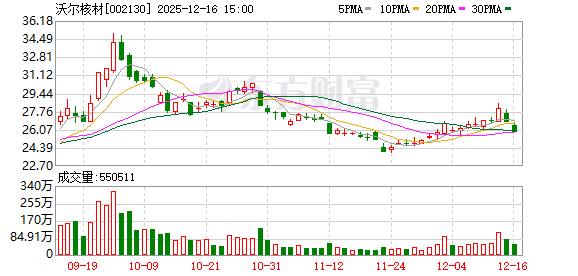
沃尔核材:拟不超15亿元扩建水口生产基地 提升生产制造与研发实力
Zhong Guo Zheng Quan Bao· 2025-12-16 14:57
Core Viewpoint - The company plans to invest up to 1.5 billion yuan in expanding its production and R&D capabilities in Huizhou, Guangdong, to enhance its industrial layout and meet growing business demands [2][3]. Group 1: Project Details - The expansion project will focus on developing high-performance communication cables and polymer foam materials, with a construction period of approximately 2 years [2]. - The project site covers about 185,300 square meters and is adjacent to the company's existing production base, facilitating operational synergies [2]. Group 2: Market Outlook - The communication cable industry is experiencing growth due to increasing demand from global data centers, artificial intelligence, high-performance computing, and automotive intelligence [2]. - Polymer foam materials are gaining traction due to their lightweight, thermal insulation, and eco-friendly properties, indicating a promising market potential [2]. Group 3: Strategic Importance - The expansion aims to align with the company's business growth needs, improve overall production capacity, and enhance delivery capabilities [3]. - The project is expected to strengthen the company's profitability and market competitiveness, laying a solid foundation for sustainable future development [3].


研判2025!中国高分子发泡材料行业发展历程、产业链、发展现状、竞争格局和发展趋势分析:环保政策趋严,高分子发泡材料积极推动绿色转型[图]
Chan Ye Xin Xi Wang· 2025-05-11 00:08
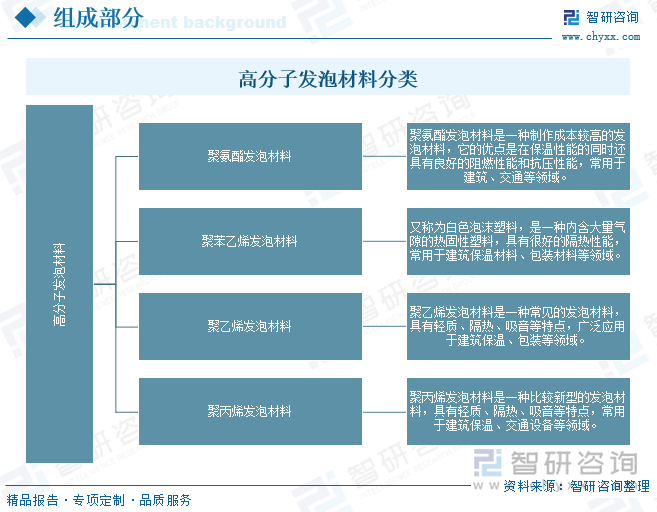
Core Viewpoint - The demand for polymer foam materials is increasing due to rising living standards and the need for comfort, safety, and environmental protection. The market size of China's polymer foam materials industry is projected to grow from 1.2 trillion yuan in 2019 to 2.3 trillion yuan in 2024, with a compound annual growth rate of 13.9% [1][14]. Industry Overview - Polymer foam materials are characterized by a porous structure, low density, and excellent thermal insulation, sound absorption, and fire resistance properties. They can be categorized into various types, including polyurethane, polystyrene, polyethylene, and polypropylene foams [3][5]. - The industry has evolved through four stages: initiation (1980-1992), development (1993-2005), rapid development (2006-2015), and transformation (2015-present) [5]. Industry Chain - The upstream of the polymer foam materials industry includes raw materials such as plastics, rubber, catalysts, and foaming agents, primarily sourced from the petrochemical industry. The midstream involves the production of polymer foam materials, while the downstream encompasses applications in construction, packaging, consumer electronics, and transportation [8]. Market Demand and Applications - Polymer foam materials are widely used in construction for insulation, soundproofing, and fire protection, in the automotive industry to reduce weight and enhance safety, and in packaging to protect products and reduce costs. The packaging market in China is expected to reach approximately 1.2 trillion yuan in 2024, reflecting a year-on-year increase of 3.99% [12][14]. Competitive Landscape - The industry is becoming increasingly competitive, with numerous companies entering the market. Key players include Changzhou Tiangsheng New Materials Group Co., Ltd., Hubei Xiangyuan New Materials Technology Co., Ltd., and others. Companies must enhance their technology, product quality, and cost efficiency to remain competitive [18][20]. Development Trends 1. **Environmental Focus**: The industry is moving towards environmentally friendly practices, including the reduction or elimination of harmful substances in production processes [24]. 2. **Multifunctionality**: Future developments will focus on enhancing the functionalities of polymer foam materials, such as adding flame retardant, anti-static, and antibacterial properties [25]. 3. **Intelligent Manufacturing**: The industry is transitioning towards smart and automated manufacturing processes, integrating information technology with production techniques to drive sustainable development [27].