Capital Market

Search documents
退市常态化格局加速形成 出清方式更多元
Zhong Guo Zheng Quan Bao· 2025-12-28 21:08
Core Viewpoint - The article discusses the evolving landscape of delisting in the A-share market for 2025, highlighting the emergence of various delisting types and the ongoing reforms aimed at enhancing investor protection and market efficiency [1][3]. Delisting Types - The delisting structure has become increasingly diverse, with 11 companies delisted for trading issues, 9 for financial issues, 6 for voluntary delisting, 5 for major legal violations, and 1 for regulatory compliance [1]. - A record 15 companies have faced major legal delisting this year, indicating a significant increase in enforcement actions [1]. Voluntary Delisting - Voluntary delisting has emerged as a notable trend, with 6 companies opting for this route through shareholder resolutions and mergers [2]. - The rise of voluntary delisting is attributed to market-driven tools such as mergers and acquisitions, which help companies improve quality and provide a buffer for underperforming firms [2]. Regulatory Environment - The regulatory framework emphasizes that delisting does not exempt companies from accountability, with a multi-faceted approach to civil, administrative, and criminal liabilities being established [3][4]. - Companies that engage in financial fraud or information disclosure violations will still face repercussions even after delisting, as evidenced by recent penalties imposed on delisted firms [3][4]. Investor Protection - Investor rights remain intact post-delisting, with ongoing legal actions and representative lawsuits providing avenues for compensation [5][6]. - The establishment of a robust investor protection mechanism is crucial for maintaining confidence in the capital market, with recent regulatory proposals aimed at enhancing protections during the delisting process [6][7]. Market Reforms - Continuous reforms in the delisting system are aimed at creating a more market-oriented and normalized exit mechanism, promoting healthy capital market operations [6]. - Suggestions include optimizing delisting functions and improving re-listing mechanisms to encourage better governance and operational efficiency among delisted companies [6].
吴清等超级智囊团重磅发声,资本市场高规格会议,信号很大
Xin Lang Cai Jing· 2025-12-19 06:19
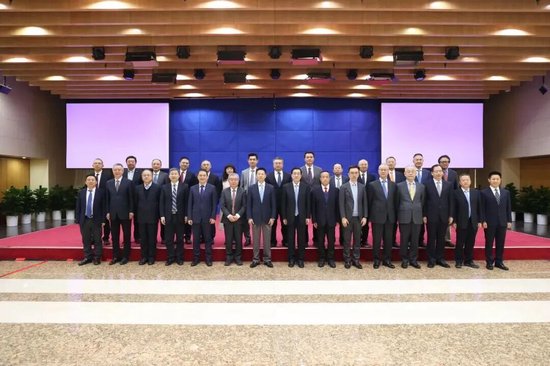
Core Viewpoint - The establishment of the Academic Committee of the China Capital Market Society marks a significant advancement in the theoretical research and intellectual support for the high-quality development of China's capital market, with 29 authoritative experts forming a "super think tank" [1][3][14]. Group 1: Establishment and Purpose - The Academic Committee was officially established on December 18, 2023, and is composed of 29 experts from various fields related to capital market research [3][15]. - The committee aims to enhance academic research, promote academic exchange, encourage innovation, and uphold academic ethics, serving as a think tank for theoretical research and a consultant for policy-making [3][15][18]. - The committee's formation is seen as a crucial step in transitioning capital market theory from fragmentation to a more systematic and professional approach [1][14]. Group 2: Leadership and Structure - Li Yang, a prominent figure in financial theory and policy research, has been appointed as the chair of the Academic Committee, with four vice chairs from academic institutions, highlighting the committee's academic independence [18][19]. - The committee's members come from diverse backgrounds, including government research institutions, universities, international investment banks, and market practitioners, ensuring a rich blend of theoretical and practical insights [19][20]. Group 3: Focus on the 14th and 15th Five-Year Plans - During the meeting, experts discussed the "14th Five-Year Plan" and provided constructive suggestions for the "15th Five-Year Plan," emphasizing the importance of enhancing the capital market's quality and functionality [21][22]. - Key recommendations included improving the inclusiveness and adaptability of listing and trading systems, expanding patient and long-term capital supply, and strengthening investor protection [21][22]. Group 4: Future Developments - The China Capital Market Society plans to launch an official academic journal titled "Capital Market Research," which will serve as a platform for cutting-edge research on significant theoretical and policy issues in the capital market [24]. - The establishment of the Academic Committee and the journal signifies a move towards a more systematic, professional, and international approach to capital market theory, enhancing China's influence in global financial governance [24].

应完善“硬约束”,推出私募标准化信息披露体系呼声渐高
Hua Xia Shi Bao· 2025-05-16 04:46
Core Viewpoint - The rapid development of China's wealth management industry has led to more diversified asset allocation channels for investors, but the protection of investor rights has become a focal point of social concern [2][3] Group 1: Market Overview - The total market capitalization of A-shares has surpassed 102 trillion yuan, with public fund sizes exceeding 32 trillion yuan and private fund sizes nearing 20 trillion yuan as of May 14 [4] - The broader financial market, including bank wealth management, insurance, and trust products, has a total scale of approximately 300 trillion yuan, with over 2 billion stock investors and 1.25 billion bank wealth management investors in China [4] Group 2: Investor Protection Issues - Middle and small investors face significant challenges in protecting their rights, often encountering infringement and fraud without effective means of recourse [2][4] - Information asymmetry places small investors at a disadvantage, complicating their ability to achieve stable income expectations and making it difficult to defend their legal rights when infringed [4][5] Group 3: Regulatory Developments - On May 15, the Supreme People's Court and the China Securities Regulatory Commission jointly issued guidelines to enhance investor protection and promote high-quality capital market development [6] - The new regulations aim to improve the market environment for investors, ensuring their rights are fully protected and fostering a positive market ecosystem [6] Group 4: Recommendations for Improvement - Experts suggest that enhancing investor education and awareness of risks is crucial, alongside establishing effective channels for dispute resolution [5][7] - There is a call for improved regulatory frameworks, including standardized information disclosure and the use of technology such as blockchain for better risk management [7]