Digital Transformation

Search documents
Exxe Group Advances Platform Strategy and Share Structure Reduction Following Strategic Meetings
Accessnewswire· 2026-03-12 13:43
Core Insights - Exxe Group is advancing its platform strategy and reducing its share structure following strategic meetings with European partners [1] - The company has finalized framework agreements with a German AI technology firm to enhance its service-based revenues and integrate AI capabilities into its platform [1] - Exxe anticipates unlocking $5.5 million in liquidity through real estate refinancing activities, with $2.8 million net for further platform expansion [1] AI Platform Development - Exxe has established agreements with an AI-focused technology company in Germany to expand services and integrate AI capabilities into its platform [1] - The agreements will facilitate the client's expansion into Switzerland and deepen the integration of AI across Exxe's offerings [1] Share Structure Reduction - The company has successfully negotiated a reduction of 30 million common shares, which will be reported to the Transfer Agent for updates on OTC Markets [1] - Additional share reductions are anticipated as the service-based platform model is validated [1] Real Estate Platform and Refinancing Strategy - Exxe is advancing its European real estate initiatives, including refinancing strategies like the Frankfurt project [1] - The management believes that these refinancing efforts will unlock $5.5 million in liquidity, aiding in platform expansion [1] Management Commentary - The CEO of Exxe Group emphasized the capital-efficient platform model that combines infrastructure services, asset monetization, and strategic M&A advisory capabilities [1] - This platform approach allows Exxe to collaborate with operating partners through management services and revenue-sharing arrangements, facilitating growth without heavy reliance on direct asset ownership [1] About Exxe Group - Exxe Group operates an asset-light platform focused on monetizing real assets and businesses through strategic advisory and operational scaling [1] - The company engages in sectors such as automotive services, healthcare products, design, agriculture, and technology, generating recurring revenues through various platform services [1]


Atos Group has signed a binding agreement to sell Ideal GRP, one of its Nordic businesses, to MAIT Group
Globenewswire· 2025-12-18 15:36
Core Viewpoint - Atos Group has signed a binding agreement to sell Ideal GRP, a Nordic business, to MAIT Group as part of its transformation plan aimed at sustainable growth and improved profitability [1][3] Group 1: Company Overview - Atos Group is a global leader in AI-powered digital transformation with approximately 67,000 employees and annual revenue of around €10 billion, operating in 61 countries [4] - Ideal GRP, founded in 1992, operates under the Eviden brand and is active in Finland, Sweden, Norway, Denmark, and Estonia, generating approximately €20 million in annual revenue and employing around 80 people [2] Group 2: Transaction Details - The sale of Ideal GRP is part of Atos Group's 'Genesis' transformation plan, which focuses on core assets such as AI, cloud-enabled, and secure solutions [3] - The transaction is expected to close in the coming weeks, pending the fulfillment of all closing conditions [3] Group 3: Strategic Implications - The divestment allows Ideal GRP to complement MAIT Group's expertise in lifecycle management and supports MAIT Group's ambition to expand its activities in the Nordic region [3]

为什么企业数字化总“转”不起来?因为分不清这两条流
Sou Hu Cai Jing· 2025-11-03 15:16
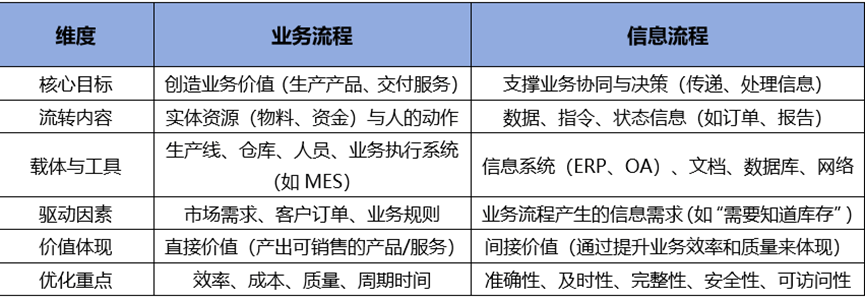
Core Insights - The essence of digital transformation is to utilize data-driven and systematic information flows to drive, optimize, and even reshape business processes [15] - Understanding the differences and symbiotic relationship between business processes and information flows is crucial for enhancing operational efficiency and advancing digital transformation [3] Business Processes - Business processes are the "value streams" that create customer value, focusing on the actual business activities such as production and service delivery [4][5] - A typical example in the e-commerce sector is the sequence of "customer order → review → picking → shipping → receipt," which directly generates transaction value [6] - In manufacturing, the business process includes steps like "raw material procurement → warehouse inspection → production → quality testing → finished goods storage," which directly produces tangible products [12][13] Information Flows - Information flows act as the "nervous system" of enterprise operations, responsible for transmitting, processing, and storing information that supports business operations [7][8] - In the same e-commerce scenario, synchronizing orders, inventory updates, and logistics status tracking exemplifies information flow [9] - In manufacturing, the information flow includes steps like "procurement request → supplier entry → inspection report upload → production instruction issuance → progress feedback → inventory update," ensuring data transmission and business node collaboration [14] Comparative Analysis - Business processes aim to create business value, while information flows support business collaboration and decision-making [11] - Business processes involve the movement of physical resources and human actions, whereas information flows deal with data, instructions, and status information [11] - The optimization focus for business processes is on efficiency, cost, quality, and cycle time, while for information flows, it is on accuracy, timeliness, completeness, security, and accessibility [11] Conclusion - The integration of business processes and information flows is essential for modern management, where competition is based on process efficiency and information response speed [15][16] - Companies must ensure that both elements are highly integrated and mutually supportive to achieve a robust operational framework and agile responsiveness to market demands [15][16]
Top 4 Women-Run Companies Delivering Market-Beating Returns
ZACKS· 2025-10-08 15:35
Corporate Leadership Trends - The shift towards more women in top executive roles is transforming corporate cultures and enhancing business performance across various sectors, including technology and healthcare [2] - Women-led firms are setting new benchmarks for strategic growth and operational excellence, often outperforming their industry peers [2] Case Studies of Women Leaders - Julie Sweet, CEO of Accenture, has driven the firm's focus on cloud, digital, and AI, emphasizing inclusion and transparent communication, which has helped sustain growth [3] - Maria Black, CEO of Automatic Data Processing, leverages her extensive experience to guide the company towards a more insight-driven and human-centric future [3] Women Entrepreneurs and Business Growth - The number of women-owned firms grew 44% faster than male-owned businesses from 2019 to 2024, with 56% of women entrepreneurs reporting higher revenues in 2025 compared to 2024 [4] - Many women entrepreneurs are accessing growth capital, with 20% utilizing debt and 32% equity funding in the past year [4] Funding Challenges for Women Entrepreneurs - Women-led startups receive only about 2% of venture capital funding in the U.S. and Europe, partly due to biases in the investment community [5] Investment Opportunities in Women-Led Companies - Companies like Phillips 66, Progressive Corporation, Macy's, and General Dynamics exemplify strong leadership and strategic vision, making them attractive investment opportunities [7] Phillips 66 Performance - In Q2 2025, Phillips 66 reported a net income of $877 million and adjusted earnings of $973 million, with a return of $906 million to shareholders through dividends and buybacks [10][11] Progressive Corporation Performance - Under Tricia Griffith's leadership, Progressive's net premiums written increased to $20 billion in Q2 2025, up 12% from the previous year, with an EPS of $4.88, reflecting strong operational discipline [14][15] Macy's Performance - Macy's reported net sales of $4.8 billion in Q2 2025, with adjusted EPS of 41 cents, and comparable sales rose 0.8% on an owned basis [18] General Dynamics Performance - General Dynamics posted revenues of $13 billion in Q2 2025, up 8.9% year over year, with a record backlog of $103.7 billion, indicating strong long-term earnings visibility [21][22]




Trident Digital Tech Holdings (TDTH) Seeks Stablecoin Licenses Across Multiple African Markets to Drive Ripple USD (RLUSD) Adoption
Globenewswire· 2025-08-08 12:17
Core Viewpoint - Trident Digital Tech Holdings Ltd is pursuing regulatory approvals for stablecoin operations in Africa to enhance financial inclusion and digital payments infrastructure through the adoption of Ripple USD (RLUSD) [1][3] Strategic Background - The company aims to raise up to US$500 million to establish one of the largest corporate XRP treasuries, leveraging staking mechanisms and integrating with the Ripple ecosystem [2] African Expansion for RLUSD - TDTH is extending its ambitions to secure stablecoin licenses for RLUSD in multiple African markets, which will improve cross-border payments and address local currency liquidity challenges [3] Why RLUSD in Africa Makes Sense - RLUSD has gained traction, reaching over US$500 million in circulating supply shortly after issuance [4] - There are ongoing innovations in stablecoin payments across Africa, including initiatives by Circle's USDC and Visa's pilot programs [4] Leadership Quote - The CEO emphasizes that pursuing stablecoin licenses and RLUSD adoption aligns with the mission to enable Web 3.0 transformations in emerging markets, reflecting the belief that blockchain-native assets can reshape financial infrastructure [5] Next Steps - TDTH is in discussions with regulatory authorities and local partners to understand licensing pathways, aiming for phased rollouts in pilot countries by mid-2026 [5] Company Overview - Trident Digital Tech Holdings is dedicated to digital transformation, particularly through its blockchain identity platform Tridentity, and has established itself as a trusted Web 3.0 infrastructure partner in emerging markets [6] About Trident - The company focuses on technology optimization and Web 3.0 activation, with a mission to connect organizations to secure digital infrastructure, particularly in Southern Africa and high-growth markets [7]
Trident Drives Engagement for Singapore's National Day Parade 2025
GlobeNewswire News Room· 2025-08-07 08:00
Core Insights - Trident Digital Tech Holdings Ltd. is the Principal Partner of Singapore's National Day Parade 2025, promoting its blockchain-based identity platform, Tridentity, through a national campaign [1][2][5] Group 1: Tridentity GO Campaign - The Tridentity GO campaign is a nationwide digital initiative running from early July to the end of August, celebrating Singapore's 60th National Day with interactive experiences and exclusive deals from over 70 local merchants [3][4] - Users can collect digital "stamps" through the Tridentity app by engaging in activities such as logging in daily, answering quiz questions about Singapore's history, and redeeming special merchant deals [6][7] - The campaign aims to support local businesses by channeling traffic and boosting sales through SG60 exclusive deals, enhancing community engagement [4][8] Group 2: Company Overview - Trident is focused on digital transformation and Web 3.0 activation, with its flagship product, Tridentity, providing secure single-sign-on authentication across various industries [9] - The company's mission is to become a global leader in Web 3.0 enablement, particularly targeting high-growth markets in Southern Africa and beyond [9]

数字化业务需求总拎不清,怎么破?
3 6 Ke· 2025-07-28 06:49
Core Insights - The main issue in digital transformation is the unclear expression of business needs, leading to difficulties for the information department in capturing valuable information [1] - There is a communication gap between business and information departments, resulting in demand deviations [1] - The lack of business knowledge within the information department hampers the ability to deeply explore the essence of demands [1] - Poor communication can lead to project failures, with ongoing conflicts between technology and business [1] Group 1: Challenges in Digital Transformation - Business departments often do not fully engage in digital transformation, viewing it as a means to appease superiors rather than a necessity for development [4] - Information departments are frequently blamed for project failures, despite being seen as cost centers rather than value-creating entities [4] - The traditional mindset within many companies makes it difficult for business departments to accept technological empowerment [2][4] Group 2: Strategies for Effective Demand Collection - Information department employees need to understand business processes and pain points to accurately identify true demands [5] - Building trust is essential for obtaining genuine feedback from business departments [5][6] - Effective communication is crucial, requiring the ability to guide business departments to express their true needs without making decisions for them [6]
技术VS业务:企业数字化主导权该由谁执掌?
3 6 Ke· 2025-07-04 06:56
Core Viewpoint - Digital transformation has become a critical issue for companies, yet many struggle to achieve satisfactory results due to a disconnect between technology and business operations [1][2] Group 1: Challenges in Digital Transformation - Common issues include insufficient technical capabilities, lack of business integration, poor operational management, and lack of leadership involvement [1] - Conflicts often arise between IT and business departments over project leadership, with each side believing they are better suited to lead [1][2] - The IT department has strong technical expertise, which can help in selecting appropriate digital tools and ensuring project stability and scalability [1][2] Group 2: Advantages of IT Department Leadership - IT departments can efficiently solve technical problems, control costs, and ensure adherence to project standards, thereby reducing the risk of project failure [2] - They can design universal digital solutions that facilitate data sharing and integration across departments, preventing data silos [2][3] Group 3: Disadvantages of IT Department Leadership - IT personnel often lack frontline business experience, leading to a disconnect between system capabilities and actual business needs [2][3] - Communication barriers exist between IT and business departments, increasing project costs and misunderstandings [3][4] Group 4: Advantages of Business Department Leadership - Business departments have a better understanding of their own needs, allowing for more relevant digital solutions that enhance operational efficiency [4][5] - They can more easily coordinate resources and gain support from other departments, facilitating project implementation [4][5] Group 5: Disadvantages of Business Department Leadership - Business departments may lack technical knowledge, leading to poor decision-making regarding technology solutions and potential project failures [5][6] - They often focus solely on their own needs, which can result in systems that do not meet the requirements of other departments, creating integration challenges [5][6] Group 6: Proposed Solution - A collaborative "dual-drive" model is suggested, where IT and business departments work together to establish cross-departmental processes and performance metrics [6][7] - Regular training sessions should be conducted to develop talent that understands both technology and business, breaking down professional barriers [6][7]
Atos announces the appointment of Marie de Scorbiac as Head of Investor Relations and CSR
Globenewswire· 2025-04-28 08:00
Core Viewpoint - Atos Group has appointed Marie de Scorbiac as the new Head of Investor Relations and CSR, aiming to enhance financial reporting strategy and stakeholder relations while promoting a secure and decarbonized digital world [2][5]. Group 1: Appointment Details - Marie de Scorbiac's role will involve defining and implementing Atos Group's financial reporting strategy and developing relationships with shareholders, investors, and financial analysts [2]. - She will also oversee Atos's CSR strategy, focusing on creating sustainable value for all stakeholders [2]. Group 2: Professional Background - Prior to joining Atos, Marie de Scorbiac served as vice president of investor relations, public affairs, sustainability, and group financial planning and analysis at Adevinta [3]. - She has extensive experience in investor relations and financial communication, having worked with listed companies such as Areva and Elior Group from 2011 to 2019 [3]. Group 3: Educational Background - Marie de Scorbiac holds a master's degree in economic and social information from the University of Paris Dauphine [4]. - She began her career as a financial analyst at Thomson and Deutsche Bank [4]. Group 4: Company Overview - Atos is a global leader in digital transformation with approximately 74,000 employees and annual revenue of around €10 billion [6]. - The company is recognized as the European leader in cybersecurity, cloud, and high-performance computing, providing tailored end-to-end solutions across 68 countries [6]. - Atos is committed to decarbonization services and products, aiming for a secure and decarbonized digital environment for its clients [6].