
Freight Transport

Search documents
EXPD Tops Q4 Earnings & Revenue Estimates, Announces Buyback Program
ZACKS· 2026-02-24 18:15
Core Insights - Expeditors International of Washington (EXPD) reported fourth-quarter 2025 earnings of $1.49 per share, exceeding the Zacks Consensus Estimate of $1.46, although this represents an 11.3% decrease year over year. Total revenues reached $2.86 billion, surpassing the Zacks Consensus Estimate of $2.8 billion but down 3.3% year over year due to weakness in ocean freight and services [1][8]. Financial Performance - Airfreight tonnage volume increased by 6% during the quarter, while ocean container volume decreased by 6%. Operating income fell by 17% year over year to $251 million, while total operating expenses decreased by 1.5% year over year to $2.61 billion [2]. - Airfreight Services revenues rose by 4.3% year over year to $1.1 billion, driven by growth in airfreight tonnage on exports from North and South Asia. Conversely, ocean freight and ocean services revenues plummeted by 32.7% year over year to $611.4 million, impacted by pricing volatility and lower volumes. Customs Brokerage and other services revenues increased by 15.5% year over year to $1.14 billion [3]. Shareholder Returns - In the fourth quarter of 2025, EXPD returned $150 million to shareholders through share buybacks. The company returned a total of $875 million to shareholders through share repurchases and dividends in 2025. Additionally, the board approved a new $3 billion share repurchase program, set to take effect after the current program expires. At the end of the fourth quarter, EXPD had cash and cash equivalents of $1.31 billion, up from $1.15 billion at the end of 2024 [4].



J.B. Hunt Transport Services, Inc. (JBHT) Presents at Barclays 43rd Annual Industrial Select Conference Transcript
Seeking Alpha· 2026-02-17 16:05
Core Insights - The conference features J.B. Hunt, highlighting its significance in the freight industry [1] - Audience engagement is encouraged through response questions regarding J.B. Hunt's stock ownership and general bias [2][3] Company Performance - J.B. Hunt's fourth quarter performance is noted as solid, with cost reductions and improving margins [4]


J.B. Hunt Transport Services (NasdaqGS:JBHT) FY Conference Transcript
2026-02-17 14:42
Summary of J.B. Hunt Transport Services FY Conference Call Company Overview - **Company**: J.B. Hunt Transport Services (NasdaqGS: JBHT) - **Event**: FY Conference Call on February 17, 2026 Key Points Industry Insights - **Market Demand**: The company observed a healthy demand environment in Q4 2025, with customer forecasts being more accurate than in previous years, leading to a solid performance [2][3] - **Impact of Weather**: A significant winter storm affected operations, making it difficult to assess demand trends accurately in early Q1 2026. However, initial signs indicated better-than-expected demand strength [3][4] - **Regulatory Environment**: The regulatory landscape, including ELD compliance and cabotage laws, is impacting market dynamics and contributing to capacity exits [10] Financial Performance - **Margins**: Margins are improving, with a noted squeeze in brokerage margins due to tighter capacity in Q4 2025 [6][8] - **Cost Management**: The company is focused on eliminating $100 million in structural costs and is undergoing a business transformation to drive efficiency through technology and AI [11][12] Business Segments - **Dedicated Contract Services**: The dedicated segment faced challenges with net tractor growth, aiming for 800-1,000 tractors per year. Retention rates improved from a low of 89% to 94% by the end of 2025 [25][38] - **Intermodal Services**: The intermodal segment is experiencing growth despite low truck rates and fuel prices, with a two-year volume growth of +6% to +11% [16][17] Strategic Initiatives - **AI and Technology**: The company is investing in AI to enhance operational efficiency and automate processes, which is expected to improve decision-making and asset utilization [11][13] - **Customer Relationships**: J.B. Hunt emphasizes building long-term relationships with customers, focusing on private fleet conversions and maintaining high service levels [34][42] Market Dynamics - **M&A Activity**: The potential merger between UP and Norfolk Southern is not expected to significantly impact J.B. Hunt's operations, as the company has established relationships with multiple rail providers [14][15] - **Bid Season**: Early indications suggest that customers are hesitant to accept higher rates, attributing market conditions to weather disruptions rather than structural changes [22] Future Outlook - **Growth Projections**: The company is optimistic about returning to net tractor growth and expects moderate income growth in 2026, with a focus on onboarding new business [27][28] - **Capital Deployment**: J.B. Hunt has been active in share repurchases, retiring 6.5% of its stock, and is focused on disciplined capital deployment to support growth [69][70] Additional Considerations - **Customer Retention**: The company has faced customer defections primarily due to rate competition and market conditions, but believes in the potential for recovery as market conditions improve [56][47] - **Operational Excellence**: J.B. Hunt aims to maintain operational excellence and disciplined growth as top priorities, leveraging technology to enhance safety and efficiency [12][13] This summary encapsulates the key insights and strategic directions discussed during the conference call, highlighting J.B. Hunt's performance, market conditions, and future outlook.
确保清洁化运输不在“最后一公里”走偏
Zhong Guo Huan Jing Bao· 2026-02-03 23:09
Core Viewpoint - The article highlights the issue of companies engaging in deceptive practices to meet clean transportation assessments, undermining the original intent of policies aimed at improving transportation sustainability [1][5]. Group 1: Current Issues in Clean Transportation - Some companies are manipulating clean transportation assessments by switching to electric vehicles only at the last mile, distorting the policy's goal of achieving comprehensive clean transport [1]. - The Ministry of Ecology and Environment and 15 other departments set a target for clean transportation rates of 80% in key industries and 70% in other areas, but the implementation has been compromised by superficial compliance [1][5]. Group 2: Regulatory Challenges - The current assessment methods rely on static data from companies, which is outdated and allows for manipulation; a shift to real-time tracking and data analysis is necessary [2]. - A recommendation is made for the establishment of a national or regional regulatory platform that utilizes IoT and big data to monitor clean transportation effectively [2]. Group 3: Infrastructure and Support - Companies face challenges such as range anxiety and high costs associated with clean energy vehicles, which necessitates government support in developing charging and refueling infrastructure [3]. - Local governments should not only enforce compliance but also facilitate the transition to clean transportation by providing necessary infrastructure [3]. Group 4: Policy Recommendations - A balanced approach of incentives and constraints is needed to motivate companies to view green transformation as an opportunity rather than a cost burden [4]. - Suggestions include tax incentives for companies that exceed clean transportation targets and integrating supply chain sustainability into evaluation systems [4]. Group 5: Systemic Solutions - Addressing the "last mile switch" issue requires a comprehensive approach that includes upgrading regulatory practices, enhancing support systems, and fostering a collaborative governance model [5]. - The focus should be on ensuring that clean transportation policies are effectively implemented and that the original goals of these policies are achieved [5].
美国关税影响追踪-环比趋势多数下滑;春节前 2 月或迎回升-US Tariff Impact Tracker_ Sequential Trends Mostly Decline; February to See Step Up Ahead of LNY
2026-02-03 02:49
Summary of Key Points from the Conference Call Industry Overview - The report focuses on the impact of tariffs on global supply chains, particularly freight flows from China to the USA, and the associated trends in shipping and transportation industries [2][4][11]. Core Observations - **Freight Trends**: Laden vessels from China to the USA decreased by 4% week-over-week (WoW) and were down 20% year-over-year (YoY) [3][11]. - **Port Activity**: Expected TEUs (Twenty-foot Equivalent Units) into the Port of Los Angeles are projected to decrease by 13% sequentially, but are expected to increase by 31% in the following week, likely due to preparations for the Lunar New Year [3][39]. - **Intermodal Volumes**: Rail intermodal volumes along the West Coast were down 6% YoY, indicating a potential decline in import trends [3][45]. - **Ocean Container Rates**: Rates for ocean containers were down 51% YoY, reflecting significant pressure on shipping costs [3][36]. Future Projections - **Volume Growth**: The ability to achieve profit and earnings growth in 2026 will depend on volume growth, particularly in higher-margin business-to-business and manufacturing flows [5][7]. - **Transport Stocks**: The report suggests that transport stocks may face volatility in the second half of 2025, but there is optimism for a recovery cycle in 2026 [8][9]. - **Fed Rate Cuts**: Anticipated Fed rate cuts in 2026 could benefit transport shares, with predictions of two additional cuts following three in 2025 [9][10]. Tariff and Trade Dynamics - **Tariff Uncertainty**: Ongoing tariff-related uncertainties have led to indecision among shippers regarding inventory levels, contributing to underperformance in transport sectors [6][9]. - **Manufacturing Investments**: Increased investments in US manufacturing by major corporations (e.g., Apple, Nvidia) are expected to enhance domestic freight flows [9][10]. Additional Insights - **Logistics Patterns**: Changes in logistics and supply chain sourcing strategies may create new opportunities for global trade, particularly as companies adopt a "China Plus 1 or 2" strategy [9][10]. - **Congestion Levels**: The Supply Chain Congestion Tracker indicates that congestion levels are returning to pre-COVID baselines, suggesting improved fluidity in supply chains [52]. Conclusion - The report highlights a complex interplay of declining freight volumes, tariff impacts, and potential recovery signals in the transport sector, with a focus on the importance of volume growth and strategic shifts in manufacturing and logistics.
西巴尔干多国货运司机联合封锁对欧盟边境通道,要求放宽限留规定
Shang Wu Bu Wang Zhan· 2026-01-27 14:42
Core Viewpoint - The coordinated protests by freight drivers from Bosnia, Serbia, Montenegro, and North Macedonia at the borders of Croatia, Hungary, Bulgaria, and Romania highlight the significant threat posed by the Schengen Area's strict driver stay regulations to regional exports and supply chain stability [1] Group 1: Protest Details - The protests began at noon on January 26, blocking freight traffic while allowing passenger vehicles, buses, and trucks transporting essential goods to pass [1] - The immediate trigger for the protests was the implementation of the Schengen Area's "90/180 days" rule, which treats professional drivers from non-EU countries like regular tourists [1] Group 2: Industry Impact - The new entry-exit system (EES) accurately records the duration of stay, causing many drivers to fear penalties and preventing them from continuing operations in the EU [1] - Industry representatives warn that if the issue is not resolved, regional exports will face severe disruptions [1] - The protesters demand that the EU reclassify cross-border freight drivers as "cross-border workers" rather than tourists to ensure smooth logistics in the region [1]
Cost management drives Q4 beat at J.B. Hunt
Yahoo Finance· 2026-01-16 12:00
Core Insights - J.B. Hunt Transport Services reported solid demand and is actively gaining market share, aligning with customers who are also increasing their share in their respective industries [1] - The truckload market has tightened since the week before Thanksgiving, continuing into the new year, although management is cautious about providing firm guidance due to past market fluctuations [2] Financial Performance - For the fourth quarter, J.B. Hunt reported earnings per share of $1.90, which is 24 cents higher year-over-year and 9 cents above consensus estimates. The adjusted EPS excludes $16 million in nonrecurring intangible asset impairments [3] - Consolidated revenue for the quarter was $3.1 billion, a 2% decrease year-over-year, slightly below the consensus estimate of $3.12 billion. However, operating income increased by 11% on an adjusted basis due to cost reductions and improved productivity [3] Cost Management - The company has achieved its target of $100 million in annual cost reductions and continues to identify further opportunities for expense cuts [4] - The operating ratio improved to 91.2%, which is 140 basis points better year-over-year and 60 basis points better than the previous quarter. Cost per load decreased by 3%, while revenue per load fell by 1.5% [7] Intermodal Performance - Intermodal revenue declined by 3% year-over-year to $1.55 billion, with load counts and revenue per load both down approximately 1.5%. Transcontinental loads decreased by 6%, while shipments in the Eastern network increased by 5% [5] - Total intermodal carloads on U.S. Class I railroads were down nearly 5% year-over-year, indicating a challenging volume comparison [5] Future Outlook - To achieve long-term margin targets of 10% to 12%, the company aims to capture one point of margin from lower costs, better volumes, and higher yields, and is already on track regarding cost management [8] - J.B. Hunt is actively engaging with rail partners, particularly in light of Norfolk Southern's planned merger with Union Pacific, to explore future opportunities and enhance service partnerships [9]
J.B. Hunt Transport Services(JBHT) - 2025 Q4 - Earnings Call Transcript
2026-01-15 23:02
Financial Data and Key Metrics Changes - For Q4 2025, revenue decreased by 2% year-over-year, while operating income improved by 19%, and diluted earnings per share increased by 24% compared to the prior year period [11] - For the fiscal year 2025, revenue declined by 1%, while operating income increased by 4% [12] - The company executed over $25 million in tracked savings in Q4, achieving a run rate of over $100 million in annualized cost savings [15] Business Line Data and Key Metrics Changes - Intermodal volumes in Q4 were down 2% year-over-year, with transcontinental volumes down 6% and eastern loads up 5% [33] - The final mile business experienced soft market demand across furniture, exercise equipment, and appliances, with expectations of a $90 million revenue headwind in 2026 due to the loss of legacy appliance-related business [21][22] - The dedicated business maintained flat operating income compared to 2024 results despite a lower fleet count, with strong new truck sales in Q4 [26] Market Data and Key Metrics Changes - The truckload market became noticeably tighter beginning the week before Thanksgiving, driven by higher levels of regulatory enforcement [22] - Customers are consolidating logistics providers, leading to the highest customer retention since 2017 [18] - Demand in Q4 aligned with expectations, with a solid peak season supported by early imported freight needing to move inland [17] Company Strategy and Development Direction - The company is focused on disciplined growth through operational excellence, leveraging investments in people, technology, and capacity to create sustainable competitive advantages [9] - The strategy for 2026 includes continuing to repair margins and maintaining operational excellence while managing costs [10] - The company is committed to engaging in discussions regarding Class 1 rail consolidation and converting highway truckload shipments to intermodal [32] Management's Comments on Operating Environment and Future Outlook - The freight market is described as fragile, with limited elasticity in supply, indicating that small increases in demand could create significant market changes [41] - Management remains cautious about the market outlook, emphasizing the need to monitor customer feedback and demand trends in early 2026 [56] - The company is optimistic about its operational momentum and capacity to deploy capital to meet customer needs [16] Other Important Information - The company spent $575 million in capital reinvesting in its business in 2025 and repurchased $923 million worth of shares, the largest annual amount in its history [12] - The balance sheet remains healthy, with leverage just under the target of one times trailing 12-month EBITDA [13] Q&A Session Summary Question: Can you elaborate on the freight market's fragility? - Management indicated that the supply side has not changed significantly since Thanksgiving, and small demand upticks could create larger market ripples due to limited elasticity [40][41] Question: What is the opportunity for cost savings in 2026? - Management expressed confidence in exceeding the $100 million cost savings target, citing successful execution of various cost initiatives [50] Question: How does the recent tighter capacity freight market impact expectations for dedicated sales? - Management noted that while it is too early to see significant changes, there is optimism due to strong new customer acquisitions and a robust sales pipeline [73]
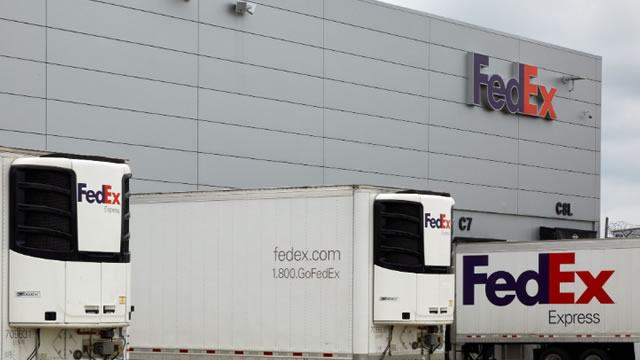
FedEx Q2 Earnings & Revenues Beat Estimates, Up Y/Y, FY26 EPS View Up
ZACKS· 2025-12-19 18:26
Core Insights - FedEx Corporation (FDX) reported strong second-quarter fiscal 2026 results, with earnings and revenues exceeding expectations, showcasing a year-over-year earnings increase of 19% and revenue growth of 6.8% [2][3][9] Financial Performance - Quarterly earnings per share (EPS) reached $4.82, surpassing the Zacks Consensus Estimate of $4.07, with share repurchases contributing an additional 5 cents per share [2][9] - Revenues totaled $23.4 billion, exceeding the Zacks Consensus Estimate of $22.8 billion [3][9] - Operating income increased by 31.4% to $1.38 billion, with operating margin rising to 5.9% from 4.8% year-over-year [5][9] Guidance and Outlook - FedEx raised its full-year fiscal 2026 guidance, now expecting revenue growth of 5-6% (previously 4-6%) and EPS between $14.80 and $16.00, up from $14.20-$16.00 [4] - The anticipated spin-off of FedEx Freight is expected to be completed on June 1, 2026, as a separate publicly traded company [6][9] Segment Performance - FedEx Express segment revenues grew 8% year-over-year to $20.4 billion, driven by higher package yields and cost savings [7] - FedEx Freight revenues declined by 2% to $2.14 billion, impacted by lower shipments and higher wage rates, alongside one-time spin-off-related costs of $152 million [8] Capital and Liquidity - FedEx ended the quarter with cash and cash equivalents of $6.57 billion, an increase from $6.16 billion in the previous quarter [11] - The company completed $276 million in share repurchases during the quarter, with $1.3 billion remaining available for future repurchases [11] Cost Management and Investments - FedEx anticipates permanent cost reductions of $1 billion from transformation-related savings and plans to invest $4.5 billion in capital expenditures focused on network optimization and efficiency improvements [13]

5 Transport Stocks Are Spiking After Slumps. Analysts Debate Their Future.
Investors· 2025-12-03 22:40
Core Viewpoint - A group of transport stocks has experienced significant gains, outperforming the S&P 500 index this week [1] Group Performance - Five freight stocks: Saia (SAIA), Old Dominion Freight Line (ODFL), J.B. Hunt Transport Services (JBHT), Forward Air (FWRD), and Knight-Swift Transportation (KNX) have seen an average increase of about 7% since the start of the week [1] - This performance is notably higher than the S&P 500's approximate 1% gain during the same period [1]