
Green Finance

Search documents
生态环境部将制定绿金支持美丽中国建设项目分类目录
2 1 Shi Ji Jing Ji Bao Dao· 2026-02-02 09:41
Key Insights - The rapid development of the green finance market is leading to an increase in relevant information and data, with a focus on the latest trends and practices in green finance to provide decision-making references for stakeholders [1] Group 1: Policy Developments - The Ministry of Ecology and Environment plans to develop a classification directory for green finance supporting the construction of a beautiful China, which will help optimize financial market support policies and enhance project recommendation mechanisms [2] - The Ministry aims to promote financial support for urban environmental protection projects and strengthen industry self-regulation policies, enhancing the disclosure of environmental information and establishing a new regulatory mechanism based on environmental credit [2] Group 2: Market Transactions - The first cross-border carbon trading settlement between China and Portugal was completed in Zhuhai, involving a total payment of 20,000 RMB for carbon emission rights, demonstrating the feasibility of cross-border carbon trading [3] - The national carbon market recorded a highest price of 82.00 RMB per ton and a total trading volume of 862,146 tons, with a total transaction value of 67,572,010 RMB [4] Group 3: Green Finance Practices - The first carbon excess loss insurance for industries such as steel and cement was issued, providing 1 million RMB in risk coverage, addressing the core risks of green transformation in high-energy-consuming industries [5] - Guangdong province proposed a "fund + bank + insurance" integrated blue finance industry system to support marine economic development, encouraging the development of marine-related financial products [6] - Ningxia released a three-year action plan for high-quality green finance development, aiming to establish a green finance service system by 2028, with a focus on ecological protection and green transformation in the Yellow River basin [7]
三大美丽中国先行区明确绿色金融任务
2 1 Shi Ji Jing Ji Bao Dao· 2026-01-04 14:06
Group 1 - The rapid development of the green finance market has led to an increase in relevant information and data, with the Green Finance Weekly focusing on the latest trends and providing decision-making references for participants in the green finance sector [1] Group 2 - Three major "Beautiful China" pilot areas have defined green finance tasks, with specific action plans released by seven government departments, emphasizing green finance as a key support [2] - The Guangdong-Hong Kong-Macao Greater Bay Area aims to establish a financial project library, promote the implementation of green finance standards, and develop carbon finance [2] - The Beijing-Tianjin-Hebei plan focuses on building a green finance and sustainable finance center, supporting the development of green credit, insurance, and bonds [2] - The Yangtze River Delta plan seeks to elevate local green finance standards to national levels and enhance the role of the National Green Development Fund [2] - The differentiated deployment of green finance in these regions aims to inject precise financial momentum into ecological protection and low-carbon industrial transformation [3] Group 3 - The national carbon market saw a highest price of 75.99 yuan/ton last week, with a closing price increase of 3.15% compared to the previous week [4] - The total trading volume of carbon emission allowances reached 6,927,636 tons, with a total transaction value of approximately 507.58 million yuan [5] Group 4 - The Shanghai Pudong New Area launched a climate risk online service for climate investment and financing, providing tools to visualize and assess climate risks based on historical weather data [6] - This service addresses the long-ignored quantification of "physical risks" in green investments, offering important tools for assessing asset stability [7] Group 5 - Beijing Energy Group's subsidiary, Jingneng International, successfully issued 1.88 billion yuan in green asset-backed notes at a low interest rate of 1.78%, showcasing the ability of state-owned enterprises to leverage market conditions for green asset securitization [8]


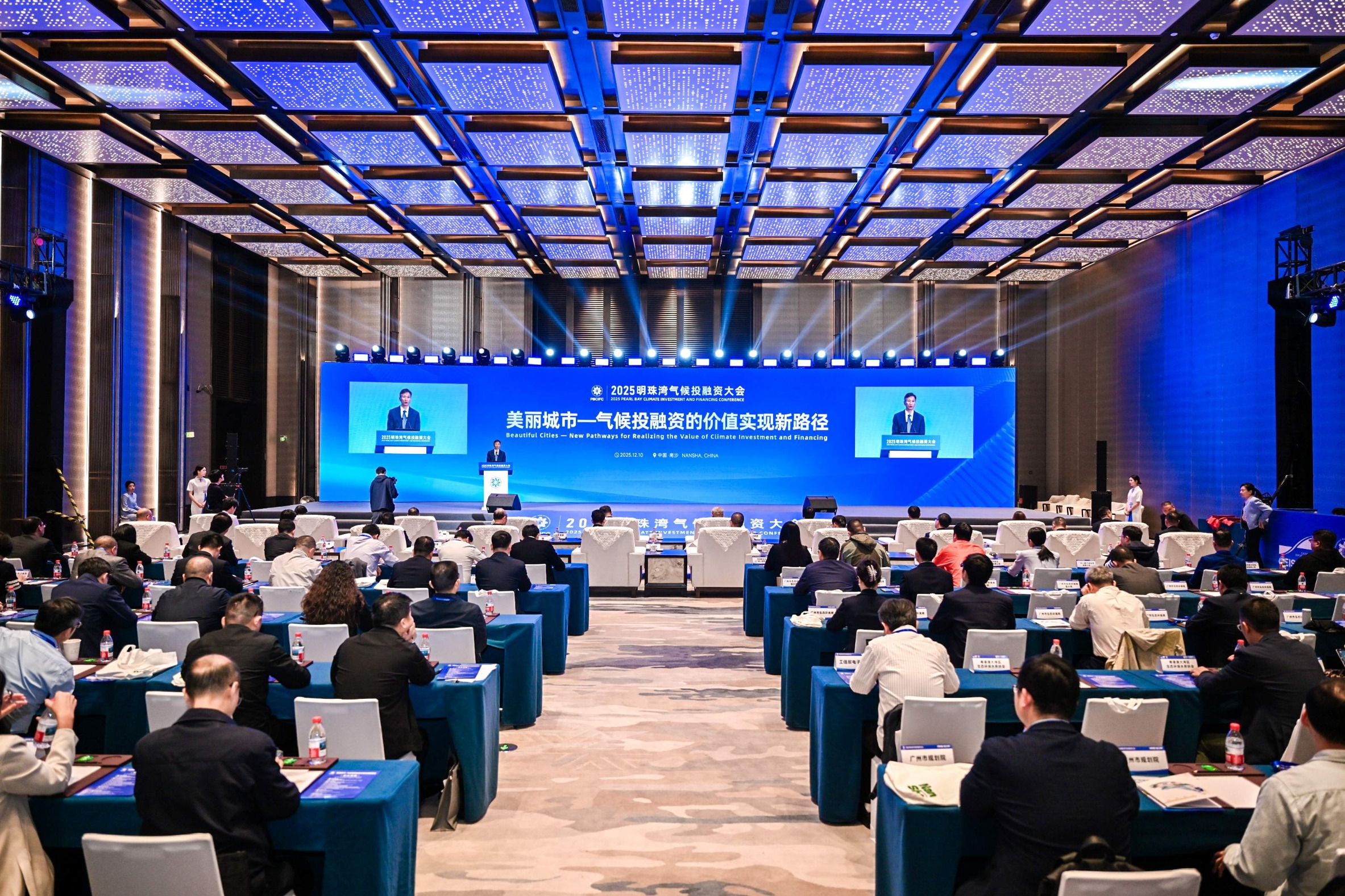
凝聚绿色发展动能 绘就美丽湾区新画卷——2025明珠湾气候投融资大会聚焦气候投融资赋能美丽城市建设
Xin Hua Cai Jing· 2025-12-11 13:48
Core Insights - The conference focused on climate investment and financing as a key lever to direct funds towards green and low-carbon sectors, aiming to explore a win-win path for ecological civilization and high-quality development in mega cities [1][3]. Group 1: Climate Investment and Financing - Climate investment and financing are recognized as essential for achieving a virtuous cycle of urban development and supporting the construction of beautiful cities [3]. - The Guangdong province is leading the way in innovative mechanisms for climate investment, establishing a provincial-level promotion mechanism and supporting Guangzhou in creating a multi-dimensional construction model [3][5]. - Guangzhou has integrated climate investment into its urban planning and governance processes, establishing a dedicated working group and a technical support unit for beautiful city construction [3][5]. Group 2: Innovative Practices and Financial Mechanisms - Guangzhou has developed a project library with nearly 100 billion yuan in total investment, facilitating the launch of eight projects and securing financing of nearly 10 billion yuan [5]. - The city’s green loan balance has surpassed 1.6 trillion yuan, with green bonds issued exceeding 259 billion yuan, showcasing the depth of green financial product innovation [5]. - The "Guangdong Carbon Label" pilot program has been initiated to enhance the competitiveness of local enterprises in international markets by managing carbon footprints [6]. Group 3: Ecological Restoration and Urban Resilience - The conference highlighted successful ecological restoration projects, such as the rehabilitation of wetlands in Macau, which have improved biodiversity and attracted rare bird species [4]. - The construction of climate-resilient cities has evolved into a comprehensive system that includes monitoring, natural solutions, and regional collaboration [4]. - The Guangdong-Hong Kong-Macao Greater Bay Area is implementing a high-precision monitoring network for disaster early warning and promoting nature-based solutions [4]. Group 4: Future Plans and Goals - The "Beautiful Guangzhou Construction Planning Outline" aims for significant achievements by 2027 and a harmonious coexistence between humans and nature by 2035, with 28 specific indicators set for implementation [14]. - The upcoming 2025 National Games in Guangzhou will focus on green, low-carbon, and sustainable practices, with a commitment to achieving carbon neutrality through various initiatives [15]. - The South China region is expected to enhance its ecological environment as a foundation for high-quality development, with a vision for a future city characterized by beautiful rivers, coastlines, and strategic platforms [15].
副中心打“组合拳”促金融发展
Sou Hu Cai Jing· 2025-11-21 20:37
Group 1: Policy Initiatives - The policies aim to promote high-quality development of the financial industry in Tongzhou District, focusing on financial services for the real economy and fostering a symbiotic relationship between finance and industry [1][2] - Financial institutions can receive substantial subsidies based on their annual revenue milestones, with one-time support of up to 10 million yuan for achieving specific revenue thresholds [1] - The strategic direction for the financial industry includes establishing dual centers for global wealth management and green finance, with significant financial support for asset management institutions reaching certain scales [1][2] Group 2: Green Finance Incentives - Incentives for green finance include support for banks with new green loans exceeding 50 million yuan and for insurance and securities institutions meeting specific thresholds [2][4] - The policies encourage participation in the establishment of green standards and project databases, enhancing the overall green finance ecosystem [2] Group 3: Economic Impact and Growth - The financial sector in the region has shown significant growth, with the value added increasing from 11.96 billion yuan in 2021 to 14.19 billion yuan in 2024, indicating its role as a strong engine for regional economic development [3] - The average annual growth rate of deposits and loans in the financial sector has reached 15.8%, demonstrating the district's increasing attractiveness and capacity for capital allocation [3] Group 4: Successful Project Implementation - Over 150 quality financial projects have been established since the start of the 14th Five-Year Plan, including the first wholly foreign-owned currency brokerage in China and the largest city commercial bank wealth management subsidiary [3] - The district has nearly 480 financial enterprises, with licensed asset management institutions managing over 1.6 trillion yuan in assets [3] Group 5: Support for Enterprises - Policies are designed to support enterprises throughout their lifecycle, including interest subsidies for key enterprises' first bank loans and various financing support for small and medium-sized enterprises [2][5] - The favorable policies and improved administrative services have significantly enhanced the operational environment for financial institutions, leading to increased loan growth and support for green projects [5][6]
北京绿色交易所召开2025年参与人大会 推动绿色低碳发展
Zheng Quan Ri Bao Wang· 2025-07-30 06:18
Core Insights - The Beijing Green Exchange hosted the 2025 Participant Conference, attracting over 200 representatives from various sectors in the voluntary carbon market [1] - The Chairman of the Green Exchange, Wang Naixiang, emphasized the company's development history and the construction of two major platforms: voluntary greenhouse gas emission reduction trading and national green technology trading, while promoting a diversified service approach to support national carbon peak and carbon neutrality goals [1] - The Bank of China Postal Savings Bank's Beijing branch highlighted its innovative practices in green finance, showcasing a comprehensive support strategy for the national "dual carbon" strategy through five dimensions: organizational structure optimization, establishment of specialized institutions, policy support innovation, key project investment, and green finance innovation [1] Development and Future Directions - Zhang Ruoyan, General Manager of the Green Exchange, presented the exchange's achievements and future directions, while various experts discussed the potential and development paths of the voluntary carbon market, global climate governance trends, CCUS technology innovations, and the application prospects of RWA technology in carbon credit [2] - Roundtable discussions focused on the opportunities and challenges in the voluntary carbon market, sharing experiences and suggestions for innovative development in carbon market participation [2] - Another roundtable explored the role of green finance in supporting green industry development and future directions, sharing practical experiences and innovative measures [2] Carbon Neutrality Initiatives - The conference utilized a digital platform co-developed with Smart Exhibition for carbon accounting, quantifying the carbon emissions and reductions of the event, with plans for carbon neutrality achieved through the cancellation of carbon credits post-event [3]