
Market Intelligence

Search documents
TechTarget, Inc. Q4 2025 Earnings Call Summary
Yahoo Finance· 2026-03-12 00:13
Core Insights - The company achieved 2025 revenue of $486.8 million by stabilizing the top line through a unified market intelligence platform under the Omnia brand [1] - Adjusted EBITDA margins expanded by 180 basis points through operational consolidation, automation, and accelerated cost synergies from the business combination [1] - The go-to-market strategy was shifted to prioritize the top 150-200 clients, resulting in double-digit revenue growth from a core cohort of 30 portfolio customers [1] Market Dynamics - The company mitigated AI-driven search traffic volatility by diversifying audience acquisition, with search now representing less than 45% of total traffic [1] - There was a 235% year-over-year increase in citations driven by 'AI answer engines', yielding conversion rates to permissioned members 2-3 times higher than traditional search [1] - A strategic shift among large technology clients toward vendor consolidation was observed, favoring the company's ability to provide integrated scale solutions over point products [1] Growth Strategies - The repositioning of Netlite addressed the cost-conscious demand generation market, expanding addressable market coverage and driving bookings growth [1]
'Substantial Shortfall' in Copper Supply Widens as the Race for AI and Growing Defense Spending Add to Accelerating Demand, New S&P Global Study Finds
Prnewswire· 2026-01-08 12:00
Core Insights - A significant copper supply deficit is projected to reach 10 million metric tons by 2040 due to a 50% increase in demand driven by electrification, AI, and defense spending [1][2][3] Demand Projections - Global copper demand is expected to rise to 42 million metric tons by 2040, a 50% increase from current levels [1] - Core economic demand will account for 23 million metric tons (53% of global demand) by 2040, while energy transition and additional demand will increase to 15.7 million metric tons [6] - Demand from AI and data centers, along with rising defense spending, is anticipated to add 4 million metric tons to the total demand by 2040 [7] Supply Challenges - Global copper production is projected to peak at 33 million metric tons in 2030, leading to a substantial shortfall by 2040 [2] - The study indicates that overcoming the supply gap will require an additional 10 million metric tons of primary supply by 2040, alongside increased recycling efforts [8] - The copper sector faces challenges such as declining ore grades, rising costs, and complex extraction conditions, with an average of 17 years needed for a new copper mine to go from discovery to production [9][10] Strategic Importance - Copper has been classified as a 'critical metal' by several countries, including the United States, due to its essential role in various sectors [4] - The future availability of copper is deemed a matter of strategic importance, linking machinery, digital intelligence, and security systems [4] Conclusion - The study emphasizes the need for multilateral cooperation and regional diversification to ensure a resilient global copper supply system, crucial for electrification and digitalization in the age of AI [11]



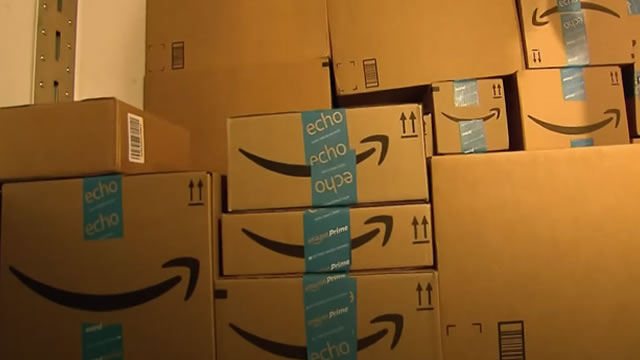
Amazon's AI chatbot Rufus drove sales on Black Friday
TechCrunch· 2025-12-01 16:25
Core Insights - Amazon's AI chatbot, Rufus, experienced significant adoption on Black Friday, with purchase sessions involving Rufus increasing by 100% compared to the previous 30 days, while sessions without Rufus only rose by 20% [1][2] - The overall website sessions for Amazon increased by 20% on Black Friday, but sessions that included Rufus saw a 35% increase, indicating a strong preference for AI-assisted shopping [2] - The rise in AI usage for holiday shopping reflects a broader trend, with 48% of surveyed consumers indicating they have used or plan to use AI for this purpose [13] Adoption and Performance Metrics - Rufus contributed to a 75% day-over-day increase in purchase sessions, compared to a 35% increase for sessions without the AI chatbot [2] - AI traffic to U.S. retail sites surged by 805% year-over-year on Black Friday, highlighting the growing reliance on generative AI chatbots for deal-finding and product research [5] - U.S. shoppers arriving at retail sites via AI services were 38% more likely to make a purchase compared to those coming from non-AI sources [9] Economic Context - Black Friday spending reached a record $11.8 billion, although this may be attributed to higher prices (up 7% on average) rather than an increase in online shopping volume, which saw a 1% decline [10] - Despite increased app and website adoption on Black Friday, total visits and downloads showed a deceleration compared to 2024, indicating a more conservative consumer spending behavior [11] - Amazon and Walmart's mobile app downloads grew by 24% and 20% respectively on Black Friday, but these figures were significantly lower than the growth rates seen in 2024 [12]

S&P Global Says Business Activity Growth Slows But Remains ‘Robust'
PYMNTS.com· 2025-09-23 23:38
Core Insights - U.S. business activity continued to grow in September, but the growth rate slowed for the second consecutive month [1][2] - The Flash U.S. Composite PMI Output Index decreased from 54.6 in August to 53.6 in September, indicating a slowdown in both manufacturing and service sectors [2] - Despite the slowdown, the PMI reading remained elevated, and the third quarter saw the strongest average monthly expansion since Q4 2024 [2] Business Sentiment - Growth remained "robust" in September, although it decreased from the peak observed in July [3] - Companies' expectations for output in the upcoming year rose to a four-month high in September, although still below long-term averages [3] - Sentiment in the service sector reached its highest level since May, while manufacturing sentiment was the highest in three months [4] Economic Factors - Business sentiment improved partly due to anticipated benefits from lower interest rates, despite ongoing concerns over the political environment and tariffs [5] - Retail sales in August showed a stronger-than-expected gain of 0.6% from the previous month and a 5% increase from August 2024 [6] - The National Federation of Independent Businesses reported a rise in small business sentiment, with the Small Business Optimism Index increasing by 0.5 points to 100.8 [6] Labor Market Concerns - The number of business owners expecting higher sales increased by 6 points to 12%, although concerns about labor shortages persisted [7] - Despite improvements in overall business health, labor quality remained the top issue for small business owners [7]