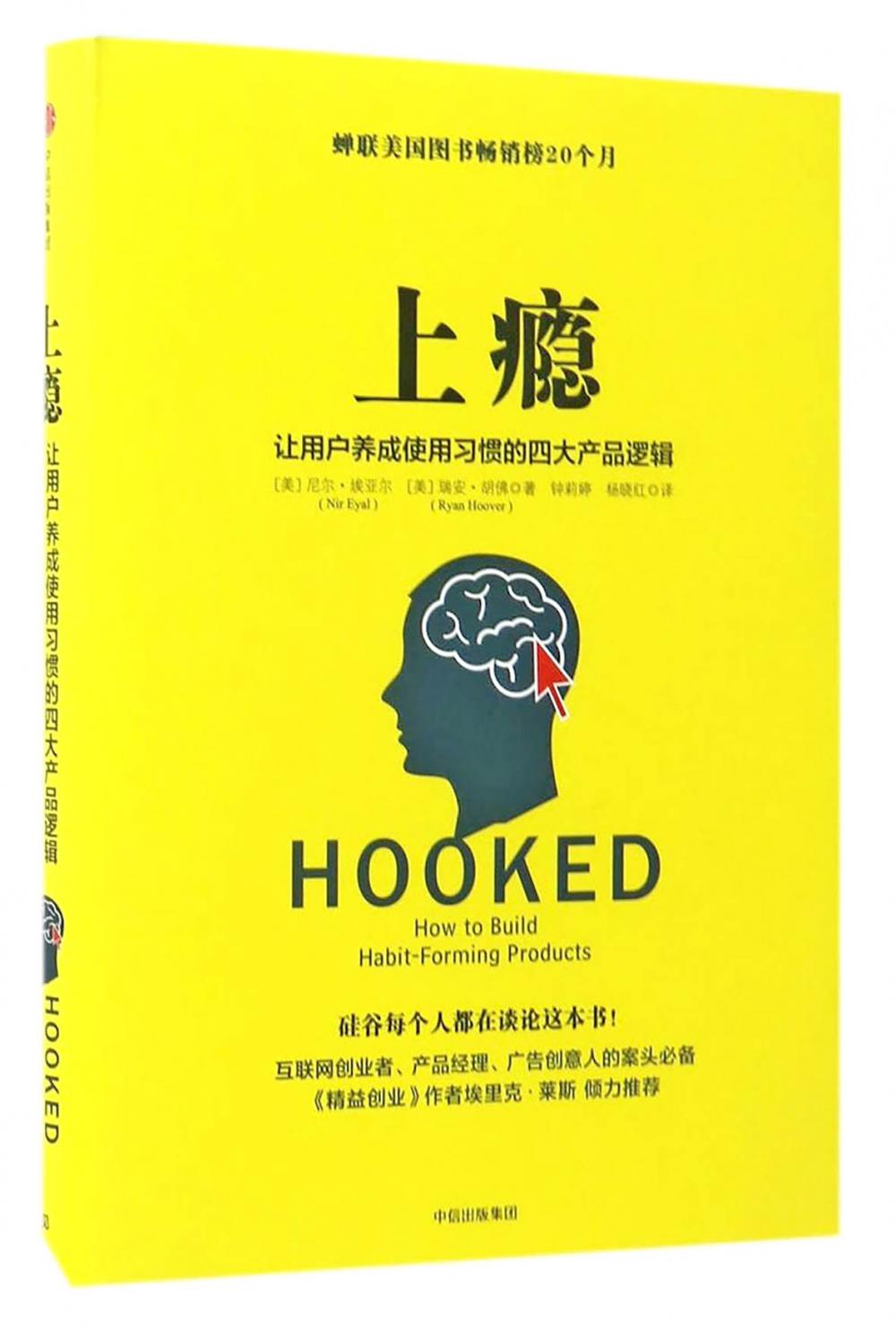
《上瘾:让用户养成使用习惯的四大产品逻辑》

Search documents
产品设计的深层行为逻辑丨书评
Xin Lang Cai Jing· 2026-01-04 23:12
Core Idea - The book "Hooked: How to Build Habit-Forming Products" by Nir Eyal and Ryan Hoover explores how certain products create habitual usage among users, emphasizing the importance of product design in fostering user engagement and dependency [1][4]. Group 1: Target Audience and Purpose - The primary audience for the book includes product managers, designers, marketers, and anyone interacting with users, highlighting the need for understanding user habit formation [4]. - The authors aim to provide a systematic approach to embedding services (like apps) into users' daily lives, transforming products from optional to essential [4]. Group 2: Theoretical Framework - The book is grounded in behavioral psychology, cognitive science, and behavioral economics, utilizing theories such as Skinner's operant conditioning and the Fogg Behavior Model to support its arguments [4][5]. - It emphasizes the significance of external stimuli in driving user behavior and creating lasting engagement with products [5]. Group 3: Ethical Considerations - While the book acknowledges that product designers should bear some ethical responsibility, it does not deeply explore the conflicts between user addiction and corporate interests [6]. - The discussion on "addiction" is metaphorical, focusing on how to design products that encourage repeated use without delving into the potential negative impacts on vulnerable populations, such as minors [5][6]. Group 4: Practical Implications - The book serves as a practical guide for product developers, illustrating how psychological mechanisms can be leveraged to create a cycle of trigger-action-reward-investment that fosters user dependency [6]. - It provides a lens for social policy researchers to critique the addictive nature of digital products designed by large companies, prompting a need for reflection on individual agency in product usage [6].