认知科学

Search documents
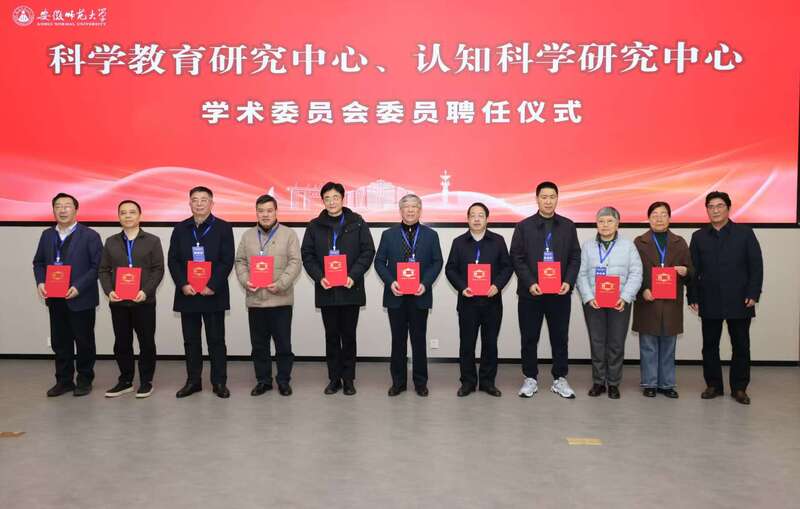
安徽师范大学成立科学教育研究中心与认知科学研究中心
Xin Lang Cai Jing· 2026-01-10 11:12
Group 1 - The establishment of the "Science Education Research Center" and "Cognitive Science Research Center" at Anhui Normal University aims to drive educational reform and technological advancements in the Yangtze River Delta region [1][4] - The Science Education Research Center will focus on three core areas: innovation in science curriculum and teaching, digital development of science popularization resources, and deep integration of intelligent technology with science education [4] - The Cognitive Science Research Center will leverage interdisciplinary support from psychology, life sciences, computer science, and neuroscience to address cutting-edge topics such as brain development, cognitive function modeling, mental health interventions, and neural regulation technology [6] Group 2 - The academic committees for both centers include renowned experts from fields such as science education, psychology, artificial intelligence, and neuroscience [6] - The establishment of these centers is a key initiative for Anhui Normal University to optimize its academic structure and enhance its core competitiveness [6] - The university plans to provide top-tier research platforms and talent support systems to facilitate interdisciplinary and collaborative innovation for the centers [6]

产品设计的深层行为逻辑丨书评
Xin Lang Cai Jing· 2026-01-04 23:12
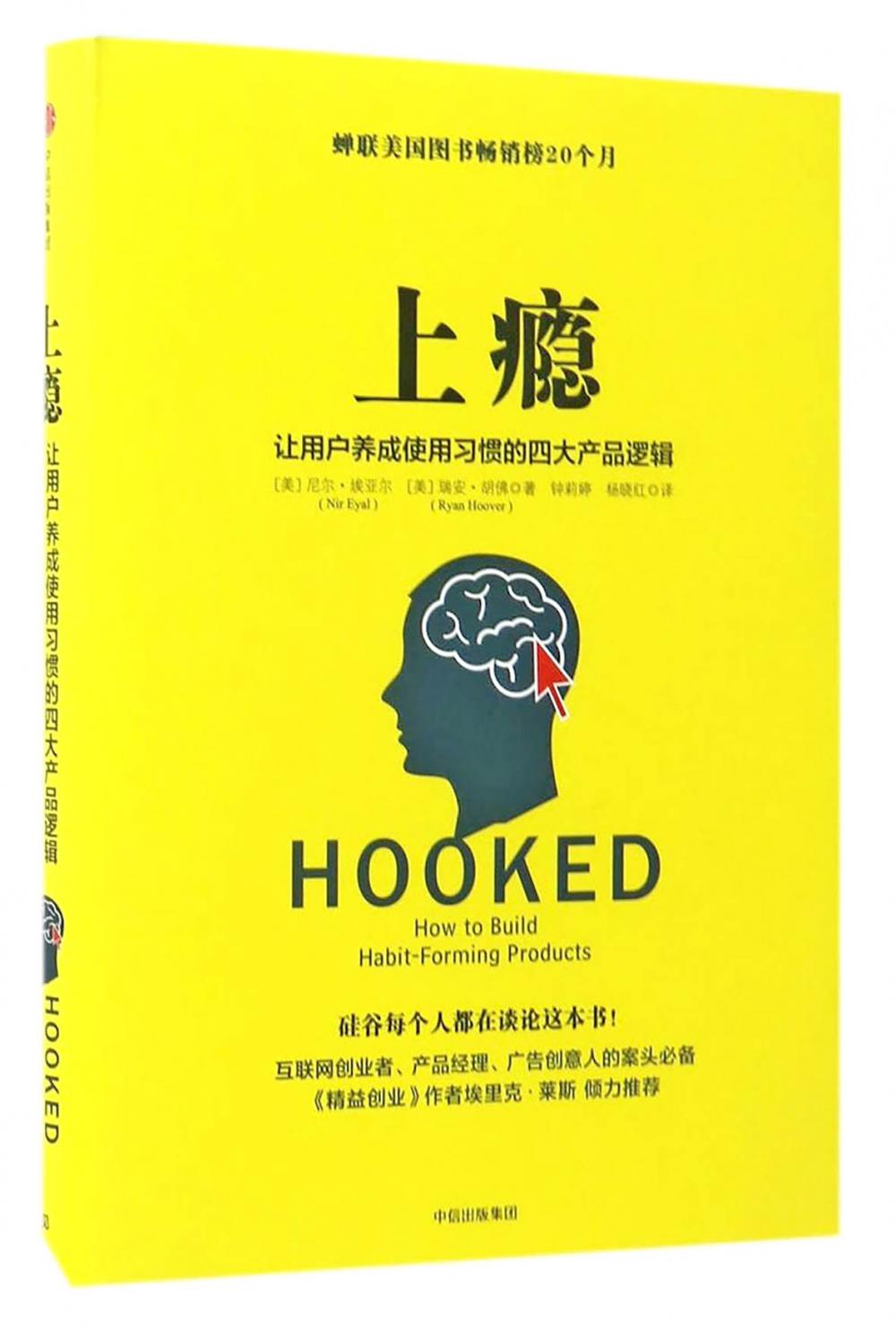
Core Idea - The book "Hooked: How to Build Habit-Forming Products" by Nir Eyal and Ryan Hoover explores how certain products create habitual usage among users, emphasizing the importance of product design in fostering user engagement and dependency [1][4]. Group 1: Target Audience and Purpose - The primary audience for the book includes product managers, designers, marketers, and anyone interacting with users, highlighting the need for understanding user habit formation [4]. - The authors aim to provide a systematic approach to embedding services (like apps) into users' daily lives, transforming products from optional to essential [4]. Group 2: Theoretical Framework - The book is grounded in behavioral psychology, cognitive science, and behavioral economics, utilizing theories such as Skinner's operant conditioning and the Fogg Behavior Model to support its arguments [4][5]. - It emphasizes the significance of external stimuli in driving user behavior and creating lasting engagement with products [5]. Group 3: Ethical Considerations - While the book acknowledges that product designers should bear some ethical responsibility, it does not deeply explore the conflicts between user addiction and corporate interests [6]. - The discussion on "addiction" is metaphorical, focusing on how to design products that encourage repeated use without delving into the potential negative impacts on vulnerable populations, such as minors [5][6]. Group 4: Practical Implications - The book serves as a practical guide for product developers, illustrating how psychological mechanisms can be leveraged to create a cycle of trigger-action-reward-investment that fosters user dependency [6]. - It provides a lens for social policy researchers to critique the addictive nature of digital products designed by large companies, prompting a need for reflection on individual agency in product usage [6].
读了这四本书,你会更懂认知科学(入门版)
3 6 Ke· 2025-12-20 02:53
Core Insights - The article discusses the disconnect between high intelligence and rational decision-making, emphasizing that intelligence does not equate to wisdom or rationality [1] - It highlights the importance of understanding cognitive processes and the limitations of human thinking in the context of information overload [1] Group 1: Cognitive Science Insights - Cognitive science reveals that human cognition is complex, and traditional education focuses too much on IQ rather than rational thinking [1] - The brain processes information through "chunking," allowing for better management of complex data, which is crucial for innovation [4] - The "greedy" nature of the brain drives both creativity and anxiety, as individuals seek patterns and structures in overwhelming information [4] Group 2: Key Literature Recommendations - "The Greedy Brain" by Daniel Bor explores consciousness as a product of brain activity, emphasizing the material basis of awareness [3][4] - "Beyond IQ" by Keith Stanovich introduces a three-tiered model of the mind, highlighting the importance of reflective thinking in rational decision-making [6][7] - "Robot Uprising" further examines rationality and autonomy, suggesting that understanding cognitive biases can help individuals make better decisions [12][13] - "The Society of Mind" by Marvin Minsky presents the idea that human thought is a collaboration of many simple agents, challenging the notion of a singular intelligence [17][18] Group 3: Practical Applications - The article suggests that to improve rational thinking, individuals should learn cognitive tools such as probability reasoning and scientific thinking [7][8] - It emphasizes the need for a structured understanding of cognitive processes to navigate the complexities of modern decision-making [21]