行为心理学

Search documents
现在最重要的任务
猛兽派选股· 2026-03-25 03:34
Group 1 - The article emphasizes that the current market performance aligns with previous judgments, indicating a potential limit to average stock price declines, which should not exceed 19% as per the current regulatory team's bottom line [1] - It discusses the psychological aspects of market behavior, particularly the near-miss effect, and how it affects normal individuals in the stock market, suggesting that those who can break through their psychological barriers may have greater influence over market movements [2] - The article highlights the importance of identifying new leading stocks and main themes in the market following significant corrections, indicating a cyclical nature of market leadership [2]


轮动焦虑和注意力破碎
猛兽派选股· 2026-02-13 03:36
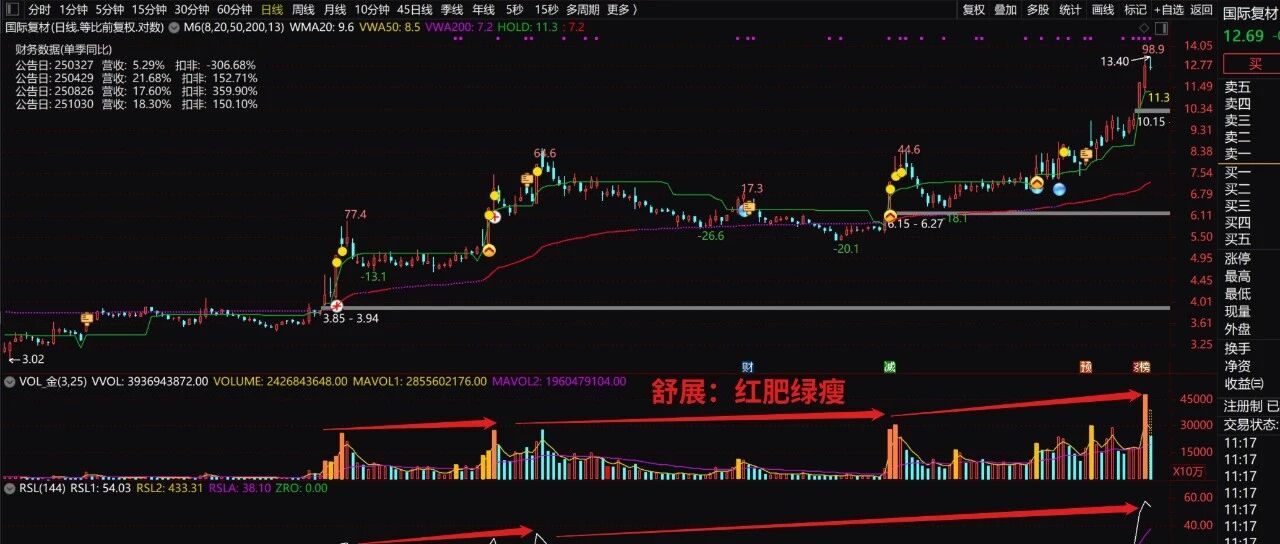
Group 1 - Market rotation anxiety is a common phenomenon experienced by almost everyone in the stock market, driven primarily by public psychology rather than just strategic moves by major players [1] - Behavioral psychology indicates that individuals fear losing profits, leading them to secure gains quickly, which in turn causes stock prices to rise and then fall rapidly [1] - The uncertainty of which stock will rise next creates anxiety, stimulating dopamine production while also causing extreme discomfort and fatigue [1] Group 2 - The difficulty in predicting the next rising stock is due to the diverse opinions among market participants, leading to complex influences and unpredictable outcomes [2] - Behavioral psychology suggests that individuals are reluctant to accept losses, often choosing to hold onto losing positions, while also fearing missing out on potential gains, which contributes to market volatility [2] - The adjustment of stock structures has a predictable pattern in terms of retracement, but the duration of these adjustments can vary significantly, complicating predictions [2] Group 3 - The anxiety experienced by market participants leads to fragmented attention, making it challenging to focus and analyze the market effectively [3] - A structural thinking approach is suggested as a way to alleviate anxiety, allowing for a broader perspective and better decision-making [3] - The discussion around specific stocks, such as international composite materials, highlights the importance of structural integrity in investment decisions rather than merely focusing on profit realization [3]
产品设计的深层行为逻辑丨书评
Xin Lang Cai Jing· 2026-01-04 23:12
Core Idea - The book "Hooked: How to Build Habit-Forming Products" by Nir Eyal and Ryan Hoover explores how certain products create habitual usage among users, emphasizing the importance of product design in fostering user engagement and dependency [1][4]. Group 1: Target Audience and Purpose - The primary audience for the book includes product managers, designers, marketers, and anyone interacting with users, highlighting the need for understanding user habit formation [4]. - The authors aim to provide a systematic approach to embedding services (like apps) into users' daily lives, transforming products from optional to essential [4]. Group 2: Theoretical Framework - The book is grounded in behavioral psychology, cognitive science, and behavioral economics, utilizing theories such as Skinner's operant conditioning and the Fogg Behavior Model to support its arguments [4][5]. - It emphasizes the significance of external stimuli in driving user behavior and creating lasting engagement with products [5]. Group 3: Ethical Considerations - While the book acknowledges that product designers should bear some ethical responsibility, it does not deeply explore the conflicts between user addiction and corporate interests [6]. - The discussion on "addiction" is metaphorical, focusing on how to design products that encourage repeated use without delving into the potential negative impacts on vulnerable populations, such as minors [5][6]. Group 4: Practical Implications - The book serves as a practical guide for product developers, illustrating how psychological mechanisms can be leveraged to create a cycle of trigger-action-reward-investment that fosters user dependency [6]. - It provides a lens for social policy researchers to critique the addictive nature of digital products designed by large companies, prompting a need for reflection on individual agency in product usage [6].