用户习惯养成

Search documents
千问30亿“重火力”覆盖,豆包元宝如何接招?
3 6 Ke· 2026-02-06 04:11
Core Insights - The article discusses the launch of Qianwen's 3 billion yuan "Spring Festival Free Order" campaign, which allows users to claim multiple 25 yuan free tea vouchers, indicating a significant marketing push during the high-traffic Spring Festival period [1][3] - Qianwen's strategy focuses on embedding AI into real-life consumption scenarios rather than treating it as a one-time entertainment tool, aiming to establish a stable relationship between users and the product [3][7] Marketing Strategy - Qianwen's campaign is characterized by its high budget, marking it as Alibaba's largest Spring Festival investment to date, emphasizing continuous user engagement through free offers rather than cash red envelopes [3][4] - The campaign allows each user to claim 21 vouchers, potentially fostering a habit-forming behavior aligned with the 21-day habit formation theory [5][7] Competitive Landscape - The article highlights a competitive environment among major tech companies, with Qianwen entering a battlefield where other players like Baidu and Tencent are also launching significant promotional activities [4][5] - Qianwen's approach contrasts with competitors by focusing on practical applications of AI in daily tasks, aiming to create a seamless user experience that integrates shopping, ordering, and other services [7][8] User Engagement - The campaign's design aims to lower barriers for users to experience AI in their daily lives, similar to how ride-hailing services initially attracted users with subsidies [23][24] - By providing tangible benefits through the use of AI, Qianwen seeks to shift user behavior away from traditional app navigation, potentially leading to a new standard in user interaction with technology [24] Long-term Vision - Qianwen's strategy is not just about immediate user acquisition but about reshaping user habits and transaction models in the AI era, leveraging Alibaba's extensive ecosystem to support this vision [8][9] - The article suggests that Qianwen's unique positioning and capabilities may allow it to achieve a breakthrough in user engagement, reminiscent of the early success of WeChat's red envelope feature [24]



产品设计的深层行为逻辑丨书评
Xin Lang Cai Jing· 2026-01-04 23:12
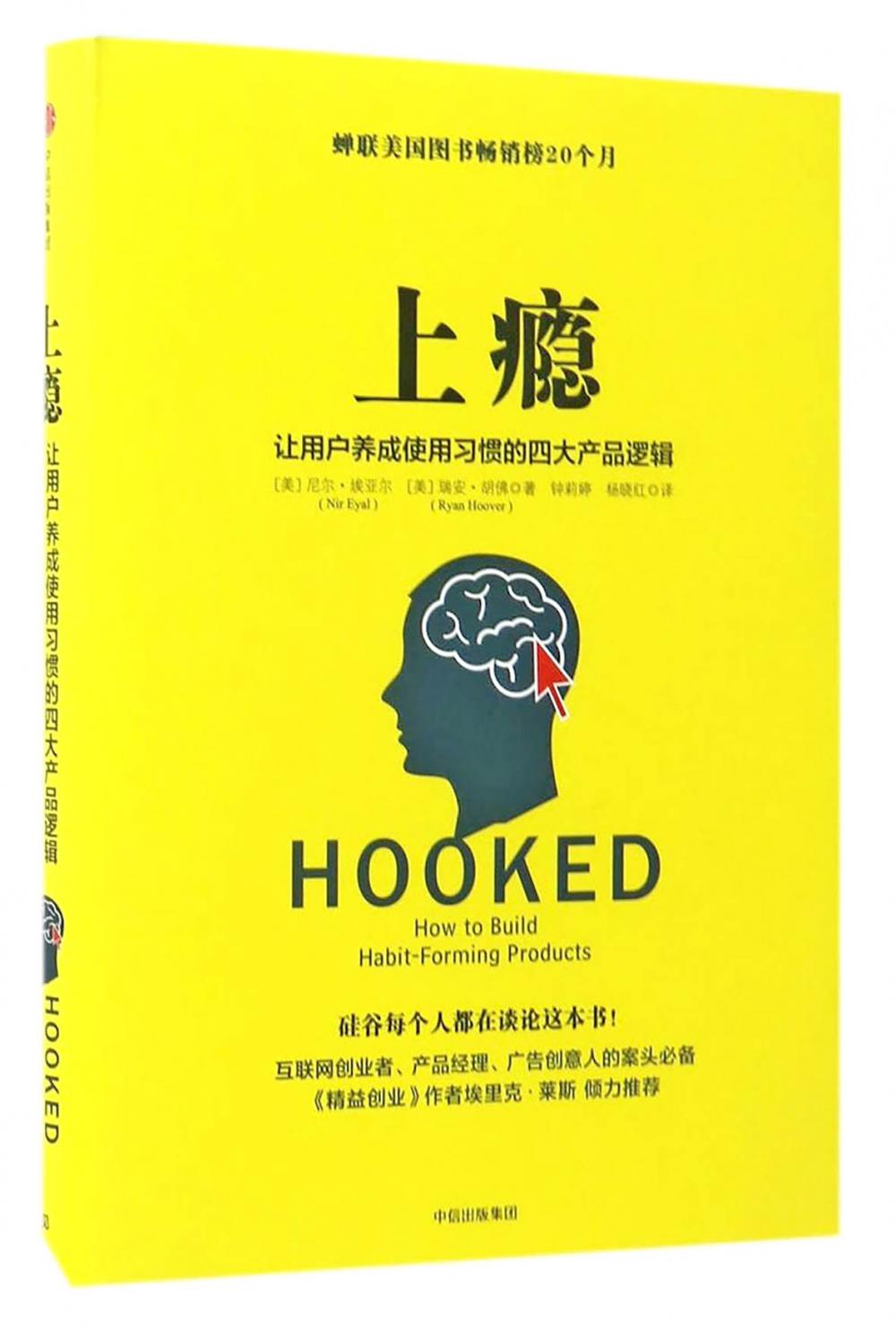
Core Idea - The book "Hooked: How to Build Habit-Forming Products" by Nir Eyal and Ryan Hoover explores how certain products create habitual usage among users, emphasizing the importance of product design in fostering user engagement and dependency [1][4]. Group 1: Target Audience and Purpose - The primary audience for the book includes product managers, designers, marketers, and anyone interacting with users, highlighting the need for understanding user habit formation [4]. - The authors aim to provide a systematic approach to embedding services (like apps) into users' daily lives, transforming products from optional to essential [4]. Group 2: Theoretical Framework - The book is grounded in behavioral psychology, cognitive science, and behavioral economics, utilizing theories such as Skinner's operant conditioning and the Fogg Behavior Model to support its arguments [4][5]. - It emphasizes the significance of external stimuli in driving user behavior and creating lasting engagement with products [5]. Group 3: Ethical Considerations - While the book acknowledges that product designers should bear some ethical responsibility, it does not deeply explore the conflicts between user addiction and corporate interests [6]. - The discussion on "addiction" is metaphorical, focusing on how to design products that encourage repeated use without delving into the potential negative impacts on vulnerable populations, such as minors [5][6]. Group 4: Practical Implications - The book serves as a practical guide for product developers, illustrating how psychological mechanisms can be leveraged to create a cycle of trigger-action-reward-investment that fosters user dependency [6]. - It provides a lens for social policy researchers to critique the addictive nature of digital products designed by large companies, prompting a need for reflection on individual agency in product usage [6].