《为你钟情》

Search documents
短剧抄袭,走到头了?
36氪· 2025-12-29 13:45
Core Viewpoint - The short drama industry, referred to as "short country," is facing a crisis due to rampant plagiarism and a lack of original content, which threatens its long-term sustainability [5][6][7]. Group 1: Current State of the Short Drama Industry - The short drama industry has rapidly expanded, almost matching the market size of long videos, but this growth has come at the cost of originality and quality [6][20]. - Plagiarism has become a normalized practice within the industry, with creators often copying scripts and ideas from one another, leading to a culture of "fast production" over originality [14][19]. - The production cycle for a short drama can be as quick as a few weeks, making it more appealing for companies to replicate existing content rather than invest in original works [20][21]. Group 2: Economic Factors Influencing Plagiarism - The cost of producing an original short drama ranges from 500,000 to 800,000 yuan, while plagiarized or heavily imitated projects can be produced for as little as 150,000 to 240,000 yuan [22]. - Many companies prioritize quantity over quality, producing hundreds of short dramas annually, with only a few needing to succeed to cover overall risks [23]. - Platforms and algorithms reinforce this efficiency-driven approach, favoring content that has already proven effective in terms of viewer engagement [25][26]. Group 3: Changes in Audience and Platform Dynamics - Audience preferences are shifting, with viewers growing tired of traditional short drama tropes, prompting platforms to reconsider their focus on rapid production and efficiency [34][36]. - Platforms are beginning to raise their standards, rejecting low-quality or plagiarized scripts, which indicates a potential shift away from the previous "fast money" logic [37][38]. - The number of platforms willing to purchase low-cost short dramas is dwindling, suggesting that the market may be moving towards a more quality-focused approach [38]. Group 4: Future Outlook and Challenges - Despite signs of change, the industry remains heavily reliant on fast production, making it difficult to eliminate plagiarism entirely [42]. - The transition to a more quality-driven model requires a significant investment in talent and creative capabilities, which many companies currently lack [44]. - The future of the short drama industry hinges on whether a stable mechanism can be established among platforms, capital, and creators to counteract the allure of quick profits [48].


短剧抄袭风波持续升级 多部短剧被质疑跨圈融梗 “拼盘式短剧”要不得
Yang Zi Wan Bao Wang· 2025-12-05 14:18
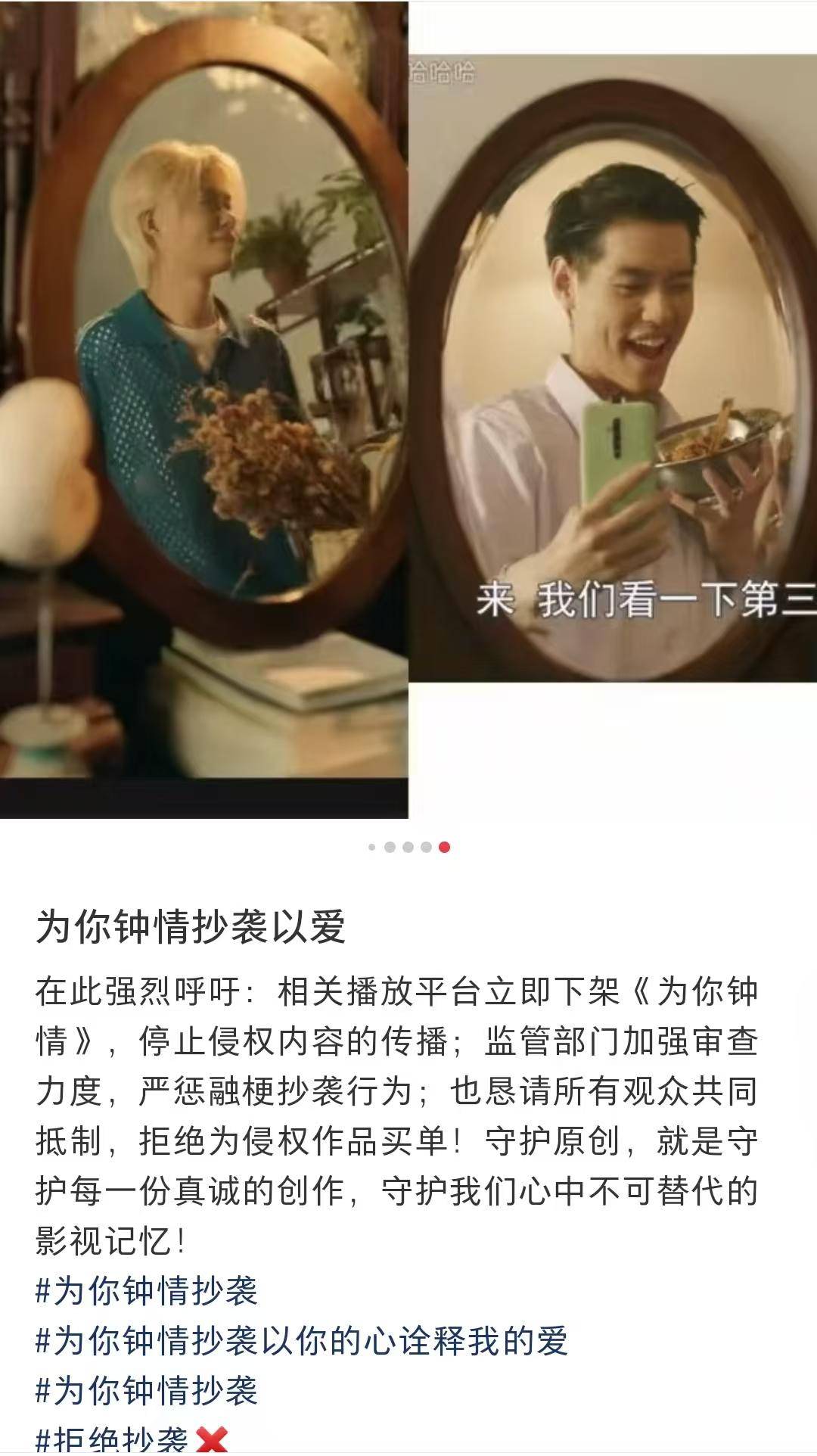
Core Viewpoint - The ongoing controversy surrounding short dramas imitating long dramas has intensified, with multiple instances of alleged plagiarism and copyright infringement emerging in the industry [1][4][9]. Group 1: Allegations of Plagiarism - Huace Film and Television strongly condemned the emergence of short dramas mimicking the yet-to-be-aired long drama "Family Business" [1]. - The short drama "For You, I Am Yours" faced accusations of copying elements from the Thai drama "Your Heart is Mine" and the Japanese drama "Drowning Knife," with significant similarities noted in various scenes [1]. - Another long drama, "Sniper Butterfly," was criticized for resembling a previously aired short drama, leading to discussions about the originality of its content [4]. Group 2: Visual and Thematic Similarities - The promotional materials for long dramas have been found to be heavily referenced in short dramas, with instances of similar titles and character names, such as "You Shine Bright" and "You Are Bright," raising concerns about originality [4][6]. - A compilation of short dramas that have visually imitated long dramas has been shared online, highlighting the extensive overlap in design and thematic elements across various productions [6]. Group 3: Industry Impact and Concerns - The practice of short dramas borrowing from long dramas has been described as a detrimental trend, undermining the integrity of the industry and leading to a homogenization of content [9]. - The industry faces a challenge with "pastiche dramas," where creators prioritize quick production and high viewership over originality, resulting in a decline in quality and innovation [9]. - Huace Film and Television emphasized the importance of maintaining originality and innovation in the industry, warning against the dangers of prioritizing rapid content creation over artistic integrity [9].