
短剧行业

Search documents
2025-2026短剧内容消费偏好全景观察
艺恩· 2026-03-31 09:16
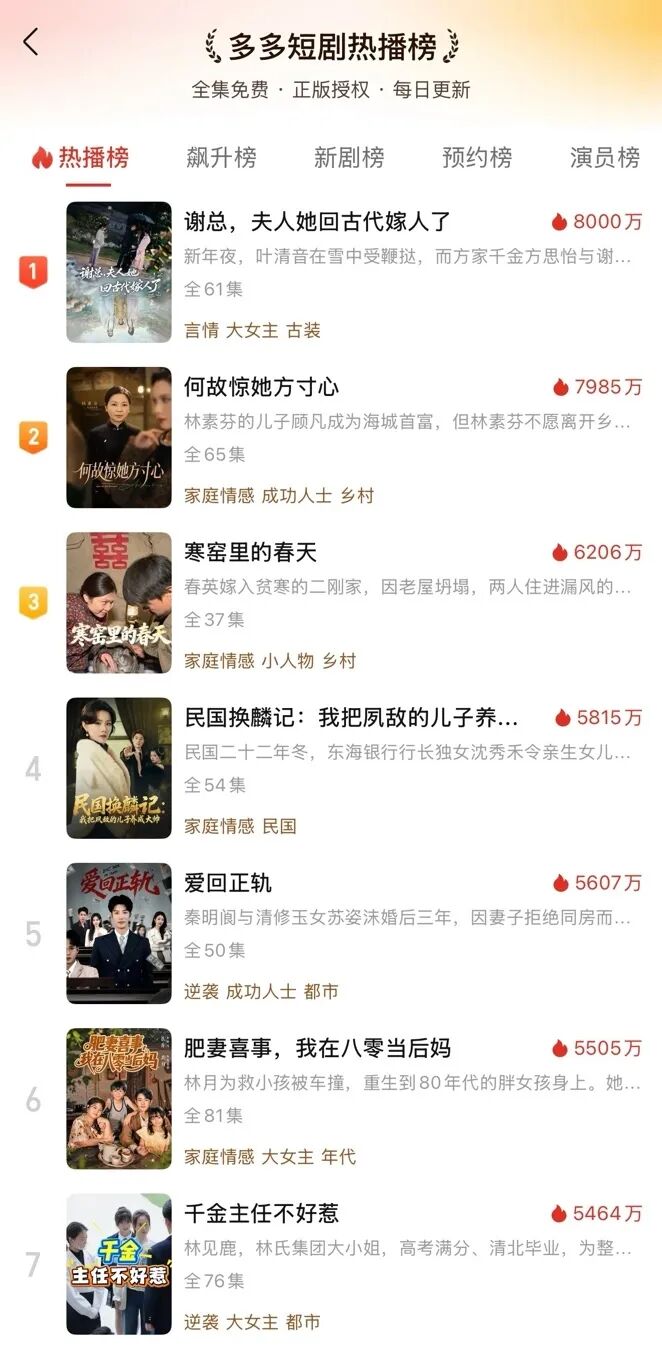
Market Overview - The short drama market in China is projected to reach a total inventory of 40,000 episodes by 2025, with over 3,500 new episodes launched in the first half of the year[17] - The market size for online micro short dramas is expected to grow steadily, with a significant increase in content supply to meet market demand[20] Consumption Trends - The average daily usage time for micro short drama applications reached approximately 116.8 minutes, with a user penetration rate of 95.96% across major platforms[27] - Female viewers dominate the audience, accounting for 67%, with nearly 50% of viewers aged between 25 and 34 years[28] Content Preferences - The popularity of short dramas surged in 2025, with social media discussions increasing by 190% and interaction volumes exceeding 3 billion[31] - The audience's preference is shifting towards high-quality content, with a notable rise in interest for fantasy themes, including reincarnation and time travel[45] Character Dynamics - Male protagonists in short dramas are primarily characterized by power and status, with 56% being portrayed as CEOs, while female protagonists are increasingly depicted as independent and strong[81][87] - The trend of "big female leads" is emerging, where female characters are portrayed as proactive and career-driven, moving away from traditional rescue narratives[88] Production Quality - The production quality of short dramas is improving, with a focus on high standards akin to long dramas, reflecting a shift towards a more refined and artistic approach[94] - The average production cost for premium short dramas is rising, indicating a commitment to quality over quantity in content creation[95] AI Integration - The AI animation drama market is expected to exceed 20 billion yuan in 2025, with a monthly compound growth rate of 83% in supply volume from April to July[119] - At least 42 AI-generated dramas have surpassed 100 million views, showcasing the potential of AI in content creation[122]
红果暂停多个项目,承制方「断粮」停工
创业邦· 2026-03-19 03:39
Core Viewpoint - The recent policy shift by Hongguo Short Drama to cancel guaranteed cooperation with production partners has caused significant disruption in the short drama industry, leading to project halts and a decline in script approval rates [5][8][11]. Group 1: Policy Changes and Industry Impact - Hongguo Short Drama has announced the cancellation of the guaranteed revenue sharing mechanism, which has led to many small and medium-sized production companies facing project suspensions [7][8]. - The shift from a guaranteed production model to a focus on AI-generated content is expected to reshape the industry, with AI content projected to account for 80%-90% of the market in the future [5][19]. - The previous guaranteed cooperation model was crucial for rapid market expansion, but it has resulted in a proliferation of low-quality content, as many production companies focused on securing guaranteed payments rather than producing quality works [10][11]. Group 2: Cost and Efficiency of AI Content - The production cost of a high-quality AI animated drama is significantly lower, ranging from 100,000 to 200,000 yuan, with a production cycle of 2-3 weeks, compared to 1.5 million yuan and 1-2 months for traditional live-action dramas [14][15]. - AI tools have enhanced production efficiency across the entire process, from script creation to post-production, allowing for rapid adjustments and lower costs [14][15]. - The disparity in investment returns between AI content and traditional dramas is prompting a decisive shift towards AI content production [15][20]. Group 3: Market Dynamics and Future Outlook - The cancellation of the guaranteed production policy is leading to a significant reshuffle in the industry, with many small production companies struggling financially and some announcing exits from live-action production altogether [17][19]. - The AI animated drama market is expected to grow rapidly, with projections indicating a market size increase from approximately 20 billion to 30 billion yuan [19]. - The current environment is seen as an opportune moment for AI animated dramas, as platforms are directing traffic and lowering barriers to entry, while computational costs continue to decline [20].

春节超千部短剧上新:银发市场被重新押注
Mei Ri Jing Ji Xin Wen· 2026-02-26 12:44
Core Insights - The short drama industry has seen a significant rise in popularity, especially among the elderly demographic, with over 6.62 million users and a market size exceeding 50 billion yuan during the 2026 Spring Festival [1][9] - Despite the initial growth, the industry is facing challenges such as content homogenization, rising production costs, and declining investment returns, leading to a cautious investment environment [2][5][9] Industry Trends - The user base for short dramas has expanded, particularly among individuals aged 40 to 59, who account for 37.3% of viewers, and those over 60, who make up 12.1% [1] - The production cost for mainstream short dramas has decreased from 800,000 yuan to 500,000 yuan, reflecting a shift towards cost-cutting measures in response to market pressures [9] Investment Challenges - Many investors are experiencing significant losses, with reports of projects failing to recoup even a fraction of their costs, highlighting the high risk associated with short drama investments [3][4] - The average return on investment for short dramas has diminished, with some projects generating only a few hundred yuan in revenue after substantial investments [4][5] Market Dynamics - The rise in actor salaries, reaching up to 50,000 yuan per day, has further squeezed profit margins, making it difficult for producers to maintain financial viability [5][6] - The traditional high-investment, high-return model is failing, leading to a more cautious approach among investors who are now focusing on metrics like completion rates rather than just chasing hits [11][12] Target Demographics - The elderly demographic is becoming a focal point for short drama producers, as they are seen as loyal viewers with stable demand, contrasting with younger audiences who have lower tolerance for subpar content [10][11] - Platforms that cater to the elderly, offering incentives like earning rewards for watching dramas, are gaining traction and driving engagement among this demographic [10][11] Future Outlook - The industry is entering a "cooling period," which may benefit serious content creators while weeding out less committed participants, potentially leading to a more sustainable market [12] - The focus on quality content tailored to the preferences of the elderly could provide a viable path for growth, although challenges such as content differentiation remain [12]
短剧市场风云突变,有人投100多万赔得精光,有人只回款几百元,从业者:当红演员日薪5万,请两位片酬轻松破百万
3 6 Ke· 2026-02-26 01:54
Core Insights - The short drama market has become a significant entertainment trend during the 2026 Spring Festival, with over 660 million users and a market size exceeding 50 billion yuan, surpassing box office revenues for films [1][3] - The demographic of short drama viewers is shifting, with a notable increase in middle-aged and elderly audiences, who are actively engaging and promoting content within their communities [3][14] - Despite the initial growth, the industry is facing challenges such as content homogenization, rising production costs, and declining investment returns, leading to a strategic shift towards targeting the silver-haired and lower-tier markets [4][8][12] Market Dynamics - The short drama industry has seen a surge in content production, with an average of dozens of new dramas launching daily, but the probability of creating a hit has drastically decreased [5][7] - Investment strategies have shifted from a "scattergun" approach to a more cautious and analytical method, as many projects are failing to recoup costs [4][5][16] - The average production cost for mainstream short dramas has decreased from 800,000 yuan to 500,000 yuan, reflecting a trend towards cost-cutting in response to market pressures [13][14] Financial Challenges - Rising actor salaries, which can reach 50,000 yuan per day, are significantly squeezing profit margins, making the "money for traffic" model unsustainable [9][12] - The cost of acquiring traffic has dropped to 30%-50% of total expenses, indicating a shift towards more rational investment practices [12][16] - Many investors are experiencing substantial losses, with reports of projects failing to generate any revenue despite significant initial investments [4][5][8] Target Demographics - The elderly demographic is becoming a key focus for short drama producers, as they represent a stable and engaged audience willing to spend time watching content [14][16] - Platforms like Pinduoduo are capitalizing on this trend by offering incentives for viewing, which has further stimulated interest among older viewers [14][16] - The self-promotional behavior of elderly viewers is creating a low-cost marketing channel for short dramas, enhancing their visibility and potential for success [14][16] Future Outlook - The industry is entering a "cooling period," which may benefit serious content creators while weeding out less committed participants [16][17] - There is a consensus that focusing on quality content tailored to the preferences of the elderly audience could provide a sustainable growth path for the short drama sector [16][17] - The challenge remains to avoid content homogenization and improve overall quality to maintain competitiveness in the evolving market landscape [16][17]
短剧风暴中,被“催熟”的小演员们
Xin Lang Cai Jing· 2026-02-05 11:04
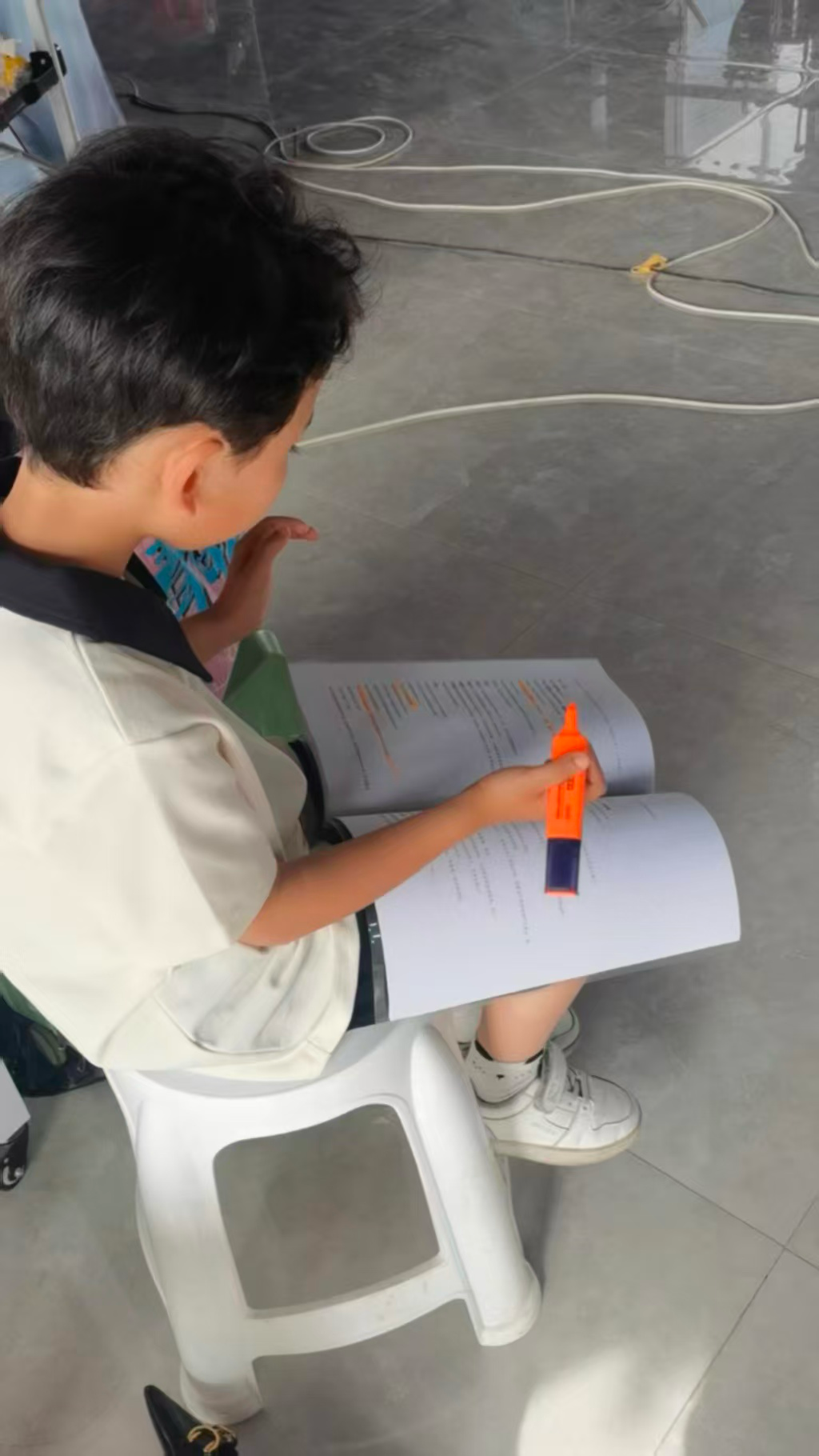
Core Insights - The short drama industry in China has seen a rapid increase in child actors, with a market value of 825 billion yuan in 2025, and a user base of 696 million [4][5][23] - The industry lacks adequate protections for child actors, including limits on working hours and content review, relying heavily on parental supervision [5][23] - Many parents are drawn to the industry due to its low entry barriers and the potential for significant financial returns, with child actors earning between 800 to 10,000 yuan per day depending on their experience and the success of their projects [16][23] Industry Overview - The short drama sector is projected to reach a market value of 1 trillion yuan by 2025, with a significant portion attributed to children's roles, particularly in the "萌宝" (cute baby) genre [4][23] - The demand for child actors has surged, leading to a proliferation of opportunities, but also to concerns about the intense working conditions they face [5][23] Parental Involvement - Parents often play a crucial role in managing their children's careers, from scouting opportunities to negotiating contracts, and many have created social media accounts to promote their children [11][16] - The emotional and physical toll on parents is significant, with many reporting long hours and exhaustion from supporting their children on set [10][11] Child Actor Experiences - Child actors are often subjected to demanding filming schedules, with some working over 12 hours a day, which raises concerns about their well-being and development [5][9][10] - Despite the challenges, many children exhibit remarkable emotional control and maturity, often surprising their parents with their ability to handle intense situations [6][9] Industry Challenges - The lack of formal regulations regarding child labor in the short drama industry poses risks, as many parents are unaware of the potential dangers their children face [5][23] - Recent guidelines from the National Radio and Television Administration aim to protect child actors, but the industry continues to operate in a largely unregulated environment [23]
屏幕里手握数亿元的“霸总”,屏幕外追要万元欠薪?
Jing Ji Guan Cha Wang· 2026-01-30 03:42
Core Insights - The rise of short drama actors is transforming their commercial value, as evidenced by collaborations with major brands like Dior and KFC, indicating a shift in industry dynamics where short dramas are gaining significant recognition and influence [2][3] - The short drama industry is experiencing a bifurcation, with top actors seeing increased demand and pay, while many others struggle with low compensation and delayed payments [6][8] Group 1: Industry Dynamics - Short drama actors are now being invited to high-profile brand events, showcasing their growing marketability and the industry's recognition of their influence [2] - The integration of traditional advertising models into short dramas, such as customized ads and spin-offs, reflects a maturation of the format and its acceptance in mainstream media [2] - The "data voting" model for short dramas mirrors past talent show practices, where fans engage in extensive efforts to boost their favorite actors' rankings, indicating a shift towards a more competitive and commercialized environment [3][4] Group 2: Economic Impact - The short drama sector is projected to create over 36 million job opportunities by 2025, significantly contributing to the national economy and employment landscape [11] - The industry is evolving to include specialized roles, such as property managers for filming locations, highlighting the diverse economic activities generated by short dramas [12] Group 3: Challenges Faced by Actors - Many short drama actors face precarious working conditions, including long hours and low pay, with some even resorting to alternative jobs like food delivery to make ends meet [6][8][10] - The disparity in pay between top-tier and lower-tier productions is becoming more pronounced, with many actors struggling to secure fair compensation for their work [8][9] - The intense production schedules often lead to health issues among actors, emphasizing the demanding nature of the short drama industry [9][10]

百度YY启动“熊力·聚星计划” 短剧业务组合拳持续发力
Zheng Quan Ri Bao Wang· 2026-01-25 09:11
Group 1 - The core event is the YY 2025 Annual Peak Ceremony, which reviews the development achievements of Baidu YY's short drama business over the past year and launches a large-scale actor recruitment initiative called the "Xiongli Gathering Stars Plan" [1] - In 2025, Baidu YY produced nearly 200 short dramas, achieving a total playback and topic volume of 860 million [1] - The company plans to continue its development strategy in 2026 by expanding its self-produced drama portfolio and nurturing short drama artists, leveraging Baidu's vast traffic and resource advantages to create a complete short drama production industry chain [1] Group 2 - The "Xiongli Gathering Stars Plan" aims to discover and cultivate potential new stars in the short drama industry, injecting fresh talent into the sector [2] - The plan is launched by Baidu YY's talent agency, Xiongli Juliang, with artistic guidance from Liu Tianchi and his team from the Central Academy of Drama, involving several months of online recruitment, auditions, and offline finals [2] - Successful young actors in the "Xiongli Gathering Stars Plan" will receive industry resources from the organizers and may have opportunities for signing with Xiongli Juliang, facilitating their career development [2]
百度YY启动“熊力·聚星计划” 携手刘天池选拔短剧新星
Xin Lang Cai Jing· 2026-01-25 08:01
Core Insights - Baidu YY launched the "Xiongli·Juxing Plan" aimed at discovering and nurturing potential short drama stars to inject fresh talent into the short drama industry [1][2] Group 1: Program Details - The "Xiongli·Juxing Plan" is initiated by Baidu YY's talent agency Xiongli Juliang, with Liu Tianchi, a teacher from the Central Academy of Drama, serving as the artistic advisor [1][2] - The selection process will include several months of online recruitment, auditions, competitions, and an offline final [1][2] - The program will accept candidates nationwide who are passionate about acting and suitable for short dramas, with no entry barriers for both professional and grassroots actors [1][2] Group 2: Business Performance - In 2025, Baidu YY produced nearly 200 short dramas, achieving a total viewership and topic volume of 860 million [1][2] - YY CEO Li Le stated that the short drama business has gained a certain reputation and success in the market, indicating plans for future professionalization, scaling, and customization of the short drama and talent agency business [1][2]
莫让“流量雨”淋透未成年人权益底线
Xin Lang Cai Jing· 2026-01-24 07:16
Group 1 - The short drama industry is facing serious ethical issues, highlighted by incidents where child actors are put in dangerous situations for the sake of efficiency and cost-cutting, such as using a real baby in a rain scene instead of a prop, with the scene's payment being only 800 yuan [2][3] - The rapid production model of "filming 100 episodes in 7 days" has led to a culture where child actors, who often lack self-protection capabilities, are the most vulnerable to rights violations, with parents sometimes complicit due to economic pressures [3] - Legal frameworks like the Minor Protection Law and guidelines from the National Radio and Television Administration exist to protect child actors, but the failure of parental responsibility undermines these protections, allowing for exploitation in the industry [3][4] Group 2 - The sustainability of the short drama industry relies on content quality and value transmission rather than exploiting rights for quick profits, emphasizing the need for adherence to legal and ethical standards [4] - Regulatory bodies must enhance enforcement against non-compliant production teams, while industry associations should establish standardized contracts and accountability mechanisms to protect workers' rights [4] - Parents must uphold their guardianship responsibilities and refuse to allow their children to be treated as mere profit-generating tools, which is essential for fostering a healthy and regulated development of the short drama industry [4]

“萌宝短剧”不该成为一个赛道
Ren Min Ri Bao· 2026-01-23 06:30
Core Viewpoint - The rise of "萌宝短剧" (cute baby short dramas) has become a new traffic password in the short drama industry, with significant audience engagement and a growing market presence [1] Group 1: Industry Trends - "萌宝" themed short dramas have seen a surge in popularity, ranking seventh in market heat in the first half of 2025, with a high number of followers [1] - During school holidays, filming locations in Hengdian attract many parents and child actors, with filming schedules extending up to 10 hours a day [1] Group 2: Child Welfare and Rights - The participation of child actors in short dramas raises concerns about their physical and mental health, as they may struggle to distinguish between their on-screen roles and real-life identities [2] - The short drama industry categorizes child actors by age, with 6-7 years being the "peak period" and 8-10 years as the "golden adaptation period," leading to potential emotional challenges as they age out of the industry [2] - The health and development of children are critical to the future of society, and protecting their rights is a collective responsibility [2] - Recent guidelines from the National Radio and Television Administration emphasize the need for strict regulation of child participation in short dramas to ensure their well-being and maintain high-quality industry standards [2]