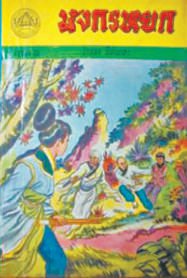
《书剑恩仇录》

Search documents
京报读书|本周书单来了!留言送苏童新作《好天气》
Xin Lang Cai Jing· 2026-01-10 05:02
Group 1 - The core viewpoint of the article is the release of Su Tong's new novel "Good Weather," which took 11 years to complete and reflects the social transformation during the early reform and opening-up period in China [7] - The novel focuses on the fate of two families across three generations in the southern urban-rural junction of "Xianshui Pond," showcasing the intertwining of personal and societal narratives [7] - Su Tong employs a magical realism style, using vivid imagery and absurd elements to explore themes of resilience and the human experience, encapsulated in the phrase "no matter how much rain and wind life brings, one can always wait for good weather" [7] Group 2 - "Good Weather" is included in the "14th Five-Year Plan" for key publications and the China Writers Association's New Era Literary Climbing Plan, indicating its cultural significance [7] - The novel has received high praise from notable literary figures such as Yu Hua and Mo Yan, who commend Su Tong's delicate writing and ability to capture emotional depth [7] - The book has resonated with readers, being described as a summary of the author's perspective on the world, transforming individual family struggles into a romantic narrative [7]


从传统评点看金庸|《书剑恩仇录》篇:金庸的幽默感
Xin Lang Cai Jing· 2025-12-20 08:47
Group 1 - The article discusses the unique appreciation tradition of Chinese classical novels, particularly focusing on the narrative aesthetics and techniques of Jin Yong's works, which are deeply rooted in this tradition [1] - Jin Yong's humor and light-hearted writing style, although not fully matured in his debut novel "The Book and the Sword," leave a strong impression through direct and witty commentary, especially on characters like Emperor Qianlong [2][4] - The use of humor in Jin Yong's narratives serves to alleviate tension and enhance the storytelling experience, as seen in the character of Afanti, who employs clever logic to outsmart greedy characters, transforming serious situations into comedic ones [4][6] Group 2 - The article highlights the importance of rhythm and pacing in narrative structure, referencing Jin Shengtan's concept of "脱卸" (detachment) to describe how humor and narrative transitions should flow naturally without disrupting the story's momentum [6][7] - Criticism is directed at the inappropriate use of humor in "The Book and the Sword," where a forced comedic scene disrupts the tension of a critical moment, showcasing Jin Yong's early struggles with long-form narrative control [7] - The article contrasts Jin Yong's early works with his later masterpiece "The Deer and the Cauldron," which successfully integrates humor with historical elements and narrative structure, demonstrating his growth as a writer [7]
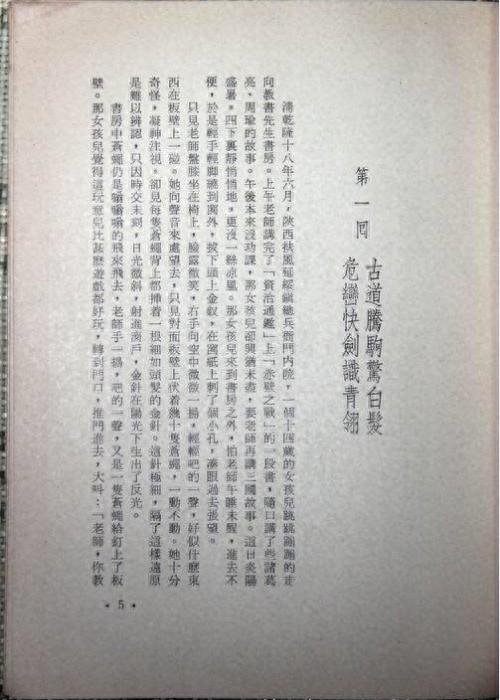
金庸海外七十年
Bei Jing Wan Bao· 2025-10-29 12:13
Core Insights - The global influence of Jin Yong's novels is significant, with translations available in over twenty countries and regions, starting from 1958 [1] Translation and Dissemination - Jin Yong's novels began to be translated in Southeast Asia, with Thailand being the first country to publish a translation of "The Legend of the Condor Heroes" in 1958 [15] - Following Thailand, Indonesia and Vietnam also produced multiple translations of Jin Yong's works, indicating a growing popularity in these regions [15] - The translation of Jin Yong's novels in Cambodia and Myanmar is less clear, with no confirmed Cambodian translations and a focus on adaptations in Myanmar through film rather than direct translations [16][17] Academic Research - Academic research on Jin Yong's works in Southeast Asia began relatively late, with Thailand starting serious studies around 2000, while Vietnam has produced a wealth of scholarly work on the subject [21][22] - In East Asia, Japan and South Korea have also developed significant academic interest in Jin Yong's novels, focusing on various aspects such as literary analysis and cultural comparisons [22] Western Reception - Jin Yong's novels began to gain attention in the West in the 1990s, with early English translations appearing but not achieving the same level of popularity as in Asia [18][19] - The first complete English translations emerged in the 1990s, with subsequent translations into multiple European languages, indicating a growing interest in Jin Yong's works outside of Asia [19] Ongoing Influence - The influence of Jin Yong's novels continues to grow, with new translations and academic studies being published, suggesting that his works are on the path to becoming "world literature" [24][25]