《凤凰台》

Search documents
生命的和鸣
Ren Min Ri Bao· 2025-11-05 22:11
Group 1 - The article emphasizes the collaborative nature of stage performances, highlighting the importance of understanding between playwrights, actors, and the audience to create impactful art [1] - The author discusses the journey of working with various theater groups, particularly the Jiangsu Provincial Kunqu Opera Theatre, and the meticulous process of tailoring scripts to fit the unique characteristics of actors and the art form [2] - The creative process is described as a collective effort, with contributions from various artists, including composers and directors, leading to the successful development of multiple theatrical works [3] Group 2 - The article illustrates the significance of precise subtitles in enhancing the audience's experience, showcasing a situation where the absence of subtitles during a performance led to an unexpected engagement from the audience who utilized an online script [4] - The author reflects on the rewarding nature of collaboration with theater companies, actors, and audiences, emphasizing that every effort contributes to a larger artistic expression [4]


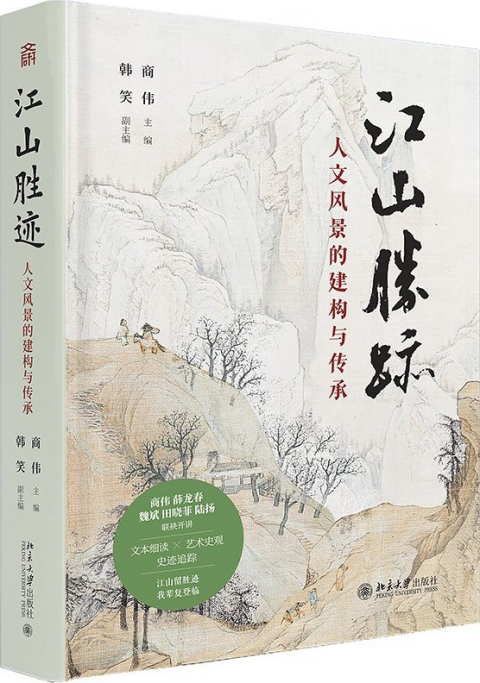
“凤凰台上凤凰游”:金陵凤凰台是怎样被题写成胜迹的?
Xin Jing Bao· 2025-10-27 04:54
Core Viewpoint - The article discusses the historical and cultural significance of the Phoenix Terrace in Jinling, emphasizing its transformation through literature, particularly the poetry of Li Bai, which immortalized the site despite its physical decline [6][24][26]. Historical Records - The earliest mention of the Phoenix Terrace is found in the "Book of Song," which describes a miraculous event involving two birds, leading to the naming of the area [2]. - Later records, such as the "Buddhist Canon," inaccurately date the events surrounding the Phoenix Terrace, suggesting a tendency for historical accounts to evolve over time [3]. - By the Ming Dynasty, the site had become neglected, with various attempts at restoration failing to maintain its significance [5]. Literary Significance - Li Bai's poem "Ascending the Phoenix Terrace" is noted as the first literary work to reference the site, establishing its cultural importance [6]. - Subsequent poets, including Yin Yaofan and Li Qunyu, reflect on the legacy of Li Bai's work, indicating that the terrace became a site of remembrance rather than a physical destination [7][10]. - The article highlights how later poets often wrote about the Phoenix Terrace without accurately depicting its current state, instead relying on the imagery created by Li Bai [11][17]. Cultural Memory - The article posits that the textual representation of the Phoenix Terrace, particularly through Li Bai's poetry, has become more significant than the actual site itself, creating a "textualized" version of the terrace that continues to inspire literary engagement [24][26]. - The phenomenon of writing about the Phoenix Terrace persists despite its physical deterioration, suggesting that cultural memory is sustained through literature rather than the site's material existence [26].