
《和平颂》

Search documents
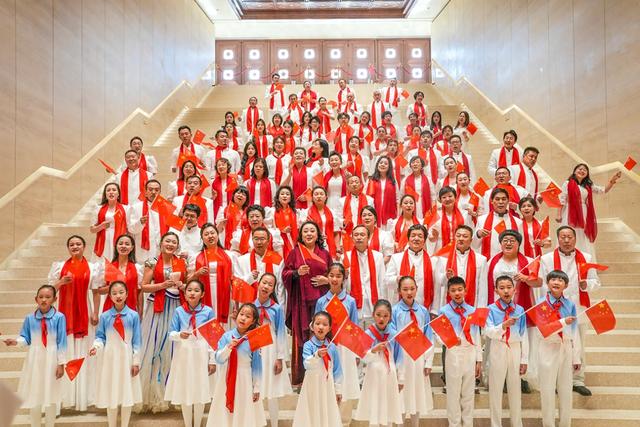
抗战馆唱响“胜利之声”
Xin Lang Cai Jing· 2025-12-21 05:18
Core Viewpoint - The event "National Anthem • Voice of Victory" commemorates the 80th anniversary of the victory in the Chinese People's Anti-Japanese War and the World Anti-Fascist War, showcasing musical works that reflect on history, honor martyrs, and celebrate victories [2]. Group 1: Event Overview - The music collection activity was launched on January 12, co-initiated by the Anti-Japanese War Memorial and the Chinese Minority Vocal Association, focusing on the theme "National Anthem • Voice of Victory" [2]. - The event received nearly 10,000 submissions from various regions, featuring diverse themes, forms, and sincere emotions, with 80 works ultimately selected [2]. Group 2: Artistic Contributions - Many creators expressed that participating in the event allowed them to revisit anti-Japanese war history, achieving a spiritual reconnection and cleansing through music [6]. - The work "Wind from Horqin" by Zhejiang Provincial Musicians Association member Zhong Xuezheng, incorporates Mongolian musical elements to vividly express the people's remembrance of war heroes and their love for the land [6]. Group 3: Impact and Significance - The Deputy Secretary of the Anti-Japanese War Memorial, Dong Lixin, stated that artistic works during the war illuminated the darkest moments of the Chinese nation and played a unique role in awakening national consciousness [6]. - The event connects history with reality through music, allowing the great spirit of the anti-Japanese war to shine even more brilliantly in the new era [6].

永不消逝的音乐 跨越时空的回响(抗战文艺作品巡礼)
Ren Min Ri Bao· 2025-05-12 22:21
Core Viewpoint - The articles highlight the profound impact of music during times of war, emphasizing its role in uniting people, recording history, and serving as a form of resistance against oppression. Notable works such as "Yellow River Cantata" and Shostakovich's "Seventh Symphony" are celebrated for their ability to inspire and resonate with the collective spirit of nations during the struggle against fascism [1][2][4]. Group 1: Historical Context and Significance - The creation of "Yellow River Cantata" in 1939 by Xian Xinghai and Guang Weiran symbolizes the indomitable spirit of the Chinese people during the war, premiering in a modest setting yet aiming to awaken national consciousness [1]. - Shostakovich's "Seventh Symphony," composed in response to the siege of Leningrad, served as a powerful declaration of resilience against fascism, resonating with the Soviet populace [2]. - Both China and the Soviet Union produced significant anti-war and resistance music during World War II, with pieces like "March of the Volunteers" and "Sacred War" becoming enduring symbols of national unity and strength [3]. Group 2: Musical Legacy and Modern Reflection - Classic wartime compositions continue to serve as reminders of a nation's voice and courage in the face of adversity, with songs like "March of the Volunteers" and "Katyusha" embodying the spirit of resistance [4]. - Contemporary compositions, such as Zhao Jiping's "Peace Ode" and Britten's "War Requiem," illustrate how modern music can engage with historical themes and human experiences, reflecting on the enduring impact of war and the quest for peace [5]. - The ongoing relevance of these musical works emphasizes the importance of remembering history to draw wisdom and strength for the future, as the themes of war and peace remain ever-present in human society [5].