
《川江号子》

Search documents
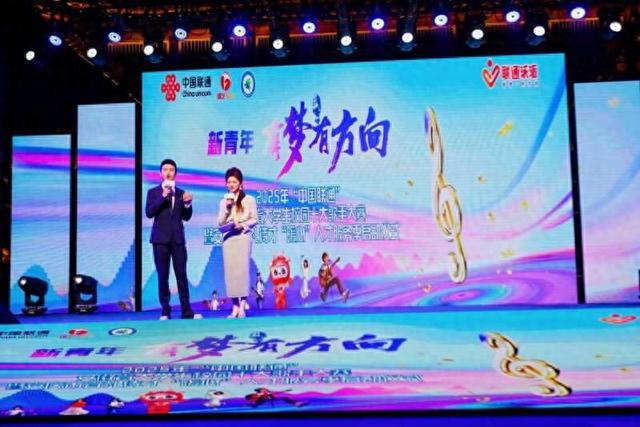
2025年安徽省大学生校园十大歌手大赛暨安庆市人才服务季启动
Zhong Guo Qing Nian Bao· 2025-11-15 13:31
Group 1 - The event "2025 China Unicom Anhui Province College Student Campus Top Ten Singers Competition" was launched in Anqing, attracting over 113,000 participants both online and offline [1] - The competition, which has been successfully held for three consecutive years, includes preliminary, semi-final, and final stages, with over 380 students from more than 100 universities in Anhui province registering to participate [2] - The event aims to enhance ideological guidance for college students, enrich campus cultural life, and provide a platform for youth to showcase their musical talents and pursue artistic dreams [2] Group 2 - The launch ceremony featured performances including a chorus of "With Me," a recap of the previous year's competition, and various musical acts that highlighted local cultural elements and the spirit of contemporary youth [5][7] - The event concluded with past winners singing the theme song "Dreams and Direction," marking a successful end to the ceremony [7]

在劳动中放歌
Ren Min Ri Bao· 2025-05-02 22:01
Core Viewpoint - The article explores the evolution and significance of labor songs in Chinese culture, highlighting their role in expressing the spirit of resilience and hard work throughout history [1][4]. Group 1: Historical Context - Labor songs, such as the earliest form "lifting encouragement song," have been part of Chinese culture since ancient times, as recorded in texts like "Lüshi Chunqiu" and "Shijing" [1]. - The tradition of singing during labor has been a way for Chinese people to express their life wisdom and collective spirit over the centuries [1]. Group 2: Types of Labor Songs - "Haozi" (labor songs) serve as a direct expression of workers' lives, with various types corresponding to different labor activities, such as boatmen's songs and agricultural work songs [2]. - "Mountain songs" represent individual expressions of labor, characterized by rich content and free rhythm, often improvised and reflecting the laborers' experiences [2]. - "Short tunes" are more widely spread and cover various aspects of life, serving as a form of everyday expression in both urban and rural settings [3]. Group 3: Modern Developments - The transition from traditional agricultural society to modern production methods has led to new forms of labor music, with songs like "Zanmen Gongren You Liliang" emerging during the industrial era [4]. - Despite changes in labor methods and song forms, the essence of resilience and the spirit of the Chinese people remain embedded in these songs, as evidenced by contemporary performances that evoke strong emotional responses [4].