
《咱们工人有力量》

Search documents
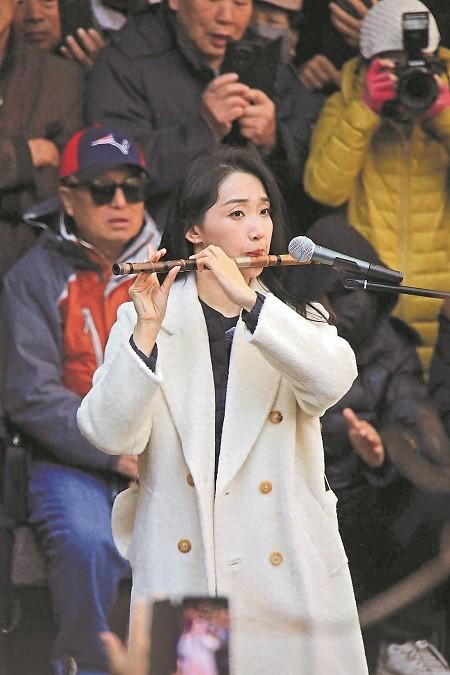
孙楚泊:竹笛吹醒烟火气,乐声暖透劳动者
Xin Lang Cai Jing· 2026-01-11 01:44
Core Perspective - The article highlights the initiative of a young bamboo flute musician, Sun Chubo, to bring traditional Chinese music closer to the public by performing in parks, making it accessible to a wider audience beyond formal concert halls [2][3]. Group 1: Community Engagement - Sun Chubo's performances in public parks have transformed from small gatherings of 40-50 people to events attracting over a thousand attendees, demonstrating a growing interest in traditional music among the general public [3][5]. - The initiative has allowed various community members, including retirees and workers, to experience professional music without the financial barrier of concert tickets, which can be several hundred yuan [2][3]. Group 2: Artistic Interaction - The performances encourage audience participation, with attendees singing along and engaging with the music, creating a shared emotional experience that resonates deeply with the laborers and everyday people [4][6]. - Sun Chubo adapts her repertoire to include both traditional and popular songs, ensuring that the music is relatable and engaging for her audience, which includes a diverse demographic [4][6]. Group 3: Cultural Impact - The initiative has sparked a movement among other musicians to perform in public spaces, promoting the idea of "art for the people" and fostering a deeper connection between traditional music and everyday life [6][7]. - The success of these performances has led to invitations for larger public events, indicating a significant demand for accessible cultural experiences [5][6].

在劳动中放歌
Ren Min Ri Bao· 2025-05-02 22:01
Core Viewpoint - The article explores the evolution and significance of labor songs in Chinese culture, highlighting their role in expressing the spirit of resilience and hard work throughout history [1][4]. Group 1: Historical Context - Labor songs, such as the earliest form "lifting encouragement song," have been part of Chinese culture since ancient times, as recorded in texts like "Lüshi Chunqiu" and "Shijing" [1]. - The tradition of singing during labor has been a way for Chinese people to express their life wisdom and collective spirit over the centuries [1]. Group 2: Types of Labor Songs - "Haozi" (labor songs) serve as a direct expression of workers' lives, with various types corresponding to different labor activities, such as boatmen's songs and agricultural work songs [2]. - "Mountain songs" represent individual expressions of labor, characterized by rich content and free rhythm, often improvised and reflecting the laborers' experiences [2]. - "Short tunes" are more widely spread and cover various aspects of life, serving as a form of everyday expression in both urban and rural settings [3]. Group 3: Modern Developments - The transition from traditional agricultural society to modern production methods has led to new forms of labor music, with songs like "Zanmen Gongren You Liliang" emerging during the industrial era [4]. - Despite changes in labor methods and song forms, the essence of resilience and the spirit of the Chinese people remain embedded in these songs, as evidenced by contemporary performances that evoke strong emotional responses [4].