《招魂》

Search documents
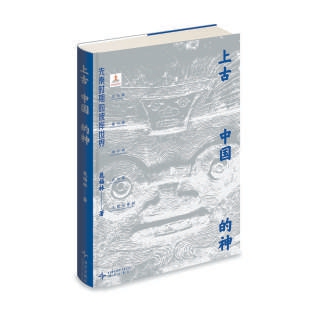
探寻上古中国的彼岸世界
Bei Jing Ri Bao Ke Hu Duan· 2025-11-07 04:55
Core Viewpoint - The article explores the concept of the "otherworld" in ancient Chinese thought, particularly during the pre-Qin period, highlighting two main interpretations: one as an idealized, unreachable realm and the other as a terrifying, unknown place [3][5][6]. Group 1: Idealized Otherworld - The first interpretation of the otherworld is a distant, beautiful realm that exists in the imagination, often described in texts like "Shan Hai Jing" and works by Zhuangzi, where divine beings reside and live carefree lives [3][4]. - This idealized otherworld is characterized by its enchanting qualities, representing a place of ultimate beauty and elegance, akin to the modern notion of "poetry and distance" [3][4]. Group 2: Terrifying Otherworld - In contrast, the second interpretation presents the otherworld as a distant, strange, and frightening place, filled with bizarre creatures and landscapes, as depicted in "Shan Hai Jing" and the poetry of Qu Yuan [5][6]. - This fear of the unknown enhances the appreciation for the tangible, beautiful aspects of the real world, creating a juxtaposition between the two realms [5][6]. Group 3: Afterlife Beliefs - Another aspect of the otherworld in pre-Qin thought relates to beliefs about the afterlife, where ancestors are thought to reside in a heavenly realm, continuing to influence the living [6][7]. - Rituals and offerings to ancestors, such as food and wine, reflect the belief that the deceased continue to exist in a manner similar to the living, enjoying comforts in the otherworld [6][7]. Group 4: Philosophical Reflections - The article also discusses the philosophical reflections on death and the otherworld, emphasizing the duality of hope and despair in human contemplation of mortality [7]. - Confucius's teachings advocate for focusing on life and moral integrity rather than the uncertainties of the afterlife, presenting a pragmatic approach to the concept of the otherworld [7].

上影节恐怖片回忆录
Hu Xiu· 2025-06-10 05:24
Core Viewpoint - The article discusses the evolving preferences of film enthusiasts, particularly the shift towards horror films during film festivals, reflecting a broader cultural trend in audience engagement and experience [11][32]. Group 1: Film Festival Dynamics - There exists a hierarchy of film preferences among festival-goers, with horror films often placed at the lower end of the desirability scale [3][4]. - The article highlights the unique atmosphere of horror film screenings at festivals, where audiences come together to share a collective experience of fear and excitement [12][13]. Group 2: Personal Experiences and Observations - The author recounts personal experiences of attending horror film screenings, emphasizing the communal aspect and the emotional responses elicited during these events [20][31]. - Specific films like "The Shining" and "The Conjuring" are mentioned as significant experiences that illustrate the intense reactions and shared moments among viewers [19][22][24]. Group 3: Cultural Commentary - The article reflects on the changing nature of film appreciation, suggesting that the pressures of adult life lead to a preference for more straightforward, engaging content like horror films [11][32]. - It also critiques the elitism in film selection, where mainstream or popular films are often looked down upon compared to obscure or critically acclaimed works [3][4].