
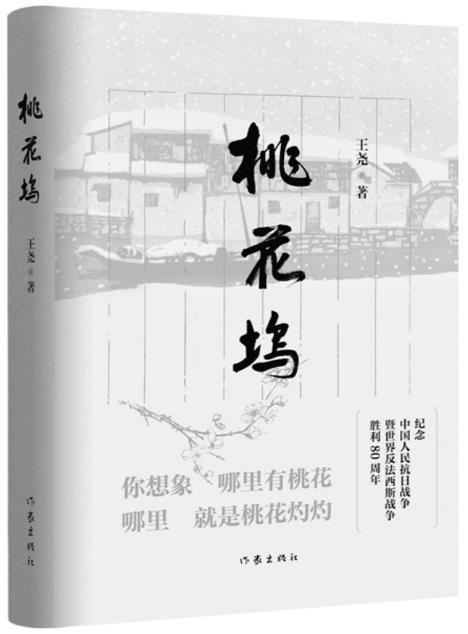
《桃花坞》

Search documents
江南梦寻——记忆与历史的精神还乡
Xin Lang Cai Jing· 2026-02-20 22:46
Core Viewpoint - The novel "Peach Blossom Dock" by Wang Yao reconstructs the spiritual map of 20th-century Chinese intellectuals through the narrative of a Jiangnan ancient town, intertwining historical events and personal reflections [3][4]. Summary by Sections Historical Context - The novel is set against the backdrop of the Anti-Japanese War, tracing back to the Xinhai Revolution and extending to the Liberation War, focusing on the fates of two literary families in Suzhou, the Fang and Huang families [3][4]. Character Development - The growth and emotional journey of the young protagonists Fang Houle and Huang Qingmei serve as the main storyline, reflecting the broader experiences of several generations of Chinese intellectuals during tumultuous times [3][4]. Cultural Significance - "Peach Blossom Dock" emphasizes the historical significance of Suzhou's cultural memory, particularly in relation to the Japanese invasion, and critiques the barbarity of the invaders while celebrating the resilience of Jiangnan culture [4][5]. Literary Style - The novel employs a realistic writing style, focusing on the details of Jiangnan life and the emotional depth of its characters, which contributes to its portrayal of cultural memory and historical events [5][6]. Thematic Exploration - The work explores the theme of cultural identity and memory, suggesting that true homeland transcends geographical boundaries and is rooted in collective memory and spiritual inquiry [6].

迈向跨界融合的“大文学”时代
Ren Min Ri Bao Hai Wai Ban· 2026-01-14 22:50
Core Viewpoint - The emergence of "New Popular Literature" signifies a shift where the general public becomes the main creator of new cultural narratives, influenced by digitalization and technological advancements [20][33]. Group 1: New Popular Literature - "New Popular Literature" was recognized as one of the "Top Ten New Words of 2025," highlighting the role of the public in cultural creation [20]. - The rise of digital media, including mobile internet and AI, has unleashed a vast amount of creative potential among ordinary authors [20][33]. - The phenomenon of "amateur writing" has gained traction, with various authors from different backgrounds contributing unique narratives [21][34]. Group 2: Impact of AI on Literature - The integration of AI in writing has sparked discussions about the nature of literary creation and the unique qualities that define human authorship [10][11]. - The coexistence of human and AI-generated literature raises questions about the future of writing and the preservation of human experiences in storytelling [10][11]. Group 3: Notable Literary Works and Themes - The year 2025 saw a surge in literature focusing on historical themes, particularly related to the Anti-Japanese War, reflecting a collective memory and cultural identity [16][19]. - Works like "The Sea Wind" and "Peach Blossom Dock" explore the experiences of individuals during wartime, emphasizing the resilience and spirit of the people [17][19]. - The literary landscape is enriched by diverse narratives that address contemporary issues, such as the struggles of ordinary people and the complexities of human relationships [13][14][30]. Group 4: The Role of Individual Experience - Authentic personal experiences and emotional impulses are highlighted as essential elements for creating impactful literature, which AI cannot replicate [11][12]. - The exploration of individual narratives, such as those from ordinary workers and their life stories, contributes to a richer understanding of society [21][34]. Group 5: Future Directions in Literature - The evolving literary scene calls for a reevaluation of traditional literary boundaries, encouraging cross-genre experimentation and collaboration with other media [25]. - The concept of "Big Literature" emerges as a response to the changing cultural landscape, aiming to connect literature with broader social contexts [25].
将举办1267项阅读活动 数量再创新高 开幕首日人气爆棚 从业者感慨——“上海书展真是一个奇迹般的存在”
Jie Fang Ri Bao· 2025-08-14 02:01
Core Insights - The Shanghai Book Fair is a significant cultural event that attracts a large number of visitors, showcasing the city's vibrant literary scene [1][2] - This year's fair features a record 1,267 reading activities, highlighting the increasing engagement between authors and readers [2] - The event includes both new book launches and a focus on classic literature, emphasizing the importance of both contemporary and historical works [3][4] Group 1: Event Highlights - The Shanghai Book Fair opened with a series of prominent literary events, including the launch of the "Walking Scenery 2025" initiative by the China Writers Association, which aims to connect literature with readers [2] - Notable authors participated in the fair, sharing their new works and engaging with the audience, which reflects the fair's role as a platform for literary dialogue [2] - The fair's atmosphere is characterized by a strong turnout, even on weekdays, indicating its popularity and cultural significance [1] Group 2: Engagement with Literature - The fair introduced a "New Knowledge from Old Books" exhibition, showcasing the value of both new and old literature, and encouraging readers to explore historical texts [3] - Publishers are increasingly recognizing the need to build genuine relationships with readers, moving beyond traditional sales models [3] - The presence of old books and historical materials at various booths highlights the fair's commitment to preserving literary heritage [4]