《能源

Search documents
陈清泉院士领衔著作《能源、交通、信息与人文融合:数智化的力量》重磅发布
Zhong Guo Qi Che Bao Wang· 2025-12-30 10:55
Core Viewpoint - The release of the book "Energy, Transportation, Information, and Humanities Integration: The Power of Digital Intelligence" marks a significant contribution to the discourse on the integration of digital intelligence in addressing global challenges in energy transition, smart transportation, and information development [3][17]. Group 1: Book Overview - The book is co-authored by experts including Chen Qingquan, an academician of the Chinese Academy of Engineering, and published by the Mechanical Industry Press [3][5]. - It systematically discusses how the three foundational infrastructures—energy, transportation, and information—can deeply integrate with humanistic values in the context of the digital economy and intelligent wave [3][17]. Group 2: Event Highlights - The book launch event featured a thematic short film emphasizing the integration of technology and humanism, setting the tone for the discussions [5]. - A book unveiling ceremony was conducted, symbolizing the opening of a new vision, which received enthusiastic applause from the audience [6]. Group 3: Academic and Industry Engagement - The event included a book donation segment aimed at promoting academic exchange and collaboration between academia and industry, with copies presented to several universities and companies [10]. - Chen Qingquan shared insights on the book's creation process and core thoughts, emphasizing that digital intelligence represents not just technological evolution but a systemic societal transformation [12]. Group 4: Insights on Artificial Intelligence - In a pre-event interview, Chen Qingquan highlighted the disruptive impact of artificial intelligence across various fields, particularly in education and the automotive industry, urging the youth to embrace AI as a tool for learning and innovation [15]. - He introduced the concept of "Four Networks and Four Flows" to enhance the efficiency of energy and asset utilization, linking the transformation of the automotive industry to energy structure adjustments and policy guidance [15]. Group 5: Future Implications - The publication of the book aligns with the critical phase of deepening the global digital economy and advancing carbon neutrality goals, potentially serving as an important resource for innovation and practice in related fields [17].


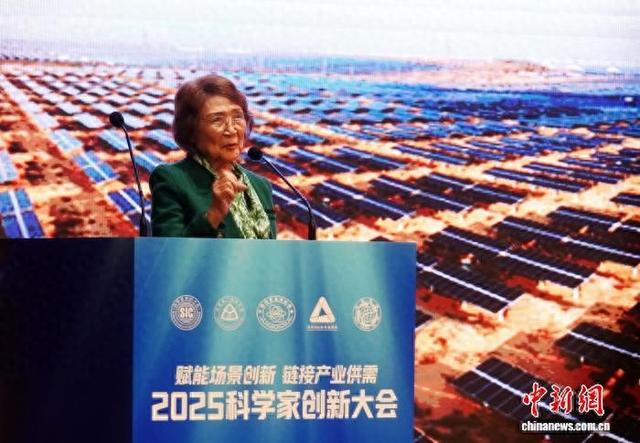
2025科学家创新大会在北京举行 聚焦赋能场景创新链接产业供需
Xin Lang Cai Jing· 2025-12-28 12:13
Core Insights - The 2025 Scientist Innovation Conference focuses on "empowering scenario innovation and linking industry supply and demand," aiming to explore how technology can enhance scenarios and strengthen industrial chains for national modernization and addressing global challenges [1][3] Group 1: Conference Themes and Objectives - The conference emphasizes the need for technology to move beyond laboratory breakthroughs to solve real-world problems and create economic and social value [3] - It advocates for a "scenario-driven" research paradigm and the development of new capabilities for seamless integration of technology innovation and industrial application [3] Group 2: Key Presentations and Reports - Notable presentations include a report by Academician Shen Changxiang on creating a secure and trustworthy computing power ecosystem to support new productive forces [3] - Academician Ma Jun discussed technological solutions for rural revitalization and ecological civilization [3] - Academician Kuang Tingyun presented a report on the collaborative development of renewable energy consumption, forage production, ecological restoration, and carbon sequestration [3] Group 3: Publications and Dialogues - The conference featured the release of the "China Big Data Industry White Paper," providing forward-looking guidance for the digital economy's transformation [7] - A new book titled "The Power of Digital Intelligence: Integration of Energy, Transportation, Information, and Humanities" was introduced, highlighting the importance of interdisciplinary integration for future societal development [7] Group 4: Forums and Collaborative Efforts - The conference included parallel forums on artificial intelligence, life sciences, and resource recycling, aimed at promoting deep integration of technology research, industrial application, and capital connection [9] - It serves as a national-level platform for deep dialogue between scientists and industry, fostering collaborative innovation and exploring core development paths for new productive forces [9]