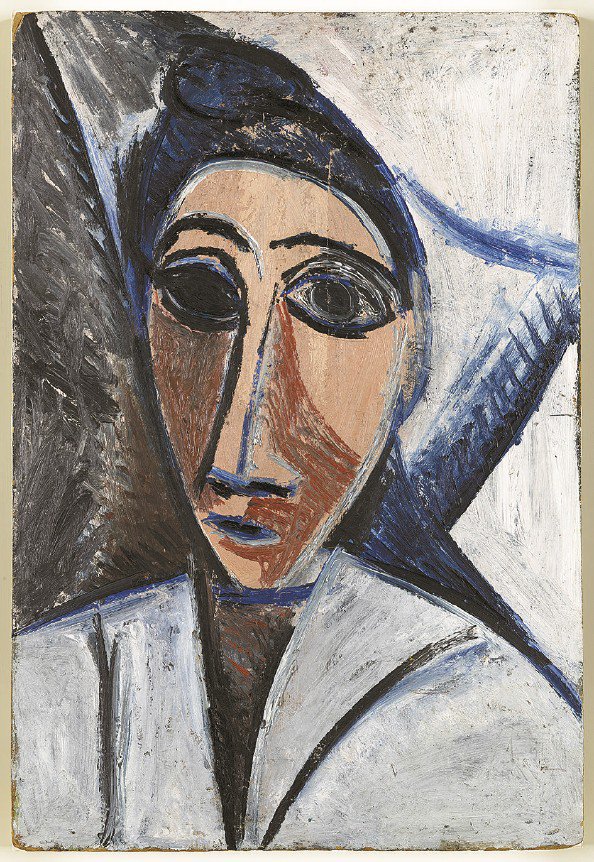
《阅读》

Search documents
毕加索,一辈子都是那个“叛逆少年”
Xin Lang Cai Jing· 2026-02-07 09:25
Core Viewpoint - The exhibition "Extraordinary Picasso: Paul Smith's New Perspective" at the Shanghai Pudong Art Museum showcases 80 works by Picasso, emphasizing his creative spirit and the importance of negation in the artistic process [5][19]. Group 1: Exhibition Overview - The exhibition features a diverse range of Picasso's works, including oil paintings, charcoal drawings, sculptures, and ceramics, highlighting his innovative use of various materials [5]. - The opening piece, "Bull's Head," exemplifies Picasso's ability to transform discarded objects into art, showcasing his humorous and unconventional perspective [5][7]. Group 2: Artistic Philosophy - Picasso's creativity stems from his continuous rejection of traditional norms, which allows for the exploration of new forms and perspectives [9][10]. - The concept of negation is central to Picasso's work, as it leads to the discovery of new artistic expressions and the breaking of conventional boundaries [10][11]. Group 3: Artistic Techniques - The exhibition includes works from different periods, such as "The Heart of the Sacred" and "Man with a Pipe," illustrating the evolution of Picasso's style from analytical to synthetic cubism [10][12]. - Picasso's technique of presenting multiple perspectives simultaneously allows viewers to understand the complexity of form and space [13][14]. Group 4: Cultural Influence - Picasso's Spanish heritage and cultural background significantly influenced his artistic development, instilling a passion for freedom and creativity [14][16]. - His works reflect a constant interplay between destruction and creation, emphasizing the importance of innovation in art [16][19]. Group 5: Late Career Reflections - In his later years, Picasso continued to seek new directions in his art, grappling with themes of loneliness and existential reflection [21][22]. - Despite the challenges he faced, Picasso maintained a fervent passion for creation, which remains a defining characteristic of his legacy [22].

伟大的艺术家之路
Xin Lang Cai Jing· 2026-01-24 07:16
Core Viewpoint - The exhibition "Picasso Through the Eyes of Paul Smith" at the Pudong Art Museum offers a new perspective on Pablo Picasso's artistic journey, highlighting his evolution and the reasons behind his greatness as an artist [7]. Group 1: Artistic Journey and Innovation - Picasso's greatness stems from his relentless pursuit of artistic mastery and innovation, characterized by a willingness to challenge himself and explore new forms of expression [8][9]. - Even in his later years, Picasso continued to study and reinterpret the works of masters like Manet and Velázquez, demonstrating his obsession with artistic technique and learning [9][10]. - The exhibition showcases Picasso's commitment to formal innovation, with works that reflect his continuous exploration of artistic language, from traditional painting to collage and sculpture [11][12]. Group 2: Cultural Influences and National Identity - Picasso's art is deeply rooted in his love for Spanish culture, with themes like bullfighting being a constant source of inspiration throughout his career [13]. - The exhibition features various works related to bullfighting, illustrating how this cultural practice embodies the spirit of Spanish tradition and influences Picasso's artistic expression [13]. Group 3: Engagement with Contemporary Issues - Picasso's ability to reflect the emotional landscape of his time is evident in works like "Guernica," which addresses the horrors of war and its impact on humanity [14][15]. - His art often conveys a sense of humor and a childlike wonder, as seen in playful moments captured in photographs, showcasing his ability to transform everyday life into art [15].
如何对毕加索“再看一眼”
Xin Lang Cai Jing· 2025-12-20 06:43
Core Perspective - The exhibition "Very Picasso: Paul Smith's New Perspective" at the Shanghai Pudong Art Museum offers a unique and vibrant exploration of Pablo Picasso's works, curated by fashion designer Paul Smith, breaking away from traditional art exhibition formats [11][13][18]. Group 1: Exhibition Concept - The exhibition is not a conventional academic display but rather a creative exploration that invites viewers to engage with Picasso's art through a lens of color, humor, and optimism [11][13]. - Paul Smith, as the artistic director, emphasizes a non-linear approach to curating, focusing on visual instinct rather than chronological order, allowing for a more intuitive experience [13][14]. - The exhibition features a diverse range of Picasso's works, including sketches, caricatures, and ceramics, showcasing his experimental and personal expressions rather than just completed masterpieces [15][18]. Group 2: Innovative Presentation - The exhibition space, designed by Jean Nouvel, transforms the traditional viewing experience into a dynamic and modern environment, enhancing the interaction between the artworks and the audience [14][18]. - Smith's use of bold stripes and patterns throughout the exhibition creates a dialogue between the artworks, challenging conventional museum practices and fostering a lively visual atmosphere [16][17]. - The layout mimics the crowded and eclectic nature of early Parisian salons, inviting viewers to experience Picasso's creative process in a more intimate and accessible manner [12][14]. Group 3: Audience Engagement - The exhibition aims to resonate with younger audiences, encouraging them to appreciate the vibrancy and creativity of Picasso's work, fostering a sense of connection to their own creative impulses [18][19]. - Smith's vision is to inspire visitors to see art as a source of joy and exploration, aligning with Picasso's own artistic ethos of curiosity and experimentation [18][19]. - The exhibition ultimately serves as an invitation for viewers to engage with art in a personal and meaningful way, encouraging them to "look again" at both Picasso's works and their surroundings [19].