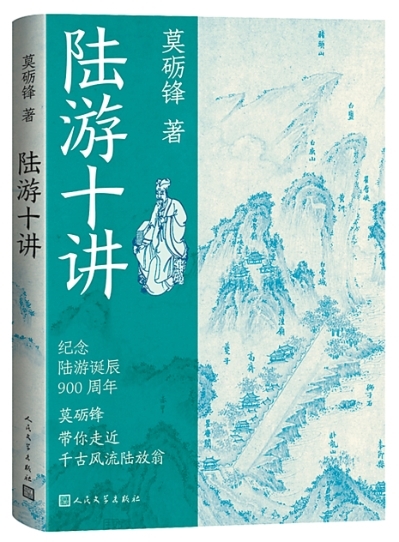
《陆游十讲》

Search documents
俯身跋涉 弦歌不辍
Xin Lang Cai Jing· 2025-12-31 21:06
Group 1 - The year 2025 marks the 900th anniversary of the birth of Song Dynasty poet Lu You, with notable publications such as "Ten Lectures on Lu You" and "Ten Lectures on Bai Juyi" by Professor Mo Lifeng from Nanjing University, reflecting over a decade of work in popularizing classical literature [1] - Professor Rong Xinjian from Peking University has dedicated over forty years to the study of Dunhuang studies, culminating in the complete release of the "Color Catalog of Dunhuang Documents in the National Library of France," which represents a significant achievement in the archival of overseas cultural treasures [1] Group 2 - Scholars have been actively responding to the challenges and opportunities presented by AI in the humanities, with works like "Literary Education in the AI Era" edited by Chen Pingyuan showcasing the humanities' sensitivity to technological revolutions [2] - Other notable publications include "Three Thousand Years of Ritual Governance: Law and Change" by Gu Tao, which explores the historical context of traditional Chinese ritual governance, and "The 'Book Exchange' of Ming and Qing Scholars" by Zhang Shengtong, which illustrates the dynamics of knowledge dissemination and interpersonal networks [2] - The ongoing research and writing efforts of scholars reflect a deep engagement with their fields and a commitment to dialogue with readers and the times, emphasizing the importance of continuous intellectual exploration [2]

为传承优秀传统文化略尽寸心
Xin Lang Cai Jing· 2025-12-31 21:05
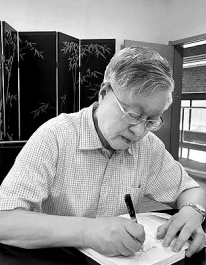
Core Viewpoint - The article emphasizes the importance of inheriting and promoting traditional Chinese culture, particularly focusing on the concept of cultural ideas as the core of this heritage [3][4][5]. Group 1: Cultural Categories - Traditional Chinese culture can be categorized into three main types: material culture, institutional culture, and conceptual culture, with the latter being crucial for cultural inheritance [3][4]. - Conceptual culture encapsulates the wisdom of ancestors and is primarily conveyed through ancient texts, which serve as effective means for cultural transmission [4][6]. Group 2: Role of Historical Figures - Confucius and Zhu Xi are highlighted as exemplary figures in the organization and study of ancient texts, setting a model for cultural inheritance [5][6]. - Confucius aimed to preserve and transmit previous cultural knowledge, while Zhu Xi dedicated himself to compiling and annotating classical texts, emphasizing the importance of understanding and promoting traditional cultural values [5][6]. Group 3: Modern Relevance - The article discusses the significance of classical poetry in understanding the spirit of ancient Chinese people, suggesting that reading these works provides insights into their values and life perspectives [6][9]. - The author has engaged in popularizing classical poetry through various works, aiming to bridge the gap between academic research and public appreciation [9][12]. Group 4: Focus on Lu You - The upcoming book "Ten Lectures on Lu You" aims to explore the patriotic spirit of the poet Lu You, emphasizing its relevance in contemporary society [10][11]. - Lu You's poetry reflects a deep emotional connection to the landscape of China, portraying the nation's beauty and cultural heritage, which resonates with modern readers [11][12]. Group 5: Cultural Promotion Efforts - The author expresses a commitment to promoting traditional culture through lectures and publications, highlighting the need for accessible interpretations of classical texts for broader audiences [12][13]. - The article concludes with a call to continue efforts in cultural dissemination, ensuring that the essence of traditional Chinese literature reaches and enriches contemporary society [13].
莫砺锋《陆游十讲》编辑手记
Ren Min Ri Bao· 2025-12-04 22:24
Core Viewpoint - The publication of "Ten Lectures on Lu You" by Mo Lifeng serves as a significant opportunity to revisit the themes of patriotism and poetic tradition in Chinese civilization, coinciding with the 900th anniversary of Lu You's birth [2][4]. Group 1: Academic and Cultural Significance - The book aims to bridge academic research and cultural dissemination, maintaining scholarly rigor while being accessible to a broader audience [3]. - Mo Lifeng has distilled key points from his extensive research on Lu You, transforming complex academic arguments into a format that is approachable for general readers [3]. Group 2: Content and Structure - "Ten Lectures on Lu You" is structured into ten thematic sections, covering aspects such as patriotism, humanistic landscapes, agrarian life, and scholarly pursuits, presenting a multifaceted image of Lu You [2]. - The author has reworked 20 of his research papers into a concise format, reducing academic jargon and focusing on clear, evidence-based explanations [2]. Group 3: Cultural Context and Impact - Lu You is portrayed not only as a historical figure but also as a timeless symbol of spirit, embodying themes of patriotism, loyalty, and resilience that resonate deeply within Chinese culture [4]. - The timing of the book's release, coinciding with both Lu You's 900th anniversary and the 80th anniversary of the victory in the War of Resistance, adds a profound cultural significance to its publication [4].